






Definition & Meaning
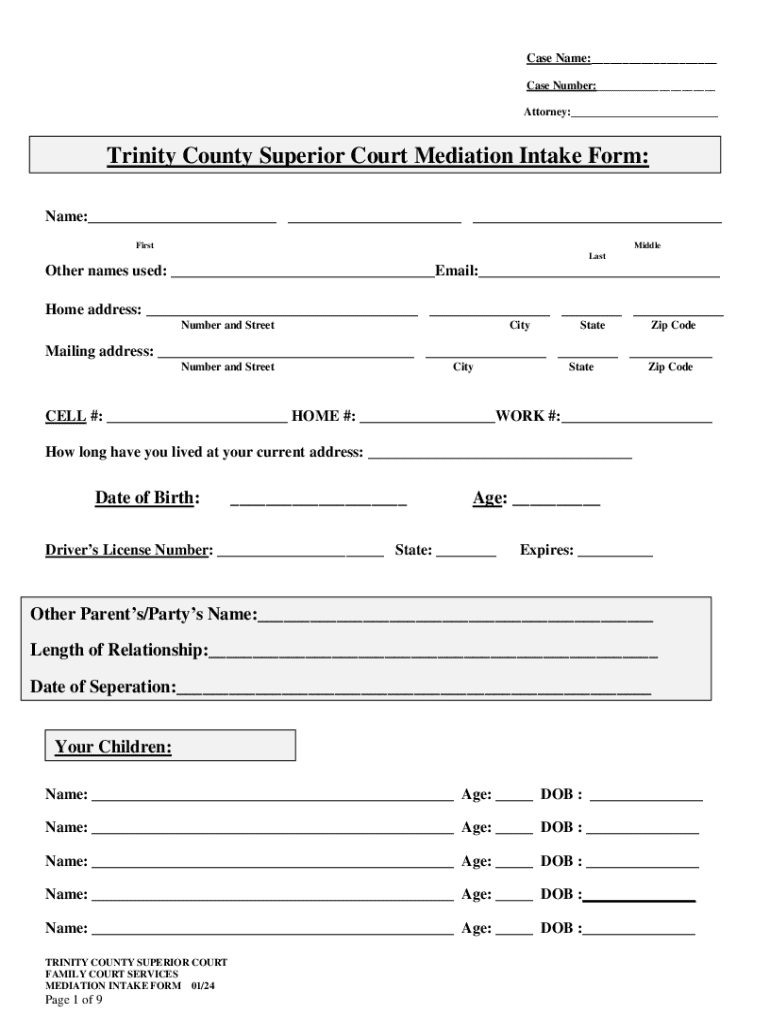
A Mediation Intake Form is a crucial document used to gather initial information from parties involved in a mediation process, particularly in custody disputes. This form serves to streamline the collection of personal and family information, ensuring that the mediation process can be conducted with full knowledge of each party's circumstances. The Mediation Intake Form typically covers various sections, including personal identification details, current and desired custody arrangements, and any pertinent concerns about each party involved. By organizing this information efficiently, the form plays a pivotal role in preparing mediators and participants for constructive discussions.
How to Use the Mediation Intake Form
To effectively utilize a Mediation Intake Form, the involved parties must complete the document accurately and thoroughly. Here’s a step-by-step process:
- Personal Identification: Start by filling out your personal details such as full name, contact information, and relationship to the case.
- Custody Arrangements: Clearly outline the existing custody setup and any proposed changes. This helps mediators understand the current dynamics and the desired outcomes.
- Concerns & Background Information: Detail any concerns regarding the other party, such as issues of trust, health, or financial stability. Include any history of domestic violence or legal troubles, as these are critical for the mediation process.
- Session Preferences: Indicate requests for separate sessions or the presence of a support person if needed. This can be crucial in ensuring a comfortable and safe environment for all parties.
Ensuring that all sections of the form are filled with accurate information helps in establishing a strong basis for productive mediation discussions.
Key Elements of the Mediation Intake Form
The Mediation Intake Form is composed of several essential sections that capture detailed information necessary for the mediation process:
- Personal Information: Collects detailed identification information, including addresses and contact numbers.
- Custody Arrangements: Explores the current custody status and any desired changes. This section is crucial for understanding the stakes and objectives of the mediation.
- Family Dynamics and Concerns: Gathers insights into family relationships and tensions that may affect the mediation outcome.
- Legal History and Abuse Records: Captures any existing legal confrontations or past domestic violence incidents, informing mediators of potential safety concerns.
- Support Preferences: Allows participants to specify any additional support they require during mediation, such as separate sessions or support persons.
Each of these sections is integral in painting a comprehensive picture of the family dynamics and assists mediators in navigating the process effectively.
Legal Use of the Mediation Intake Form
The Mediation Intake Form is used legally within the scope of family law to facilitate custody mediation processes. The information collected forms the basis upon which mediators can work to achieve an amicable agreement between parties. The mediation process aims to avoid the adversarial court system, and the form contributes by allowing mediators to understand and address each party's needs and concerns. It is compliant with U.S. legal standards for mediation and ensures that all collected data is handled with confidentiality and respect, adhering to legal and ethical guidelines.
Steps to Complete the Mediation Intake Form
Completing the Mediation Intake Form involves a methodical approach to ensure accuracy and completeness:
- Gather Necessary Documents: Have all relevant documents at hand, including personal IDs, custody-related paperwork, and any legal documents that may be required.
- Fill Out Personal Details: Accurately enter your personal information, ensuring all fields are completed.
- Detail Custody Information: Explicitly state both the current custody arrangement and any proposal for changes in custody.
- Record Concerns: Use the space provided to elaborate on any concerns you might have regarding the other party, incorporating any past incidents that may be relevant.
- Documentation of Legal and Abuse History: Clearly and truthfully document any history of legal issues or domestic incidents.
- Specify Mediation Preferences: Indicate any needs for special accommodations, such as separate sessions for sensitive matters.
Review the completed form for accuracy before submission, as this will impact the mediation's effectiveness.
Who Typically Uses the Mediation Intake Form
Typically, individuals involved in custody disputes use the Mediation Intake Form as a part of the mediation process. This includes parents or guardians looking to resolve custody issues outside of the courtroom environment. Additionally, legal professionals and mediators engage with these forms to gather necessary background information to facilitate the mediation process. Court-appointed mediators within family law mediation programs also frequently utilize these forms to organize and prepare for mediation sessions effectively.


State-Specific Rules for the Mediation Intake Form
The use of Mediation Intake Forms may vary slightly depending on the state, given that family law can differ across jurisdictions in the U.S. Here are some examples of how state rules can influence the form’s usage:
- Specific Information Requirements: Certain states may require additional details or documentation based on their custody laws.
- Confidentiality Provisions: Different states might have unique requirements regarding the confidentiality and handling of information collected through the form.
- Use in Court Proceedings: Some states might allow contents of the form to be referenced in court if mediation does not resolve the issue, whereas others keep the form purely for mediation purposes.
It is vital to be aware of and comply with state-specific legal requirements when completing a Mediation Intake Form.
Examples of Using the Mediation Intake Form
Consider this scenario: a divorced couple in California, with joint custody of their child, wishes to alter their custody arrangement. They begin with the Mediation Intake Form, documenting their existing arrangement and any concerns they have regarding each other's parenting. By highlighting specific issues and proposals, both parties set a foundation for the mediation session. This structured approach allows the mediator to address the concerns systematically and work towards a resolution that reflects both parties' interests. Furthermore, if historical events such as legal issues or domestic violence are involved, these are outlined clearly in the form, equipping the mediator to devise a safe and fair mediation strategy.