






Definition and Meaning of the Certificate of Good Moral Character
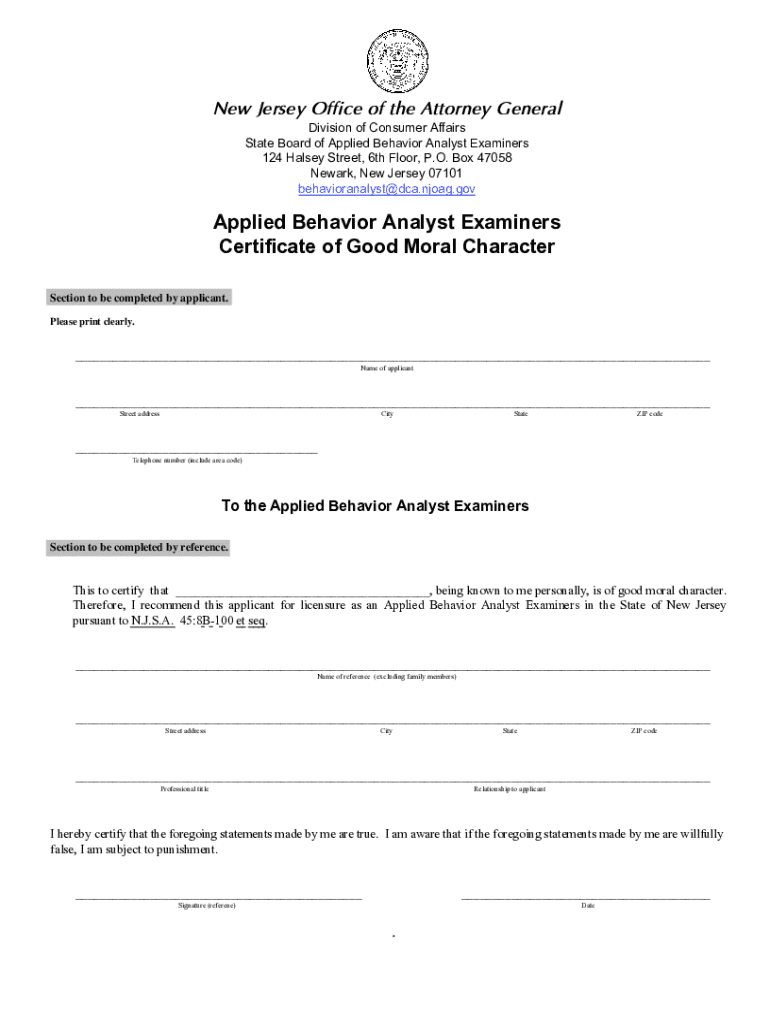
The Certificate of Good Moral Character is a formal declaration that vouches for an individual's ethical and moral conduct. It is often required for individuals seeking licensure or approval in professions that demand trust and integrity. For instance, applied behavior analysts in certain regions, such as New Jersey, are required to present this certificate to verify their moral standing as part of the licensing process. The certificate serves as a testament to the applicant's character, typically vouched for by a professional who is not a family member.
How to Obtain the Certificate of Good Moral Character
Acquiring a Certificate of Good Moral Character involves a few key steps. Primarily, applicants must identify a qualified individual who can corroborate their moral fiber. This person should ideally hold a professional title and possess firsthand knowledge of the applicant's behavior in both professional and social settings. Once an appropriate reference is selected, the applicant must formally request that this person fills out and signs the certificate form. The process often includes verifying the identity and relationship of the reference to ensure legitimacy.
Steps to Complete the Certificate of Good Moral Character
- Select a Reference: Choose an esteemed professional who is familiar with your moral conduct. This could be a mentor, employer, or colleague, but not a family member.
- Provide Personal Information: Fill in the form with your personal details, such as name, address, and contact information.
- Reference's Certification: The selected reference should provide their professional title and indicate their relationship to you. They will need to sign the form.
- Review and Submit: Double-check all entries for accuracy before submitting the form according to the issuing authority's guidelines.
Key Elements of the Certificate of Good Moral Character
The certificate includes several vital components that must be accurately completed. These elements include the applicant's personal information, such as name and contact details, and the reference's details. The form must also include a statement from the reference attesting to the applicant’s moral character, which underscores the credibility and reliability of the attestment. Additionally, the form typically requires a signature and date to validate the information provided.
Who Typically Uses the Certificate of Good Moral Character
The use of this certificate extends across various professional fields where moral conduct is paramount. Often required for licensing in sectors such as healthcare, education, and legal professions, the document is pivotal in maintaining the integrity and trust essential in these fields. By ensuring that professionals possess good moral character, the certificate helps to uphold standards and protect the public from unethical practices.


Why You Should Obtain a Certificate of Good Moral Character
Obtaining this certificate can be crucial for advancing your career, particularly in fields that emphasize ethics and morality. It conveys to potential employers or licensing boards that you are a trustworthy and honorable individual, thus potentially enhancing your professional reputation. Moreover, it can be a decisive factor in your eligibility for certain licenses or positions, aligning your qualifications with legal and professional standards.
State-Specific Rules for the Certificate of Good Moral Character
While the fundamental aspects of the Certificate of Good Moral Character remain consistent, there are state-specific rules and variations in its application. For instance, certain states may require additional documentation or have specific prerequisites for who can serve as a reference. Understanding these nuances is crucial for ensuring compliance and successful submission of the form. Applicants should consult their state's licensing board or relevant authority for detailed requirements specific to their region.
Legal Use of the Certificate of Good Moral Character
Legally, the Certificate of Good Moral Character functions as a supportive document that reflects an individual's commitment to upholding ethical standards. It may be used in legal proceedings where character is assessed, such as custody cases or trustee appointments, where demonstrating good moral character is vital. The certificate must be completed truthfully, as false statements can lead to legal repercussions, including denial of licensure or other penalties.
Important Terms Related to the Certificate of Good Moral Character
Understanding key terms associated with this form is essential:
- Reference: A person who attests to your character.
- Applicant: The individual requesting the certificate.
- Certification: The attestation process by which the reference validates the applicant's moral character.
- Licensing Authority: The organization or board that requires the certificate for issuing professional licenses.
Eligibility Criteria for Obtaining a Certificate of Good Moral Character
Eligibility typically depends on both the applicant and the reference. The applicant must be seeking a position or credential that necessitates the certificate. The chosen reference should be an individual in good standing, often required to hold a professional or community position that reflects credibility and the ability to attest truthfully to the applicant’s character. The criteria may vary slightly by state or profession, emphasizing the importance of checking requirements in your jurisdiction.