






Definition & Meaning
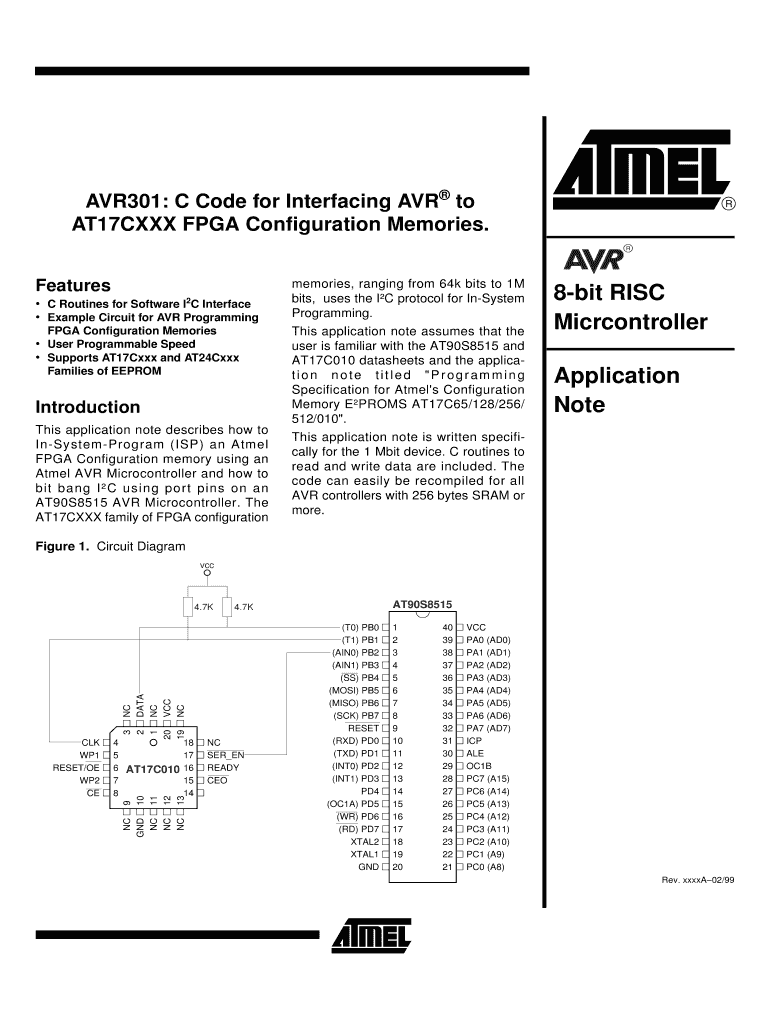
The "8-bit RISC Microcontroller Application Note - OoCities" is a comprehensive guide intended for engineers and developers working with 8-bit Reduced Instruction Set Computing (RISC) microcontrollers. It provides technical details and application references necessary for the effective integration and utilization of these microcontrollers in various projects. The document covers the architecture, operational specifics, and interfacing techniques, enabling professionals to enhance performance and functionality in embedded systems.
How to Use the Application Note
To utilize the "8-bit RISC Microcontroller Application Note," start by thoroughly reviewing the sections that detail specific microcontroller features and interfacing requirements. The document typically includes schematic diagrams, flowcharts, and example code snippets—essential tools for developers designing custom applications. Systems designers can leverage these resources to ensure compatibility and functionality across various hardware platforms, leading to streamlined development and testing processes.
Practical Steps
- Identification of Requirements: Begin by isolating the specific sections relevant to your project's requirements.
- Schematic and Algorithm Review: Study the included schematics and algorithms to understand the necessary modifications.
- Implementation Testing: Use the application note's examples to test your implementation in a controlled environment before full-scale deployment.
Who Typically Uses the Application Note
This document is typically used by embedded systems engineers, firmware developers, and electronics hobbyists with experience in microcontroller programming. It serves as an educational resource for students learning about microcontroller applications, offering valuable insights into real-world interfacing challenges.


Use Cases
- Firmware Developers: To develop efficient code routines for embedded applications.
- Product Engineers: To integrate 8-bit RISC microcontrollers into new consumer electronics products.
- Academics: To teach microcontroller interfacing in engineering courses.
Important Terms Related to the Application Note
Understanding the specific terminology used within the "8-bit RISC Microcontroller Application Note" is crucial for effective utilization. Key terms include:
- RISC Architecture: A microprocessor design philosophy that utilizes a smaller number of simple instructions for efficient performance.
- Interfacing: The process of connecting a microcontroller to other hardware components or systems.
- ISP (In-System Programming): A technique for programming microcontrollers after installation within a system.
Definitions
- FPGA (Field-Programmable Gate Array): A type of hardware commonly used alongside microcontrollers for flexible electronic design.
- I²C Protocol: A communication protocol used to connect low-speed peripherals to microcontrollers.
Key Elements of the Application Note
The main components of the "8-bit RISC Microcontroller Application Note" include technical schematics, interfacing guidelines, and example C code for common applications. Additionally, timing diagrams illustrate how to synchronize microcontroller operations with other components.
Core Sections
- Schematic Diagrams: Visual representations of circuit designs.
- Example Code Routines: Pre-written code helping to expedite application development.
- Timing Specifications: Detailed operational timings necessary for accurate interfacing.
Steps to Complete Projects Using the Application Note
Projects requiring an 8-bit RISC microcontroller can be completed effectively using the guidelines within the application note. The following steps provide a structured approach:
- Research: Begin by identifying required components and specifications relevant to your application.
- Design: Use the application note's schematics to design your circuit layout.
- Code Development: Employ provided code examples to develop microcontroller programs.
- Testing & Debugging: Verify the functionality of your application through iterative testing.
- Deployment: Install and configure your microcontroller-based solution within the target system environment.
Examples of Using the Application Note
The application note offers numerous potential implementations. For instance, developers can create embedded systems such as temperature monitors, automation controllers, or simple robotics applications using the guidance provided.
Case Study
- Home Automation Project: An engineer uses the application note to integrate an 8-bit RISC microcontroller for controlling lighting and security systems. By following provided examples, efficient interfacing with sensors and actuators is achieved.
Digital vs. Paper Version of the Application Note
The application note is available in both digital and paper formats, each with distinct advantages. The digital version allows for easy searching and bookmarking, while the paper version enables annotation and physical reference during hands-on work sessions.
Considerations
- Digital Access: Facilitates on-the-go consultation via electronic devices.
- Paper Reference: Useful for in-depth study and offline work environments where digital devices may be impractical.
Software Compatibility
The note's resources and examples are often compatible with popular microcontroller development environments and software such as AVR Studio, MPLAB X, and others supporting C programming. Utilizing compatible software ensures a smoother development experience by harnessing the full potential of the microcontroller's capabilities.
Suggested Software
- AVR Studio: For Atmel AVR microcontroller development.
- MPLAB X IDE: For projects involving Microchip Technology's PIC microcontrollers.