






Definition & Meaning
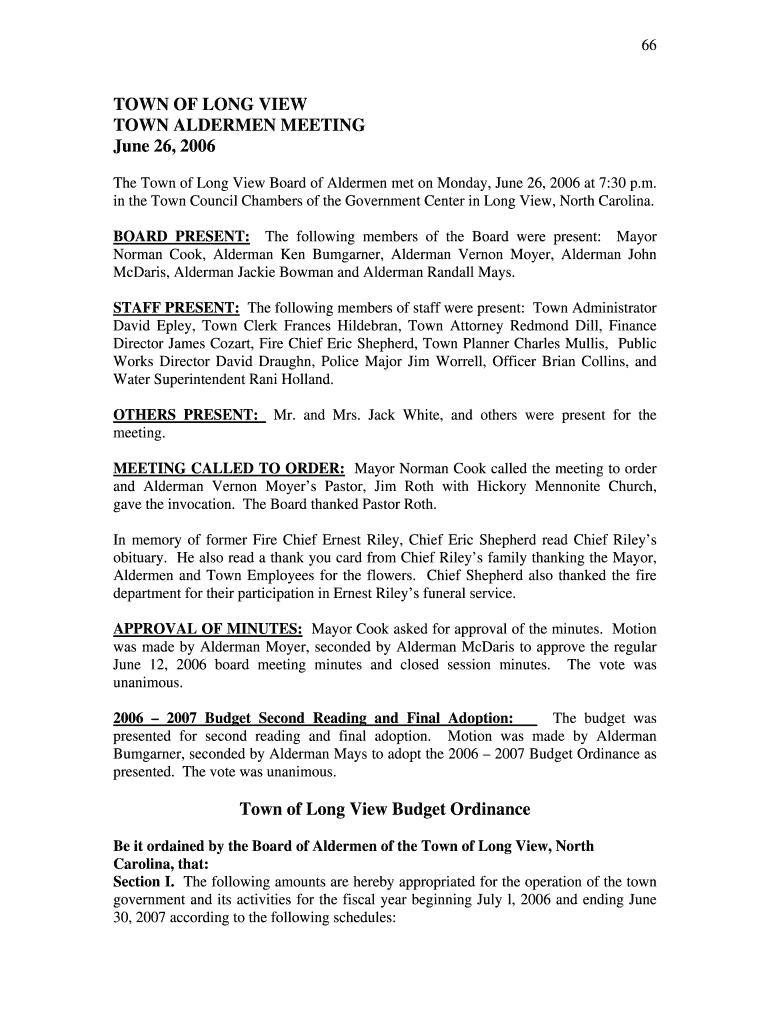
The "June 26, 2006 Minutes - Town of Long View - ci longview nc" refers to the documented proceedings of a municipal meeting held by the Town of Long View's Board of Aldermen. Minutes from such meetings typically contain a detailed account of discussions, motions, decisions, and other relevant actions taken by the board. For this particular meeting, items such as the approval of previous minutes, budget adoption, and various town projects were likely documented. These minutes serve as an official record for public access and governmental transparency.
How to Use the June 26, 2006 Minutes
Using the June 26, 2006, minutes involves reviewing the document for a comprehensive understanding of the town's governmental decisions and priorities made during that meeting. An individual might access the minutes for various purposes:
- Research: Investigating the historical decisions made by the Town of Long View.
- Legal Reference: Understanding the context of regulatory or legal changes that might have an impact on residents or businesses.
- Public Awareness: Gaining insights into how local governance affects community development and public policy.
Accessing Key Topics
By navigating through the minutes, readers can identify specific decisions such as budget allocations, public hearings, and infrastructure projects. This targeted information can help individuals in tailoring their inquiries or analyses based on their unique needs or interests.
Steps to Complete the June 26, 2006 Minutes
While the completion of municipal meeting minutes is typically the responsibility of an appointed recorder or secretary, understanding the steps involved provides insight into the process:
- Attendance Recording: Note who was present, who presided over the meeting, and any absences.
- Review of Previous Minutes: Confirm and approve the minutes from prior meetings.
- Discussion Documentation: Transcribe discussions on each agenda item, including pertinent questions and debates.
- Resolution and Voting: Record all motions proposed, votes taken, and outcomes, noting majority and minority positions.
- Closing Remarks: Summarize any future action items, follow-up requirements, and the purpose and date of upcoming meetings.
Importance of Accurate Documentation
Complete and accurate minutes are crucial as they serve not only as a historical record but also offer an accountability measure for public officials and a basis for understanding ongoing governance.
Key Elements of the June 26, 2006 Minutes
The minutes from the Town of Long View meeting on June 26, 2006, would include a variety of essential components:
- Budget Approval: Adoption of the 2 budget with detailed accounts of allocated funds and financial strategy.
- Economic Development: Discussions on economic initiatives such as the grant for Tailored Chemical Products.
- Infrastructure Projects: Updates and decisions concerning regional utilities and infrastructure like the Raw Water Pump Station Project.
Additional Components
- Public Initiatives: Forward-looking plans and public hearings, including shifts in policy or land use.
- Feedback Mechanisms: Community and stakeholder input as captured through public discourse and reactions during the meeting.
Examples of Using the Minutes
Examples of real-world use cases for the June 26, 2006, minutes include:
- Urban Planning: Planners and developers might use minute details to align new projects with the town's historical plans and ongoing infrastructural priorities.
- Historical Research: Academics studying the evolution of local governance or public policy can use the minutes as primary source documents to analyze changes over time.
- Legal Disputes: Lawyers and specialists might reference specific discussions or decisions to support legal arguments or clarify disputes involving municipal responsibilities.
Who Typically Uses the June 26, 2006 Minutes
The primary users of the minutes typically include:
- Local Government Officials: For reference in policy-making and future meetings.
- Residents and Business Owners: Those interested in local affairs, business developments, and fiscal policies.
- Researchers and Academics: Engaged in studies related to public administration, policy analysis, and community development.
- Journalists: Reporting on governance, accountability, and public infrastructure projects.


Participation and Engagement
These groups often participate actively in public meetings or access the minutes to ensure their voices are heard and to maintain an informed citizenry.
Legal Use of the June 26, 2006 Minutes
Legally, the minutes play a pivotal role in ensuring transparency and accountability in public office:
- Public Access: As public records, they must be accessible to the community for review and inspection.
- Procedural Integrity: They provide evidence that proper procedures were followed during decision-making processes.
- Regulatory Compliance: They establish compliance with state laws governing public meetings, also known as "sunshine laws."
Legal Challenges
In instances where public decisions are contested, items found in the minutes could be pivotal in legal challenges or procedural reviews.
State-Specific Rules Impacting the Minutes
In the United States, municipal meeting minutes must comply with state-specific regulations:
- Open Meetings Law: Ensures that meetings are conducted in a manner open to the public, with minutes documenting attendance and participatory opportunities.
- Public Record Laws: Dictate the period for maintaining records and protocols for public inspection and archiving.
Adaptation to Local Needs
The above general guidelines can be adapted to the local context of the Town of Long View where unique aspects of North Carolina's legislative framework might also affect how minutes are recorded and utilized.