






Definition & Meaning
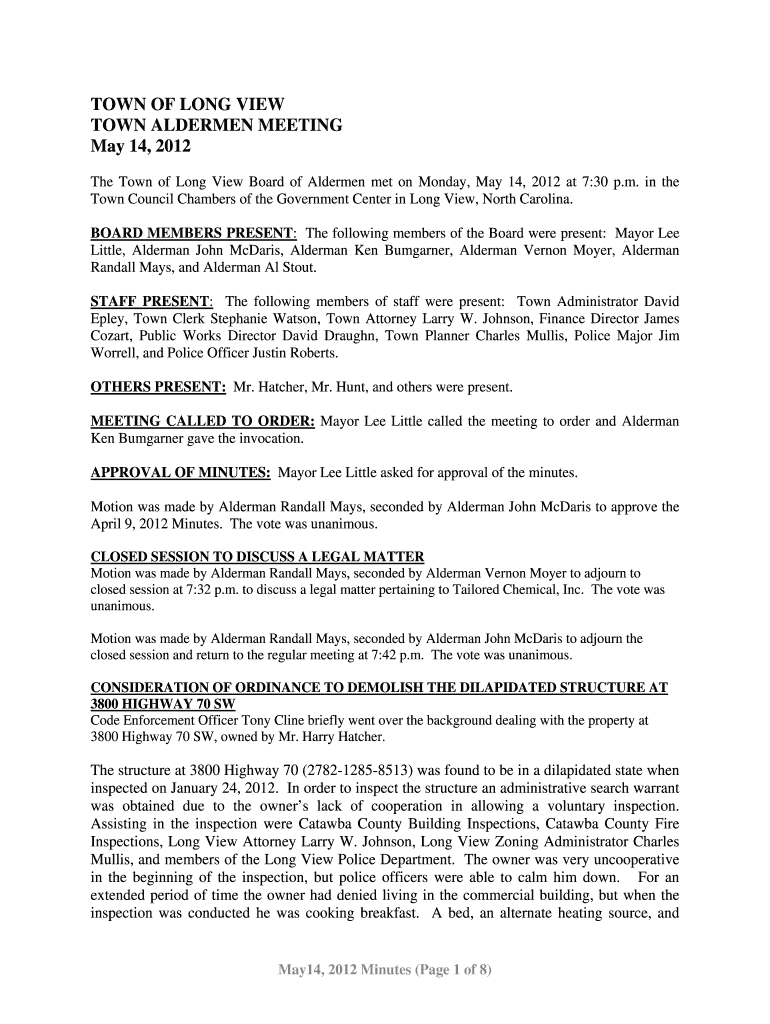
The Town of Long View Board of Aldermen meeting held on May 14, 2012, reflects a formal gathering where the town’s legislative body convened to discuss and make decisions on various important matters. This particular meeting involved deliberations on issues such as approval of previous meeting minutes, addressing legal concerns in a closed session, and the consideration and passing of an ordinance to demolish an unsafe structure at 3800 Highway 70 SW. This meeting is a vital part of local governance, as it ensures that town authorities make informed decisions regarding community welfare and administrative procedures.
Key Elements of the Meeting
Understanding the key elements deliberated in the meeting offers insight into local governance processes:
- Approval of Minutes: The initial step in such meetings is the review and approval of minutes from the previous meeting to ensure accuracy and accountability.
- Closed Session: Held to discuss sensitive legal matters that require confidentiality, ensuring that sensitive issues are addressed discreetly.
- Ordinance Consideration: The passing of an ordinance to demolish a structure highlights the board’s role in upholding safety standards and taking corrective actions for non-compliance.
- Resolution Adoption: Adopting resolutions such as the Catawba County Solid Waste Management Plan exemplifies proactive measures in regional cooperation and sustainable practices.
Steps to Complete Action Items from the Meeting
- Review Meeting Agenda: Familiarize yourself with the topics discussed, particularly those requiring follow-up.
- Draft Legal Documents: Prepare any necessary ordinances, resolutions, and other legal documents as decided in the meeting.
- Secure Approvals: Obtain the necessary signatures or approvals for any documents that need formal ratification.
- Coordinate with Relevant Departments: Work with departments involved in the implementation of decisions, such as the demolition of the unsafe structure.
- Monitor Compliance: Ensure all actions taken comply with local and state regulations, and monitor the outcome to address any subsequent issues.
Important Terms Related to the Meeting
- Board of Aldermen: The legislative body of the town responsible for making decisions on town governance.
- Ordinance: A local law or regulation enacted by a municipal authority.
- Resolution: A formal expression of opinion or decision voted on by an official body.
- Closed Session: A portion of a meeting where sensitive issues are discussed privately.
Why Should You Follow the Meeting Outcomes
Following the outcomes of such meetings is crucial for residents, as the decisions impact direct aspects of community life:
- Community Safety and Standards: Actions like the demolition of unsafe buildings enhance community safety.
- Operational Transparency: Understanding these meetings’ processes fosters a transparent governance view, promoting public trust.
- Opportunity for Engagement: Being informed creates opportunities for civic engagement and participation in future town meetings or related activities.
Examples of Using Meeting Information
- Civic Participation: Residents can use information from these meetings to advocate for or against certain projects or policies affecting their neighborhoods.
- Academic Research: Scholars studying urban development or local governance might reference the meeting’s decisions as part of larger case studies on municipal management.
- Policy Development: Other municipalities might look to Long View’s handling of similar issues as a model for their actions, particularly regarding compliance enforcement and regional planning initiatives.
State-specific Rules for Board Meetings
The Town of Long View, NC, follows specific rules adhering to North Carolina state laws regarding public meetings:
- Open Meeting Laws: Mandate that governmental meetings are open to the public, with some exceptions like closed sessions for legal matters.
- Public Notices: Requirement to issue notices in advance about meeting times and agendas to ensure community members have the opportunity to participate.
Penalties for Non-Compliance
Non-compliance with decisions made during such meetings can lead to legal repercussions and penalties:
- Fines: Property owners not adhering to ordinances, such as making necessary repairs post-inspection, may face fines or legal actions.
- Legal Action: Continued disregard for meeting mandates might culminate in court orders enforcing compliance or issuing penalties.
- Revocation of Permits: Businesses failing to align with resolutions like waste management plans might risk permits or licenses being revoked.
Incorporating deeper insights and practical implications of this specific town meeting provides a comprehensive view of local governance and its impacts, fostering an informed and engaged community.