






Definition & Meaning
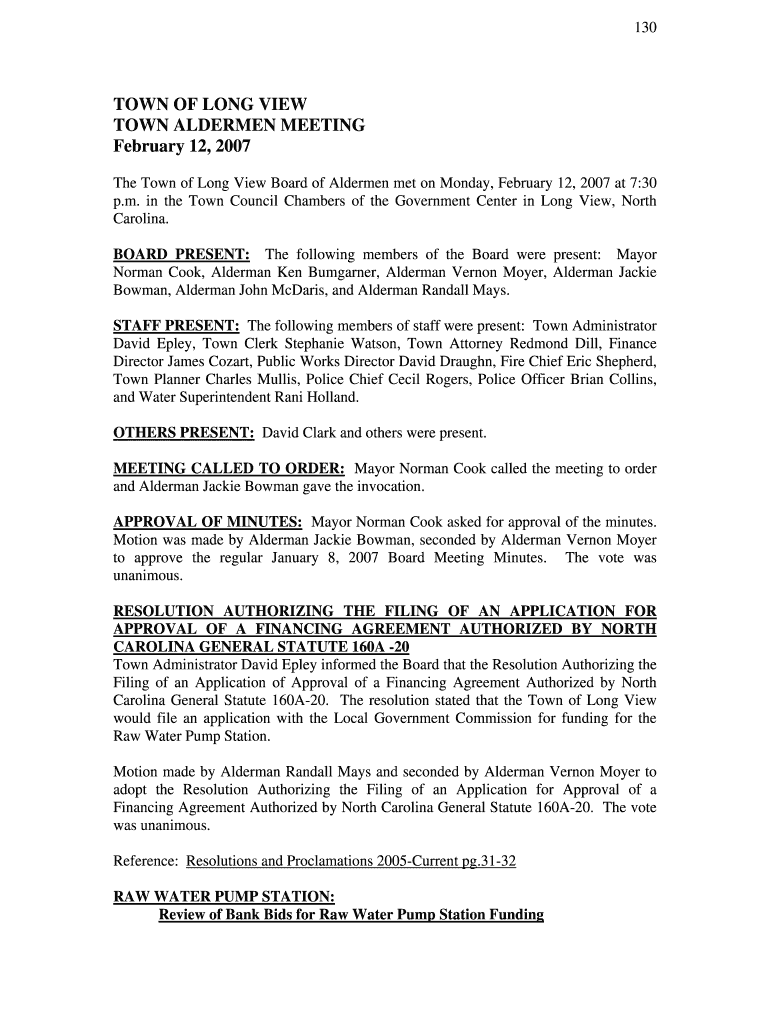
The "February 12, 2007 Minutes - Town of Long View - ci longview nc" refers to the official record of proceedings from the Town of Long View's Board of Aldermen meeting held on that date. This document serves as a formal account of discussions, decisions, and actions taken by the governing body, covering agenda items ranging from financial approvals to departmental updates. These minutes are crucial for transparency, providing a historical record of municipal governance that stakeholders can reference for accountability and future planning.
Importance of Meeting Minutes
Meeting minutes function as an official and legal document that validates what occurred during a meeting. They allow public officials and citizens to track policy changes, financial decisions, and project developments. Additionally, these records can influence future legislative and administrative actions by providing a detailed context of past decisions.
How to Use the February 12, 2007 Minutes
Meeting minutes from February 12, 2007, can be utilized in various ways depending on the needs of the user:
- Reference for Historical Data: Researchers or citizens seeking insight into past municipal operations may analyze these minutes to understand long-standing policies or the town's development history.
- Legal Scrutiny: The minutes can be used to verify compliance with procedural rules or to serve as evidence in legal contexts where governance and decision-making processes are reviewed.
- Community Accountability: Residents can use these minutes to hold elected officials accountable for the promises and decisions made during the meeting.
Areas of Application
- Educational Resources: Teachers or students studying local governance might leverage these minutes to learn about municipal operations.
- Policy Development: Policymakers may use historical minutes to guide current and future policy-making, ensuring continuity and addressing past challenges.
Steps to Complete the February 12, 2007 Minutes
Creating and finalizing meeting minutes involves several key steps to ensure accuracy and completeness:
- Preparation Before the Meeting: Prepare an agenda and familiarize yourself with the topics to be covered, ensuring you're equipped to capture all necessary details.
- Recording During the Meeting: Take notes on all discussions, decisions, and participant contributions. Ensure to accurately record motions, votes, and outcomes.
- Drafting the Minutes: Write a draft summarizing the meeting proceedings in a clear and concise format, including key points and outcomes.
- Review and Approval: Circulate the draft among participants for feedback. Make necessary edits before submitting for final approval by the board.
- Archiving: Once approved, store the minutes in a secure location for future reference and public access.
Best Practices
- Use Clear Language: Ensure notes are easily understandable to all stakeholders.
- Incorporate Feedback: Engage with meeting attendees to clarify any ambiguous points when drafting the minutes.
Key Elements of the February 12, 2007 Minutes
Understanding the structure of the minutes is essential for effective interpretation:
- Opening Details: Date, time, and location of the meeting, along with a list of attendees and presenters.
- Agenda Items: Each section should detail specific topics discussed, such as financial resolutions, department updates, or project reports.
- Decisions Made: Clearly document all resolutions passed, voting results, and any deferred or pending issues.
- Closing and Next Steps: Summarize the concluding comments, adjournment time, and any future meeting arrangements.
Detailed Reporting
For matters like financial approvals or project status discussions, providing comprehensive data and charts can enhance the minutes' utility and precision.
Who Typically Uses the February 12, 2007 Minutes
Several groups are particularly interested in accessing and reviewing these minutes:
- Community Members: Local residents interested in community developments.
- Local Government Officials: Elected representatives and municipal employees responsible for policy enforcement and development.
- Legal Professionals: Lawyers reviewing municipal actions as part of casework involving local governance.


Targeted Use Cases
- Town Planning Committees: Utilize past minutes to guide current urban planning initiatives.
- Transparency Advocates: Organizations focused on civic engagement and transparency can use these documents to educate the public about governance processes.
Legal Use of the February 12, 2007 Minutes
These minutes hold significant legal weight, providing a record of government deliberations and actions:
- Proof of Compliance: Evidence of adherence to procedural rules during meetings.
- Documentary Evidence: Serve as a primary source document in legal disputes involving the town.
- Public Accountability: A demonstration of transparency in government operations provides citizens the basis for holding officials accountable.
Compliance with Regulations
Minutes must conform to state-mandated guidelines concerning accuracy, accessibility, and maintenance to remain valid and legally binding.
Examples of Using the February 12, 2007 Minutes
- Case Study: In a legal matter involving municipal decision-making, legal teams examine these minutes to ensure all measures followed lawful procedures, providing clarity on contentious points.
- Community Engagement: A local activist uses the minutes to prepare a presentation on municipal spending at a public forum, advocating for increased financial oversight by town officials.
Scenario Exploration
- Fiscal Analysis: Financial consultants review the minutes to understand budget allocations, ensuring proposed expenditures align with approved funds.
- Public Works Projects: Construction companies bidding on town projects refer to these minutes to gauge previous discussions about infrastructure requirements and priorities.
By meticulously understanding and dissecting these elements of the February 12, 2007 Minutes, stakeholders can leverage these records to enhance transparency, engagement, and informed decision-making.