






Definition & Meaning
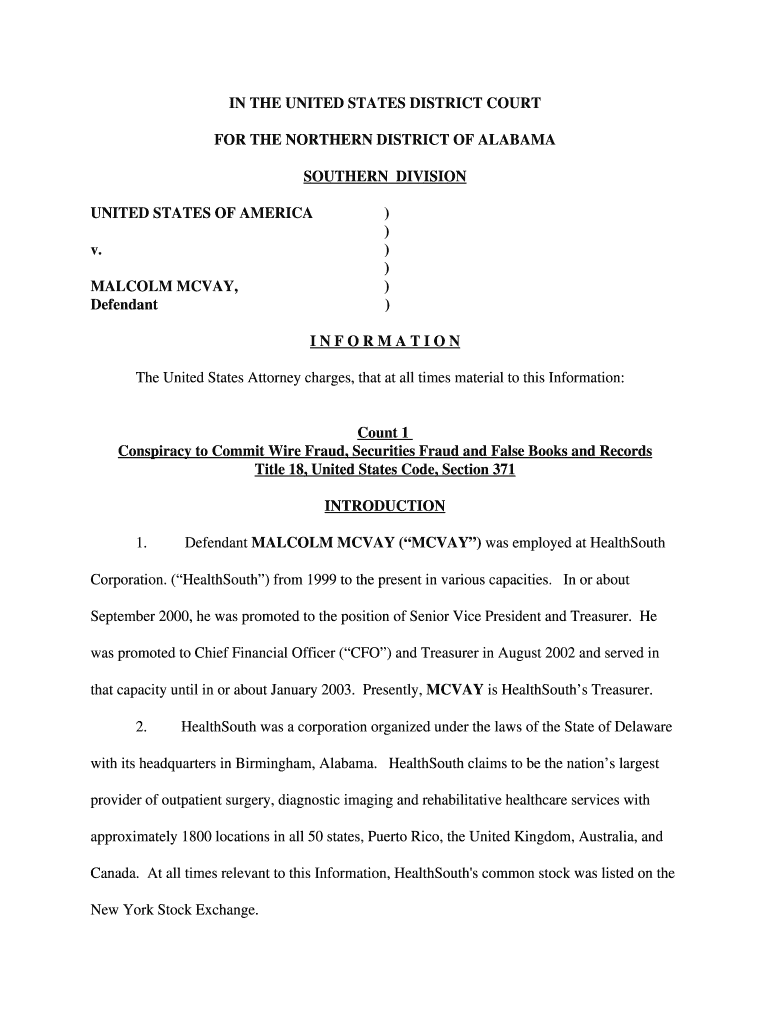
The form titled "The United States Attorney charges, that at all times material to this Information - justice" is a formal legal document used in U.S. federal prosecutions. It outlines the charges brought against an individual or entity by the United States Attorney's office. The document provides detailed allegations of wrongdoing, including specific statutes violated and the nature of the offenses, which can range from fraud to other federal crimes. This form serves as an official statement of the charges and marks the commencement of a criminal case in a federal court.
Key Elements of the Form
The form contains several critical components that ensure the defendant is fully informed about the charges:
- Defendant's Information: Includes the name and identifying details of the accused.
- Charges: A detailed list of legal violations, specifying the statutes allegedly violated.
- Factual Allegations: A narrative of the material facts surrounding the purported criminal activity, which must be specific enough to sustain the charges.
- Jurisdiction: Identifies the federal jurisdiction where the charges are filed, often based on where the crime was allegedly committed.
- Possible Penalties: While not always detailed in this document, potential legal repercussions are implied through the charges.
How to Use This Document
The form serves as a crucial component of the criminal justice process. Legal professionals, including defense attorneys, use the information in the document to prepare their client's defense strategy. The form is also pivotal in pre-trial proceedings, where parties discuss the sufficiency of the allegations and any potential plea negotiations. Individuals who are charged should immediately seek legal counsel to understand the implications and plan an appropriate legal response.
Legal Use of the Form
In the context of the U.S. justice system, this form is used to formally commence a federal criminal prosecution. It provides a record for the court and the accused of the specific allegations brought against them. This legal document is critical because it filters frivolous claims, requiring a factual basis for charges under the scrutinous standard of probable cause. The form also ensures uniformity in legal proceedings across different federal courts.
Important Terms Related to the Form
Understanding the form requires familiarity with several key legal terms:
- Indictment: An alternative to this information, where a grand jury formally charges an individual.
- Probable Cause: The standard by which the accusations must be supported, indicating a reasonable basis for believing the accused committed the crime.
- Conspiracy: A common charge that involves multiple parties agreeing to commit a criminal act.
- Wire Fraud: A federal crime involving the use of electronic communications to carry out a deceptive scheme.
Steps to Complete the Form
Although typically completed by a U.S. Attorney, understanding the process is important:
- Initiation: The U.S. Attorney’s office gathers evidence against the accused.
- Drafting: Legal professionals draft the document, enumerating the charges and factual allegations.
- Approval: Senior officials in the U.S. Attorney’s office review and approve the charges.
- Filing: The document is filed with the appropriate federal court, officially initiating proceedings.
- Notification: The accused and their legal representation receive a copy of the document, allowing for preparation of a defense.
Penalties for Non-Compliance
If an individual fails to respond to the charges in the form, they risk severe legal consequences:
- Arrest Warrants: Non-response may lead to the issuance of a warrant for arrest.
- Default Judgments: The court may proceed with the case without the accused’s input, potentially resulting in a guilty verdict.
- Increased Sentencing: Lack of cooperation can be factored into sentencing, often leading to stricter penalties.
Who Typically Uses the Form
This document is predominantly used by federal prosecutors to bring charges against individuals or organizations believed to have committed federal crimes. It is essential for defense attorneys, as they utilize the form to devise legal strategies for their clients. Additionally, judges use the document as a basis to understand the charges and make rulings on motions related to the sufficiency of the allegations.