






Definition and Meaning
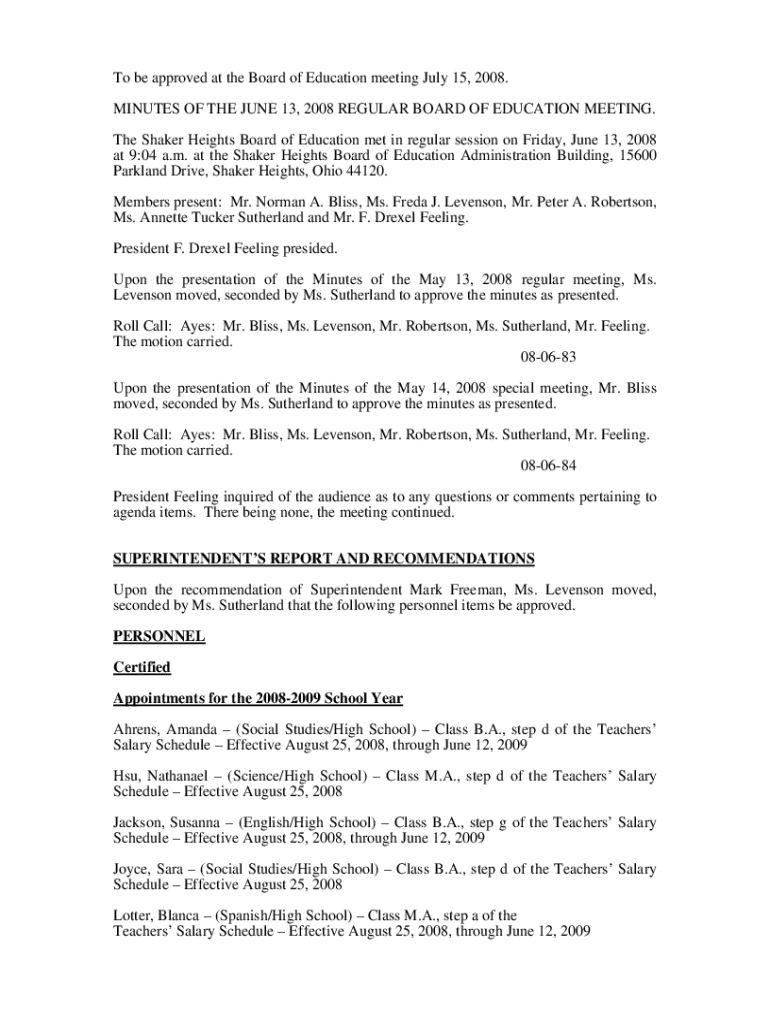
The Shaker Heights Board of Education met in regular session on Friday, June 13, 2008, is a formal gathering of the Shaker Heights Board of Education where official decisions pertaining to the school district are made. During such sessions, the board discusses and approves various agenda items, including budgets, personnel changes, and updates on educational programs. The decisions made impact school operations and policies, affecting students, faculty, and the broader community within the Shaker Heights district.
Key Elements of the Meeting
Key elements of this meeting typically include:
- Attendance Records: Documentation of the individuals present at the meeting, including board members and sometimes members of the public.
- Approval of Previous Meeting Minutes: Formal acceptance of the notes from past meetings, ensuring that records are accurate and agreed upon.
- Personnel Appointments: Discussion and approval of any staff changes for the upcoming school year, which can affect staffing levels and personnel planning.
- Budget Approvals: Consideration and sanctioning of financial reports and budgets, essential for the operation of the school district.
- Educational Program Updates: Review and discussion of ongoing and new educational initiatives, providing oversight of the district's academic offerings.
Steps to Complete and Document the Meeting
- Prepare the Agenda: Create a detailed agenda outlining all topics that will be discussed during the meeting.
- Record Attendance: Note who is present, which is crucial for verifying quorum and participation.
- Discuss Each Agenda Item: Considerations include voting on motions, discussing reports, and deliberating on new proposals.
- Approve Meeting Minutes: Evaluate the minutes from the last meeting and amend them if necessary before granting formal approval.
- Close the Meeting: Formally adjourn after all agenda items have been addressed, setting the stage for the next meeting.
How to Obtain Meeting Minutes
The minutes of the Shaker Heights Board of Education meeting held on June 13, 2008, can be accessed by contacting the board's administrative office. Typically, such documents are available to the public through:
- Board's Official Website: Many education boards publish meeting minutes online for transparency and easy access.
- Direct Request: Contacting the board directly through phone or email to request a copy of the minutes.
- Local Library or Archive: Sometimes, records are archived in local libraries where they can be reviewed by the public.
Legal Use of Meeting Details
The detailed records from meetings like these can be used for:
- Reference for Policy Implementation: Ensuring that decisions are followed according to official directives.
- Public Transparency: Offer insights into how decisions impacting schools are made, promoting accountability.
- Legal Reference: In some cases, meeting minutes can be used in legal settings to verify decisions and actions taken by the board.
Important Terms Related to Board Meetings
- Quorum: The minimum number of members required to be present for the meeting to be valid.
- Motion: A proposal put forward for discussion and decision during the meeting.
- Minutes: The official record of what transpired during the meeting, including discussions, decisions, and votes.
State-Specific Rules
While the general structure of board meetings follows a standard protocol, state-specific rules may dictate:
- Open Meeting Laws: Regulations ensuring that meetings are conducted openly and with public access.
- Archival Requirements: Rules on how long meeting minutes must be preserved and in what format.
- Notification Guidelines: Procedures for announcing upcoming meetings to the public, ensuring adequate notice is given.
Examples of Using Meeting Outcomes
The results and outcomes of board meetings have real-world implications, such as:
- Implementation of New Policies: Based on approved recommendations, which directly affect school operations.
- Staff Adjustments: Resulting from approved appointments or changes, impacting classroom dynamics and teaching quality.
- Financial Alignment: Ensuring that budgets align with educational goals and resources are adequately allocated.
Digital vs. Paper Version of Records
Meeting records are often available in both digital and paper formats. Digital versions offer:
- Ease of Access: Quickly downloadable from the official website.
- Searchability: Allowing easy navigation and reference.
- Environmental Benefits: Reducing the need for paper and physical storage.
Paper versions, on the other hand, might be necessary for formal filing or when digital access isn’t possible.