






Definition and Meaning of Dentist Report
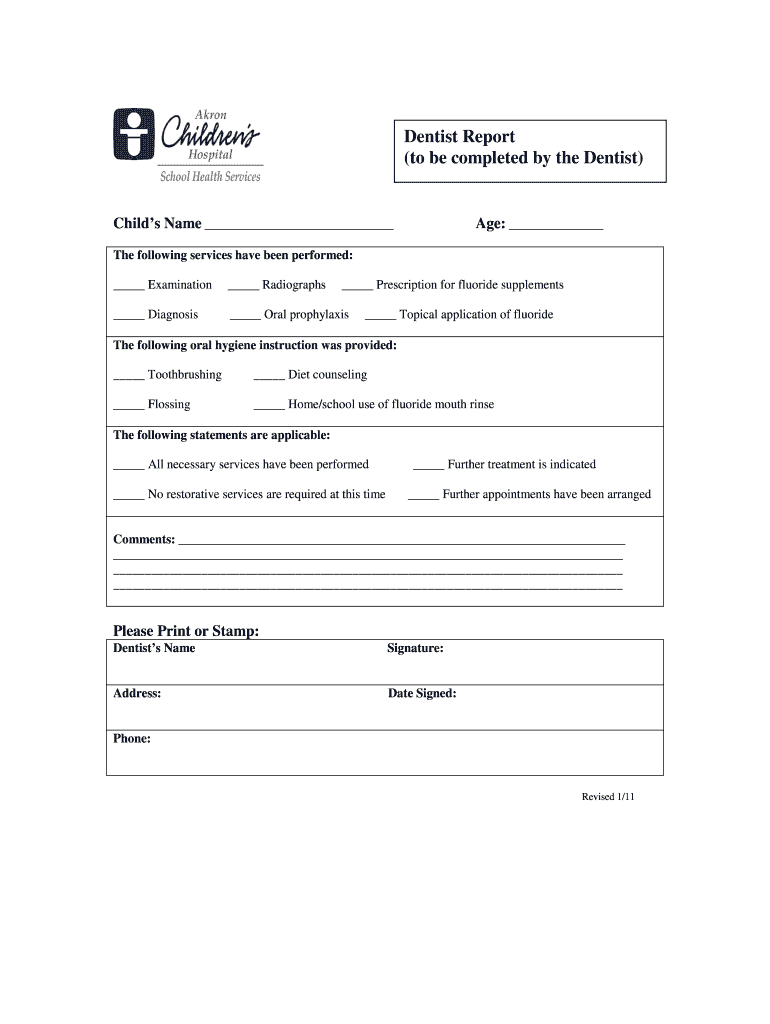
A "Dentist Report" is a detailed document that outlines the dental health status of a patient, typically after a routine check-up or specific dental consultation. For children, this report often encompasses the various treatments performed, oral hygiene recommendations, and follow-up care required. Such a report aids in maintaining an ongoing record of dental health, allowing caregivers and healthcare providers to track changes, observe patterns, and make informed decisions regarding future dental care. By understanding the components and purposes of a Dentist Report, parents and guardians can better engage with their child's oral healthcare needs.
How to Use the Dentist Report
The Dentist Report serves multiple purposes across different contexts. For parents, it provides an overview of their child's dental health status, ensuring they are informed about any immediate concerns or ongoing dental issues that need attention.
- Informing Future Appointments: Utilize the report to determine when the next dental visit should be scheduled, leveraging recommendations made by the dentist.
- Communication Tool: The report can be shared with other healthcare providers to ensure comprehensive care.
- Insurance and Reimbursements: It may be required by insurance companies to process claims related to dental procedures.
Understanding how to apply the information contained in the report can streamline dental care planning for both the caregiver and the healthcare provider.
Steps to Complete the Dentist Report
Completing a Dentist Report involves several key steps to ensure all necessary information is accurately documented:
- Detail Patient Information: This includes the child’s full name and age, serving as identifiers for the report.
- Record Services Rendered: Document all dental services performed, which may include examinations, cleanings, sealants, or fluoride treatments.
- Note Oral Hygiene Instructions: Summarize any recommendations regarding daily oral care practices such as brushing and flossing.
- Outline Follow-up Treatments: If additional appointments or treatments are needed, these should be clearly indicated.
- Comments and Observations: The dentist should provide any additional observations that might be relevant for the child’s dental health.
These steps ensure a comprehensive and useful Dentist Report, facilitating ongoing dental care management.
Key Elements of the Dentist Report
The Dentist Report should include several critical elements, each serving to provide a full picture of the patient's dental health:
- Patient and Dentist Identification: Include the names and credentials of both the patient and the dentist to validate the report.
- Treatment Overview: Detailing what procedures were performed is crucial for tracking dental history.
- Hygiene Recommendations: Precise instructions aid in preventing future dental issues.
- Follow-up Care: Scheduled or suggested follow-up appointments need to be outlined for continuity of care.
Having these elements ensures the report covers all necessary aspects for effective communication and future dental care planning.
Important Terms Related to Dentist Report
Familiarizing oneself with the terminology used within a Dentist Report can enhance understanding and application:
- Fluoride Treatment: Application of fluoride to teeth to strengthen enamel and prevent cavities.
- Plaque and Tartar: Build-ups that can lead to tooth decay if not managed through regular cleaning.
- Sealants: Protective coatings applied to the chewing surfaces of teeth, often used for children.
- Gingivitis: An early form of gum disease that can lead to more severe periodontal issues if untreated.
Clear understanding of these terms fosters better communication between the dentist and the caregiver, ensuring the child’s dental health is monitored and managed efficiently.
Legal Use of the Dentist Report
Dentist Reports serve important legal functions in various circumstances:
- Medical Records: Part of the patient's permanent health record, providing legal documentation of care provided.
- Insurance Claims: Used to justify treatments and secure coverage for dental procedures.
- Educational Support: May be utilized to fulfill health record requirements for school admissions or extracurricular activities.
Legal utilizations emphasize the importance of maintaining accurate and detailed reports as part of a broader medical documentation framework.
Who Typically Uses the Dentist Report
Primarily, the Dentist Report is utilized by:
- Parents and Guardians: To stay informed about their child's oral health and follow up on recommended dental care.
- Dentists and Oral Health Professionals: For record-keeping and planning future care regimens.
- Insurance Providers: To validate claims and authorize coverage for dental procedures and treatments.
Understanding who uses the Dentist Report provides insight into its multifaceted role in dental health management.


Examples of Using the Dentist Report
Real-world scenarios demonstrate how the Dentist Report is applied:
- Routine Check-ups: After every dental visit, a report is generated detailing the child's current oral health and any interventions made.
- Post-treatment Documentations: Following significant procedures like cavity fillings or orthodontic assessments, the report is updated to reflect the completion of these services.
- School Records: Sometimes schools require health documentation for sports participation, where these reports can substantiate a child's eligibility or need for accommodations.
These examples underscore the practical applications of a Dentist Report in managing and maintaining an individual’s comprehensive oral health record.