






Definition & Meaning
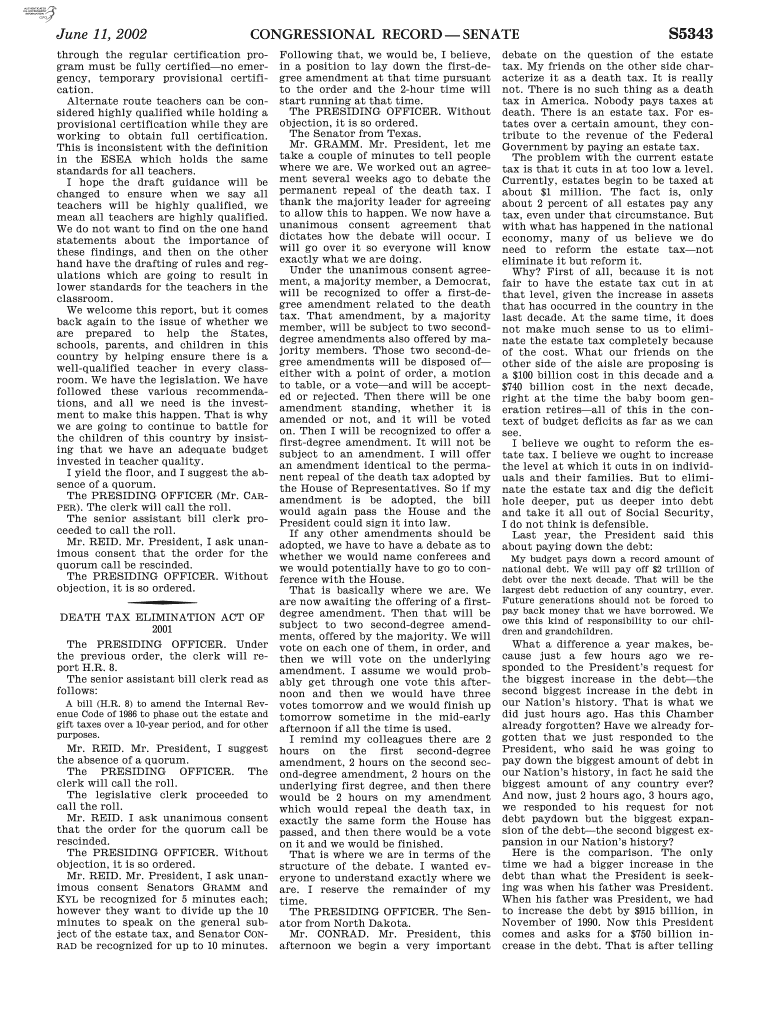
The "DEATH TAX ELIMINATION ACT - Congress" refers primarily to legislative proposals aimed at repealing or significantly modifying the United States federal estate tax, often referred to as the "death tax." This tax is imposed on the transfer of the estate of a deceased person. Such proposals often arise in congressional discourse, reflecting ongoing debate over tax policy, fairness, and economic impact. The act suggests abolishing the estate tax to reduce the financial burden on heirs, particularly affecting family-owned businesses and farms. Understanding this legislative context is crucial for comprehending its potential implications.
Key Elements of the Death Tax Elimination Act
Proposals for the Death Tax Elimination Act typically include several key components:
- Repeal of the Federal Estate Tax: Complete abolishment of current estate taxes.
- Adjustment of Tax Rates: Modification or elimination of certain tax rates applied to estates.
- Increased Exemption Thresholds: Raising the exemption amount under which estates are not taxed, thereby reducing the number of estates subject to taxation.
- Protection Measures for Family Businesses and Farms: Legislative safeguards to ease tax burdens on family-owned entities.
These elements aim to provide relief to taxpayers while addressing concerns around fiscal responsibility and economic growth.
How to Use the Death Tax Elimination Act in Congress
The Death Tax Elimination Act, serving as a legislative proposal, is primarily utilized by legislators and policymakers. Those interested in supporting such legislation can engage through:
- Lobbying Congress Members: Advocacy groups or individuals can campaign for the act by meeting with legislative representatives.
- Public Campaigns: Educating the public and rallying for support through media outlets and informational campaigns.
- Submitting Testimonies: Citizens and stakeholders may submit written or verbal testimonies during congressional hearings to support or oppose the bill.
Awareness and active participation in the legislative process are critical for influencing the act’s progress.
Steps to Complete the Death Tax Elimination Act by Congress
While not a form to be completed by individuals, supporting or opposing such legislation involves a sequence of steps:
- Understand the Proposal: Familiarize yourself with the specifics of the act and its implications.
- Identify Stakeholders: Engage with groups or individuals who are directly affected.
- Communicate with Legislators: Write to or meet with representatives to express views.
- Participate in Public Hearings: Attend and participate in committee hearings when scheduled.
- Track Progress: Follow the bill’s journey through legislative sessions for updates and required actions.
These steps are essential for those who wish to influence legislative outcomes.
Who Typically Uses the Death Tax Elimination Act in Congress
This legislative act mainly engages the following groups:
- Lawmakers and Senators: They propose, debate, and vote on the bill.
- Advocacy Groups: Organizations focused on tax reform and economic policy may champion the act.
- Small Business and Farm Owners: These stakeholders are often most impacted and thus actively involved in advocacy efforts.
- Economic Policy Analysts: They evaluate and project the potential impacts on the economy and taxation systems.
Understanding who is involved can guide effective advocacy and educational strategies.


State-Specific Rules Related to the Death Tax Elimination Act
While the federal estate tax is uniform across the U.S., states may have their own estate or inheritance taxes:
- Varying Exemption Thresholds: States can implement differing exemption thresholds below which no state tax is owed.
- State-specific Rates: Some states levy their own, independent estate taxes, which are impacted differently by federal legislative changes.
- Local Advocacy Needs: Regional efforts may be necessary to address unique state tax policies in conjunction with federal proposals.
These variations necessitate state-specific advocacy strategies to align and adjust to both federal and state tax law landscapes.
IRS Guidelines for the Death Tax Elimination Act
Though the IRS enforces current estate tax laws, any enactment of the Death Tax Elimination Act would require:
- Publication of New Guidelines: Clarification on how the elimination affects existing estate planning and tax processes.
- Training for IRS Personnel: Ensuring IRS employees understand and effectively implement any changes.
- Taxpayer Notifications: Informing taxpayers about changes via official channels, and providing guidance on transitioning to new regulations.
Following these guidelines will ensure a smooth compliance process for affected individuals and businesses.
Legal Use of the Death Tax Elimination Act
From a legal perspective, the act governs the cessation of the estate tax at the federal level. Important legal considerations include:
- Compliance with Existing Law: Until formally enacted, existing estate tax laws remain in effect.
- Tax Planning Adjustments: Estate planners and legal professionals must adjust strategies to comply with any enacted changes.
- Judicial Reviews: Potential for court challenges, especially concerning constitutional and equity issues.
Understanding these legal implications aids practitioners in advising clients on future planning under evolving law.