






Understanding Parenting Style Differences
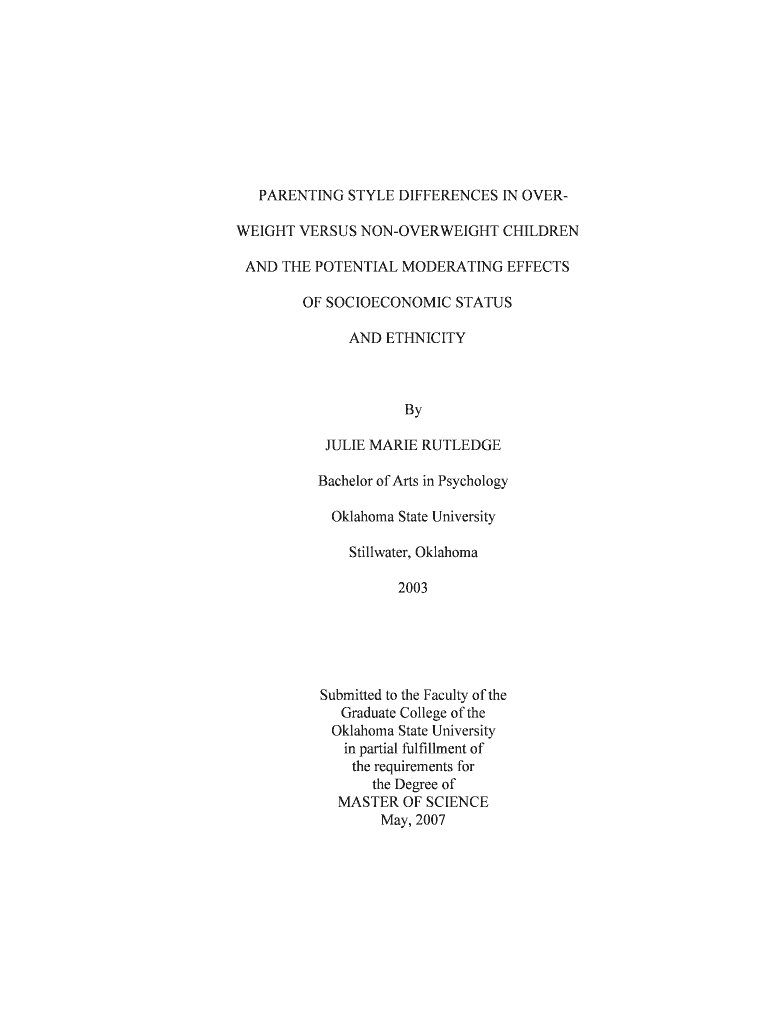
Parenting style differences refer to the varied approaches parents use in raising their children. This concept encompasses the strategies, practices, and norms parents employ, which can significantly impact a child's development. The study by Julie Marie Rutledge, as mentioned in the Oklahoma State University digital library, highlights how parenting styles differ between overweight and non-overweight children, influenced by factors like socioeconomic status and ethnicity. For instance, the permissive style observed among Native American mothers contrasts with the more authoritarian approach seen among European American mothers. Understanding these differences is crucial for developing effective parenting strategies that promote healthy development.
Practical Implementation of Parenting Styles
To apply insights from the document on parenting styles effectively, one might consider tailoring parenting strategies according to the child's unique needs and circumstances. For example, recognizing when a more authoritative approach is necessary for setting boundaries, or when a permissive style might be beneficial in fostering creativity. The document suggests interventions that accommodate cultural and socioeconomic backgrounds, ensuring that parenting methods are adaptable and considerate of the child’s environment. Implementing these strategies involves ongoing observation and flexibility to adjust parenting approaches as necessary.
Obtaining Insightful Resources from the OSU Digital Library
The Oklahoma State University digital library offers a wealth of resources for those interested in further exploring parenting styles. Accessing these materials is straightforward: users can search the library’s database using the title of the specific thesis or relevant keywords. Once located, documents can generally be viewed and downloaded, providing valuable academic insights. These resources are especially useful for researchers, educators, or parents seeking evidence-based strategies to improve child-rearing practices.
Completing the Analysis of Parenting Styles
The document outlines specific steps for analyzing parenting styles. First, researchers must classify parents based on their predominant style—authoritative, authoritarian, permissive, or uninvolved. Next, factors such as socioeconomic status and ethnicity are considered to understand their influence on parenting styles and children’s outcomes. Using statistical methods like logistic regression, as highlighted in Rutledge’s study, one can quantitatively assess the relationship between parenting styles and children's weight status. Finally, these insights are collated to form evidence-based recommendations for adapting parenting techniques.
Reasons to Study Parenting Style Differences
Studying parenting style differences is crucial as it helps in understanding how various approaches affect child development outcomes. Insights from these studies guide parents in making informed decisions that promote the physical and emotional well-being of their children. Furthermore, educators and policymakers can leverage this information to craft interventions that address the specific needs of different communities, ultimately reducing disparities in child health and development outcomes.
Who Utilizes Information on Parenting Styles
Information on parenting style differences is valuable to a wide range of individuals and professionals. Parents and caregivers are the primary users, benefiting from tailored strategies that improve child-rearing practices. Educators and school counselors use these insights to support students from diverse backgrounds. Additionally, health professionals and policymakers rely on this data to form policies and interventions that address childhood obesity and other health issues.
Key Concepts in Parenting Style Research
Understanding key terms and concepts associated with parenting style research is essential. Terms such as "authoritative," "authoritarian," "permissive," and "uninvolved" define distinct parenting approaches. Concepts like socioeconomic status and ethnicity help contextualize these styles, illustrating how external factors influence parenting. Recognition of these key elements aids in the comprehensive analysis and application of parent-child interaction strategies.
Legal Implications of Parenting Styles
While parenting styles themselves are not legislated, their outcomes can have legal implications. For instance, extreme forms of authoritarian control may cross into issues of neglect or abuse, attract legal scrutiny. Moreover, understanding the legal definitions of child welfare standards ensures parenting practices comply with state and federal regulations. Professionals working with families must be aware of these legal aspects to advocate effectively for healthy parenting practices.
Key Components Identified in the Thesis
Julie Marie Rutledge's thesis identifies several critical components concerning parenting styles. Key findings include the correlation between permissive parenting and increased weight risk in children, particularly amongst Native Americans. Furthermore, the study emphasizes how socioeconomic status and ethnicity act as moderating variables, influencing the parenting approach and outcomes differently across cultural and economic spectrums. These components underscore the complexity and variability inherent in effective parenting strategies.
State-Specific Observations
While the thesis primarily provides an overarching view of parenting style differences, it also touches upon state-specific observations, particularly within Oklahoma. Such insights are critical because state policies and cultural norms can considerably influence parenting practices. By acknowledging these differences, parents and policymakers can devise targeted interventions that respect local customs and effectively address region-specific challenges faced by children and families.
Case Studies: Impact of Parenting Styles
The thesis includes case studies that exemplify the impact of various parenting styles. For instance, families employing an authoritarian style may adhere to stricter dietary controls, leading to lower obesity rates. Conversely, permissive parenting in other cases might result in less regulated eating habits, contributing to higher instances of overweight children. These case studies highlight the practical implications of parenting styles and emphasize the need for a nuanced understanding to address child health effectively.