






Definition & Meaning
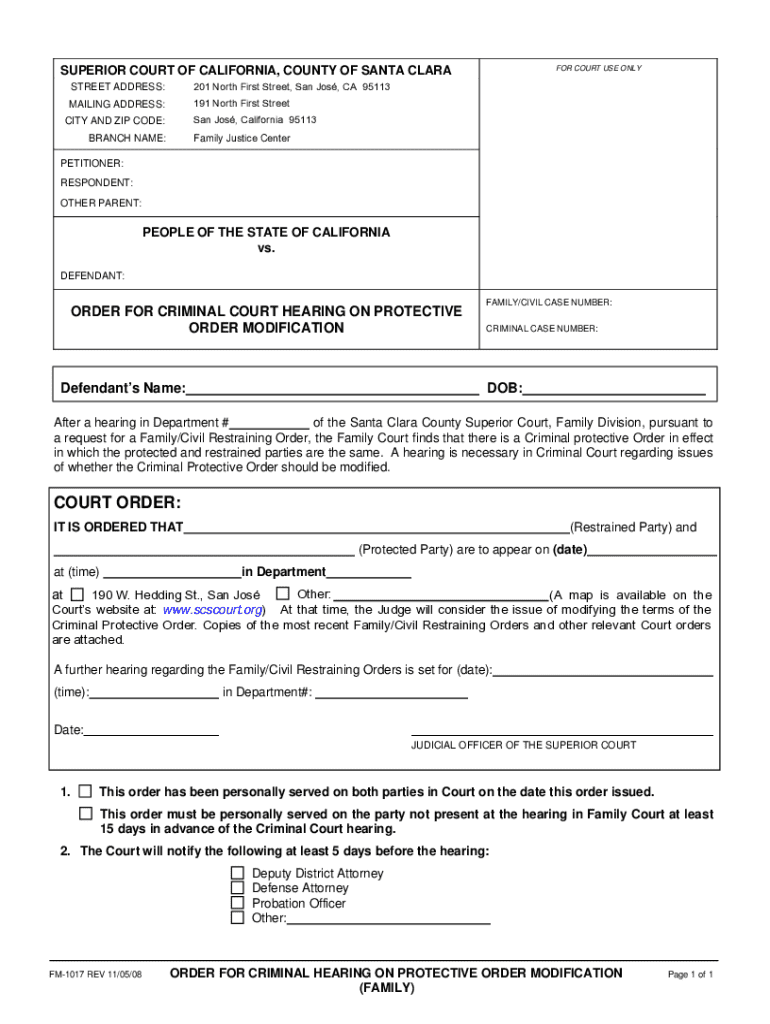
The HomeSuperior Court of California, County of Santa Clara form is a legal document related to hearings for modifying Criminal Protective Orders connected to Family or Civil Restraining Orders. This form serves as an official order that dictates the procedural requirements and appearance mandates for restrained and protected parties involved in the case. Understanding this form is crucial for ensuring compliance with court instructions and timelines, which affect the outcomes of legal proceedings.
- Purpose: The form is used to modify existing protective orders, ensuring that all parties are aware of and comply with new legal obligations.
- Scope: It involves appearances by the restrained and protected parties, with detailed procedural requirements.
How to Use the HomeSuperior Court of California, County of Santa Clara Form
To effectively use the HomeSuperior Court of California, County of Santa Clara form, individuals must carefully adhere to the instructions provided within the form. These include attending scheduled hearings and abiding by set procedural requirements.
- Review the Form: Begin by thoroughly reading the entire form to understand your obligations and the modifications being proposed.
- Prepare for Court Appearances: Note the date, time, and location for the hearing, making necessary arrangements to appear in court as required.
- Meet Notification Requirements: Ensure that all parties involved are properly notified as stipulated in the form, which may include serving copies of the order and any related documents.
Steps to Complete the HomeSuperior Court of California, County of Santa Clara Form
Completing the HomeSuperior Court of California, County of Santa Clara form involves a series of methodical steps designed to ensure accuracy and compliance.
- Gather Required Information: Obtain all relevant details, including names, case numbers, and existing court orders.
- Fill Out the Form: Accurately complete each section, paying particular attention to details such as dates and participant information.
- Review and Verify: Double-check all entered information for errors or omissions to prevent potential delays.
- Submit as Directed: Submit the completed form to the designated court office in accordance with the instructions provided.
Legal Use of the HomeSuperior Court of California, County of Santa Clara Form
The legal use of this form mandates strict adherence to judicial processes outlined by the Superior Court of California, County of Santa Clara. Failure to comply with these protocols may lead to legal penalties or delays in the progression of the case.
- Court Appearance Obligations: Ensures all involved parties are present for court proceedings unless otherwise excused.
- Notification and Service: Requires proper service of modified orders to relevant parties to maintain transparency and legal integrity.
Key Elements of the HomeSuperior Court of California, County of Santa Clara Form
This legally binding document includes several critical elements that must be accurately completed to ensure its validity.
- Order Details: Specifics about the modifications to the existing order, outlining changes to restraining terms.
- Hearing Information: Details the schedule and location for necessary court appearances.
- Procedural Requirements: Lists required actions by the restrained and protected parties, including service and notification steps.
Important Terms Related to the Form
Understanding the terminology used in the HomeSuperior Court of California, County of Santa Clara form is essential for correctly interpreting its contents and following its instructions.
- Restrained Party: The individual against whom the protective order is directed.
- Protected Party: The individual for whom the protective order is intended to offer protection.
- Notification Requirements: The legal obligation to inform parties about changes to the order and upcoming hearings.
State-Specific Rules for the Form
This form is governed by specific rules applicable within the state of California, particularly the County of Santa Clara. Familiarity with these local statutes is critical for ensuring proper compliance and adherence to applicable legal standards.
- California Family Code Compliance: All modifications must align with the regulations set forth by the state’s family code.
- County-Specific Procedures: Procedures vary by county, so references to Santa Clara protocols are essential for this form.
Penalties for Non-Compliance
Non-compliance with the instructions or requirements detailed in the HomeSuperior Court of California, County of Santa Clara form can result in serious legal repercussions.
- Missed Appearances: Failing to appear in court as instructed can lead to contempt charges or default judgments.
- Improper Notification: Inadequate notification of involved parties may invalidate the order modifications or result in additional legal actions.
These sections provide a comprehensive guide to understanding and managing the HomeSuperior Court of California, County of Santa Clara form, ensuring users are well-prepared to comply with its requirements across different contexts.