






Definition & Meaning
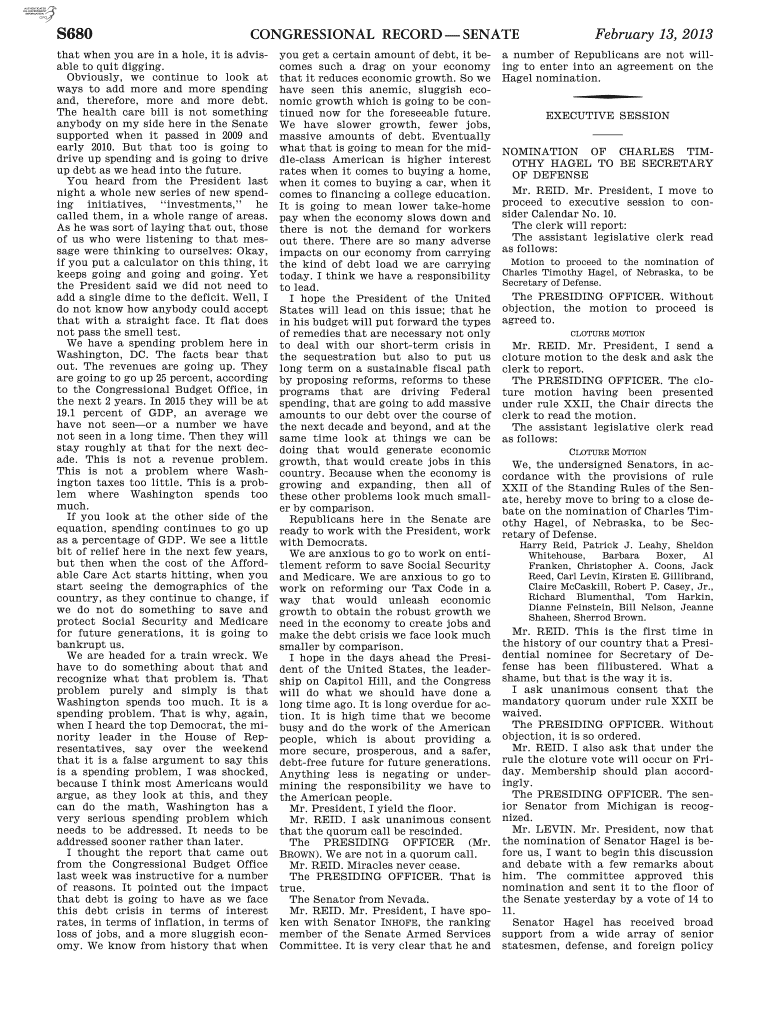
The term "jbell on DSK7SPTVN1PROD with SENATE S680 that when you are in a hole, it is advisable to quit diggin" appears to reference a legislative document or procedural note that may relate to discussions in the U.S. Senate. It suggests the practice or advice of stopping potentially damaging actions in fiscal policy contexts by interpreting the adage, "when you are in a hole, quit digging." This could involve recommendations for fiscal caution or halting unproductive spending practices, as indicated by famous legislative discussions on similar topics.
Key Elements of the Form
Key elements associated with the "jbell on DSK7SPTVN1PROD with SENATE S680" would likely include:
- The Document Type: Understanding whether this is a resolution, discussion paper, or another formal document.
- Primary Objectives: The goals of addressing fiscal issues or reforms as outlined within.
- Participants: Identification of primary authors or Senate members involved.
- Associated Sections: Breakdown of major sections or clauses that advocate specific actions or suggestions, such as budget reductions or financial caution.
Legal Use of the Document
Understanding the legal implications of “jbell on DSK7SPTVN1PROD with SENATE S680” involves:
- Authority: Knowing the governing law or legislative authority under which this document operates.
- Implementation: How and when specific recommendations or mandates are applied.
- Compliance: Responsibilities for different governmental or corporate bodies.
- Challenges: Potential legal challenges or issues raised over its content or proposals.
Who Typically Uses This Form
The document might be used by:
- Senators and Legislative Staff: For discussions around financial policies.
- Policy Analysts: To analyze the impact of recommendations on national finances.
- Lobbyists and Advocacy Groups: Pushing for or against suggested reforms.
- Academic Researchers: Studying governmental fiscal strategies or legislative effectiveness.
How to Obtain the Document
To access the "jbell on DSK7SPTVN1PROD with SENATE S680" form:
- Senate Records: Visit a governmental repository or the official U.S. Senate website.
- Library of Congress: Access standardized government documents.
- Online Databases: Use legal and legislative databases such as LexisNexis or Westlaw.
- Direct Requests: Participate in Senate hearings or public documentation requests.
Examples of Document Application
Practical applications of such a document or advisory include:
- Policy Guidance: Advising on ceasing ineffective financial practices during economic downturns.
- Budget Planning: Influencing the design of balanced budgets or amendments to current expenditures.
- Public Discourse: Stimulating discussion on best practices for national financial health.
Important Terms Related
Key terms relating to the document may include:
- Budget Deficit: Exceeding government expenditure over revenue.
- Fiscal Policy: Government revenue and expenditure control.
- Entitlement Reform: Changes in programs like Social Security to ensure sustainability.
- Bipartisan Cooperation: Cross-party collaboration to achieve legislative goals.
Filing Deadlines / Important Dates
Tracking key dates is critical for relevance:
- Senate Sessions: Dates when such discussions or actions may take place.
- Budget Cycles: Annual or biennial cycles affecting financial proposals.
- Legislative Calendars: Published schedules for when specific fiscal policies are addressed.
Penalties for Non-Compliance
If a formal mandate, penalties associated with the document could involve:
- Financial Sanctions: Possible fines or budget cuts for non-adherence.
- Legislative Actions: Turnovers or delays in subsequent funding approvals.
- Public Accountability: Reputation impacts or public critique for non-compliance.
These sections aim to probe deeper into the content, utility, and implications of documents within the Senate, particularly concerning fiscal policy and legislative advice, mirroring potential uses and scenarios around these constructs.