






Definition & Meaning
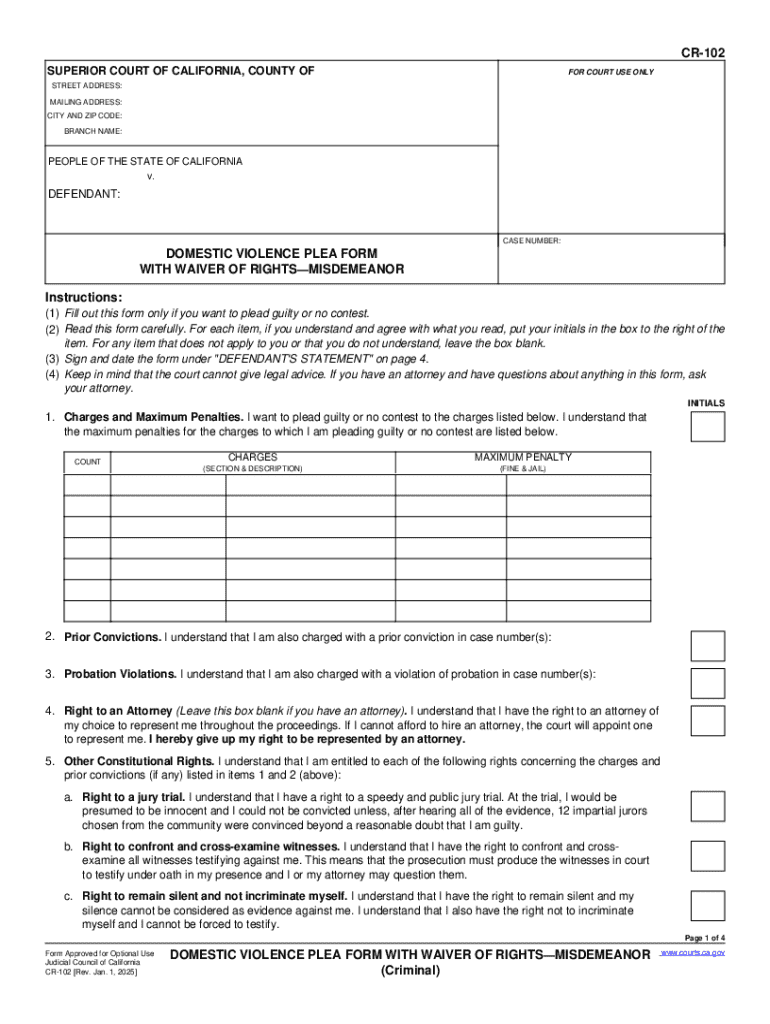
The CR-102 Domestic Violence Plea Form With Waiver of Rights is a legal document used by the Superior Court of California. It allows defendants to enter a plea of guilty or no contest to misdemeanor charges related to domestic violence. By signing this form, defendants acknowledge that they understand the rights they are waiving, including the right to an attorney, a jury trial, and the right to remain silent. The form also details potential penalties and consequences associated with the plea, ensuring that defendants comprehend the implications before proceeding.
Key Elements of the CR-102 Form
The CR-102 form comprises several critical sections designed to ensure that defendants are fully aware of their rights and the legal implications of their plea. Key elements include:
- Defendant Information: Captures personal details such as name, case number, and contact information.
- Rights Waiver: Lists the rights being waived, including the right to an attorney, a jury trial, and others.
- Plea Terms: Outlines the type of plea entered (guilty or no contest) and any conditions or terms accompanying the plea.
- Potential Penalties: Describes potential punishments, including fines, probation, or incarceration.
- Acknowledgment: Requires defendants to confirm their understanding of the plea's consequences by signing the document.
Steps to Complete the CR-102 Form
Completing the CR-102 form involves several detailed steps to ensure accuracy and compliance:
- Read the Form Thoroughly: Defendants should carefully read all sections of the form to understand the rights they are waiving and the plea terms.
- Provide Personal Information: Fill in the required fields with personal details, such as name and contact information.
- Understand the Rights Waiver: Review the waiver section and ensure comprehension of all rights being forfeited.
- Enter Plea Information: Clearly indicate whether the plea is guilty or no contest, and note any related conditions.
- Sign and Date: The defendant must sign and date the form to acknowledge their understanding and agreement to the terms.
How to Obtain the CR-102 Form
Obtaining the CR-102 form can be done through various methods to suit different needs and preferences:
- Local Courthouse: Forms are typically available at the courthouse where the case is being heard.
- Online Resources: Many courts offer downloadable versions of the form on their official websites.
- Legal Representation: Attorneys can provide clients with the necessary documents and guidance for completion.
Who Typically Uses the CR-102 Form
The CR-102 form is utilized by specific individuals and parties involved in domestic violence-related legal proceedings:
- Defendants: Individuals charged with misdemeanor domestic violence who wish to plead guilty or no contest.
- Attorneys: Legal representatives who assist their clients in understanding and completing the form.
- Judicial Personnel: Judges and court clerks involved in processing and verifying the form's submission and accuracy.


Legal Use of the CR-102 Form
The legal use of the CR-102 form is bound by specific regulations and guidelines:
- Court Admissibility: The form is a standard legal document required for court proceedings in cases of misdemeanor domestic violence pleas.
- Binding Agreement: Once signed, the form serves as a binding agreement between the defendant and the court, indicating that the defendant is waiving certain legal rights.
- Documentation: It acts as documented evidence of the defendant's informed decision-making during their case.
Important Terms Related to the CR-102 Form
Several important terms are associated with understanding and using the CR-102 form effectively:
- Probation: A period during which the defendant must comply with specific conditions instead of serving time in jail.
- Waiver: The intentional relinquishment or abandonment of a known legal right.
- No Contest: A plea where the defendant neither disputes nor admits to committing the crime but accepts the court's punishment.
State-Specific Rules for the CR-102 Form
While the CR-102 form is used statewide in California, certain local jurisdictions may have additional requirements or considerations:
- Local Variations: Some counties might have specific protocols for submitting or processing the form.
- Supplemental Forms: Depending on the court's location, supplementary forms or documents might be required.
Examples of Using the CR-102 Form
Utilizing the CR-102 form involves real-world applications and scenarios:
- Scenario One: A defendant pleads guilty to a misdemeanor domestic violence charge, opting to use the form to waive their right to a trial.
- Scenario Two: An attorney advises their client on completing the form accurately to ensure all rights and obligations are clear and legally binding.
- Scenario Three: A judge reviews the submitted form to ensure compliance with court requirements and verifies that the defendant fully understands their waived rights.