






Overview of Electronic Subject Guides in Literary Studies
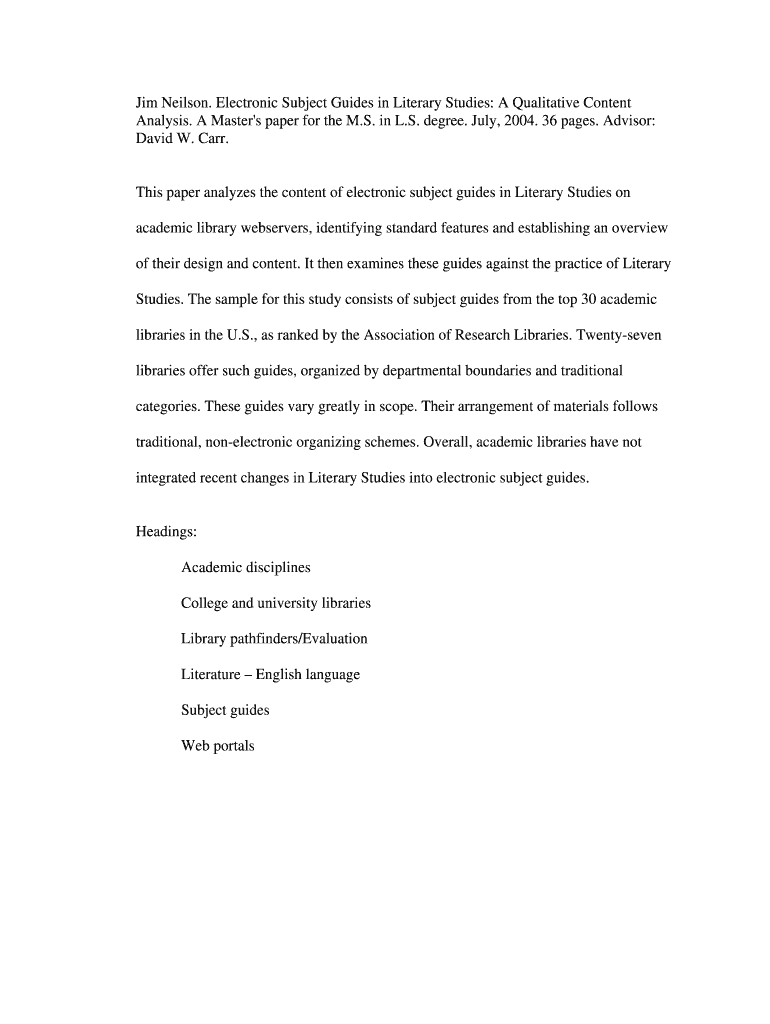
Electronic Subject Guides in Literary Studies at the UNC School of are designed to support students, faculty, and researchers by providing curated resources for literary studies. These guides integrate traditional literary tools with digital resources, enhancing research and learning experiences in the field of literary studies.
How to Use the Guides
Navigating the Guides
- Search through comprehensive databases and library catalogs.
- Utilize subject-specific resources for in-depth research.
- Access digital archives for historical or rare literary works.
Resource Selection
- Choose from categorized sections based on literary periods, theory, or critical approaches.
- Use links to relevant journals and articles for current research developments.
Steps to Access and Complete Guides
Accessing the Guides
- Visit the UNC School of Library website.
- Navigate to the Literary Studies section from the homepage.
- Log in using your student or faculty credentials for full access.
Utilizing the Guides
- Explore subject-specific sections for detailed resources and instructions.
- Participate in webinars or workshops offered through the guide interface for more interactive learning.
Key Elements of the Guides
Features
- Annotated bibliographies and recommended readings.
- Links to digital collections and literature-specific databases.
- Customizable resource lists for various courses and projects.
Integration with Other Tools
- Compatibility with citation management software like Zotero or EndNote.
- Availability of downloadable content for offline use.
Who Typically Uses the Guides


Primary Users
- Undergraduate and graduate students in literary studies.
- Faculty members looking for teaching resources.
- Researchers requiring specialized literature databases.
Secondary Users
- Alumni engaged in continuous learning.
- Interdisciplinary scholars seeking literary context for their own fields.
Important Terms Related to the Guides
Key Concepts
- "Digital Humanities": Intersection of computer technology and literary studies.
- "Intertextuality": Relationship between texts and literary outcomes.
- "Canon": Collection of works considered representative of a period or genre.
Legal Use of the Guides
Compliance and Accessibility
- Guides follow ADA compliance for accessibility.
- All digital materials used are licensed and comply with copyright laws.
Academic Integrity
- Users are encouraged to cite sources appropriately as per academic standards.
- Plagiarism guidelines and policies are integrated within the guide materials.
Examples of Using the Guides
Case Study: Research Project
- A graduate student using the guides to compile resources on post-colonial literature.
- An instructor designing a syllabus for a course on modern American poetry using the guides.
Practical Application
- Accessing historical texts unavailable in physical libraries.
- Collaboration through shared resources with peers and instructors.
Versions or Alternatives to the Guides
Alternative Resources
- Other academic libraries offer similar guides tailored to their specific strengths.
- Independent online platforms provide open-access resources for self-directed learning in literary studies.
Considerations for Selection
- Users might choose based on specific academic focus or additional services offered, such as inter-library loan compatibility or unique archival access.
Digital vs. Paper Version
Advantages of Digital Guides
- Up-to-date content with instant access to the latest publications.
- Environmental benefits with reduced paper consumption.
Considerations for Paper Use
- Ideal for settings with limited digital access or for users who prefer physical interaction with materials.
- Paper versions may include annotations and discussion points not available in digital formats.