






Definition & Meaning
The "final judgment of dissolution of marriage with property but" refers to a court's final order that legally ends a marriage and resolves all issues related to marital property. This document not only represents the legal conclusion of the marriage but also serves as an official record of how assets and debts are divided between the parties. It is crucial in detailing the rights and responsibilities of each party concerning shared property and any awarded spousal support.
Key Components
- Legal Termination: This judgment officially terminates the marriage, allowing both parties to remarry.
- Property Division: Outlines how marital properties and liabilities are distributed.
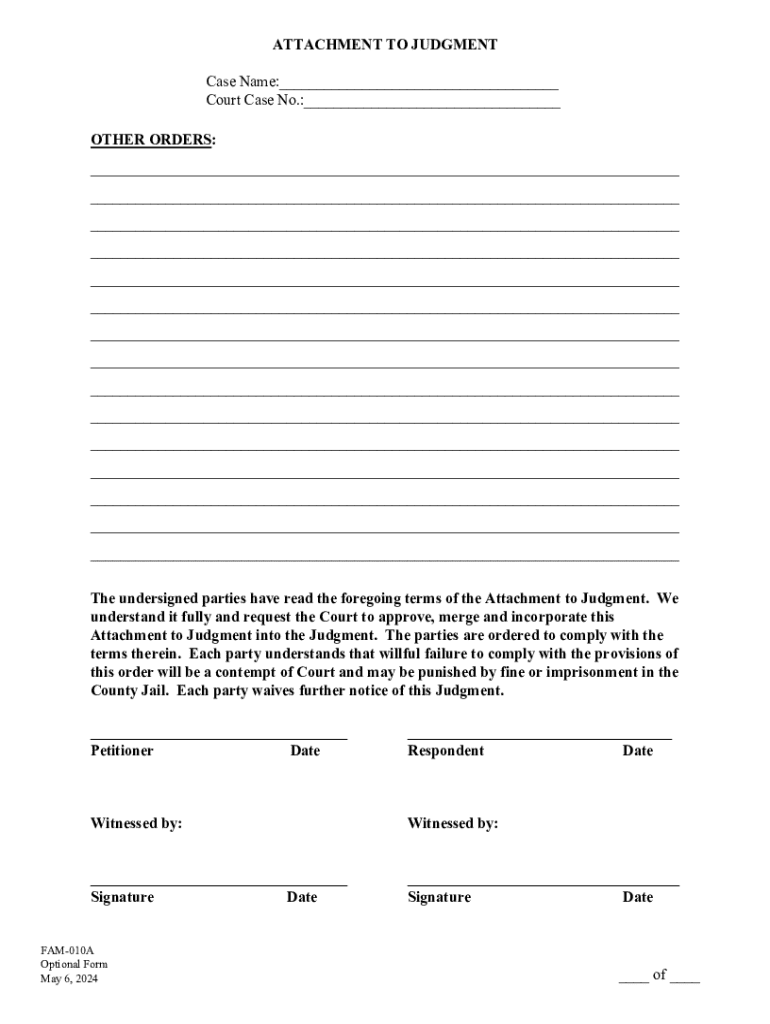
- Additional Orders: May include spousal support or other financial arrangements.
Key Elements of the Final Judgment
The primary elements within this judgment ensure that all aspects of property division are judiciously handled. These elements typically include:
Asset Division
- Real Estate: Allocation of the family home and other real properties.
- Personal Property: Division of household items, vehicles, and collectibles.
- Financial Assets: Bank accounts, investments, and retirement funds are clearly divided.
Debt Allocation
- Spells out who is responsible for joint debts like mortgages, loans, and credit card balances.
Special Provisions
- Spousal Support: Terms of alimony payments, if applicable.
- Enforcement Mechanisms: Legal tools for ensuring compliance with the judgment.
Steps to Complete the Final Judgment
Individuals going through this process must meticulously follow several court procedures to ensure a legally binding outcome.
- Filing a Petition: Initiates the process by submitting a formal request to the court.
- Court Approval: Both parties must agree to the terms, and a judge must approve them.
- Form Completion: Fill out required forms detailing property divisions and other agreements.
- Court Hearing: Attend a hearing where a judge reviews and finalizes the judgment.
Document Preparation
- Gather all relevant financial statements, property deeds, and a complete inventory of marital assets.
- Complete all necessary legal forms and affidavits accurately.
Important Terms Related to Final Judgment
Understanding the terminology is essential for navigating the dissolution process successfully.
- Petitioner: The spouse who initiates the divorce proceedings.
- Respondent: The spouse who responds to the divorce petition.
- Marital Property: All property acquired during the marriage unless deemed separate by law.
State-Specific Rules
Each U.S. state may have unique regulations regarding the dissolution of marriage, influencing how the judgment is structured.
Variations by State
- California: Community property laws strictly divide assets 50/50.
- Texas: Equitable distribution for fair, though not necessarily equal, asset division.
Impact of Local Laws
- Residency requirements and waiting periods can vary significantly.
- Some states may require mediation before final judgment is granted.
How to Use the Final Judgment
After receiving the final judgment, both parties are responsible for upholding its provisions. This includes adhering to asset distribution and any support obligations.
Maintaining Compliance
- Maintain records to ensure all terms are met promptly.
- Use legal avenues to enforce orders if needed.
Legal Use of the Final Judgment
This document serves not only as a personal record between the parties involved but also as an official legal instrument that courts and other entities recognize.
Applications
- Legal proof of divorce for remarriage permits.
- Authorization for name changes.
- Basis for updating legal documents and financial accounts reflecting property arrangements.
Penalties for Non-Compliance
Failure to comply with the terms of the final judgment can result in serious repercussions.
Consequences
- Contempt of Court: May include fines or imprisonment for continued disobedience.
- Financial Penalties: Additional financial burdens such as interest on unpaid amounts or attorney fees.
Examples of Using the Final Judgment
This judgment can offer practical guidance in resolving disputes and ensuring equitable property division.
Scenario Examples
- A couple with multiple assets, such as businesses and stocks, will use the judgment to outline a fair division plan.
- Disputes over real property are resolved by strictly adhering to the terms laid out in the judgment.
Careful attention to each component and how they interact within the context of state laws ensures that the final judgment comprehensively addresses the dissolution of marriage, prioritizing clarity and legal completeness.