Definition and Meaning of the DHS HQ Medical Statement Form
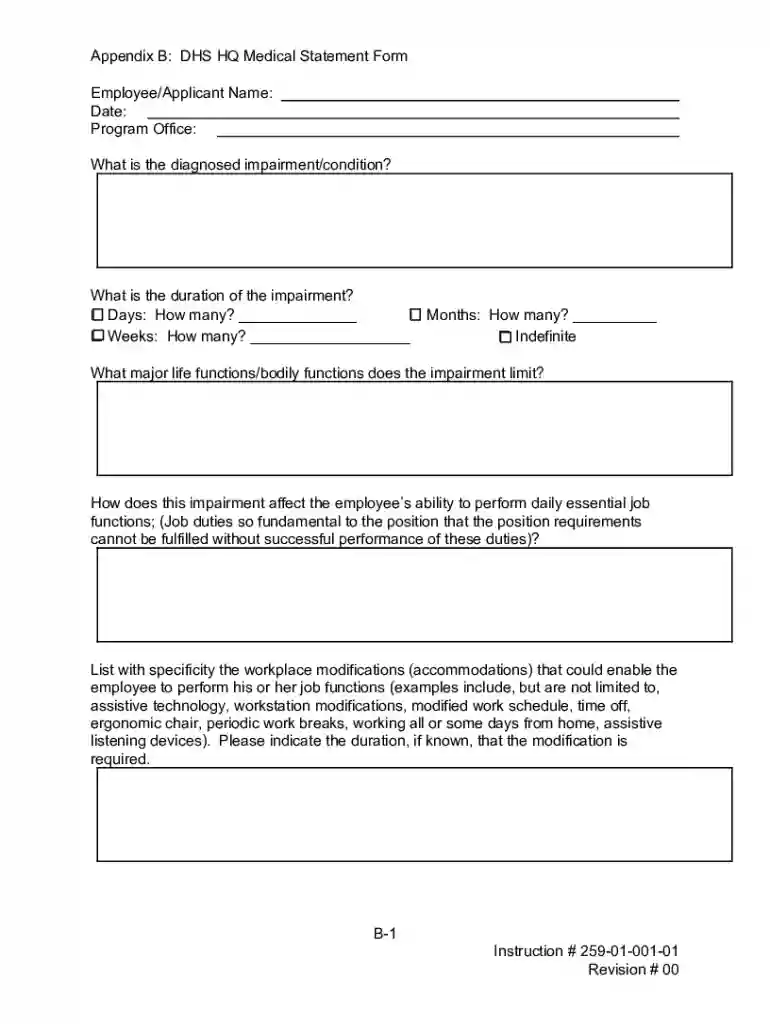
The DHS HQ Medical Statement Form, Appendix B, is an official document utilized by the Department of Homeland Security. Its primary purpose is to collect comprehensive information regarding an employee's diagnosed medical impairments or conditions. The form aims to outline the duration of the condition and determine its potential impact on the employee’s job performance. This document is essential for ensuring that workplace accommodations are effectively implemented, and it aligns with legal compliance requirements under the Privacy Act and the Genetic Information Nondiscrimination Act (GINA).
Key Elements of the Appendix B - DHS HQ Medical Statement Form
Several critical elements are incorporated within the DHS HQ Medical Statement Form to ensure it effectively gathers essential medical information:
- Employee Information: Captures basic details such as name, identification number, and position within the organization.
- Medical Diagnosis: Requires a detailed explanation of the diagnosed condition or impairment, supported by medical documentation when necessary.
- Duration and Prognosis: Requests information regarding how long the condition is expected to last and any changes anticipated over time.
- Impact on Work Performance: Seeks to describe how the condition affects the ability to perform essential job functions and any limitations present.
- Recommended Accommodations: Suggests possible modifications or adjustments in the workplace that could assist the employee in performing their role effectively.
Steps to Complete the Appendix B - DHS HQ Medical Statement Form
To accurately complete the Appendix B - DHS HQ Medical Statement Form, follow these steps:
- Review Needed Information: Before filling out the form, gather all relevant medical records and diagnosis details to ensure accuracy.
- Fill Personal Details: Begin with the employee's personal and contact information, ensuring all fields are correctly filled.
- Provide Medical Details: Include detailed medical information, clarifying the nature and extent of the condition.
- Assess Impact on Work: Describe in detail how the condition affects job performance, highlighting any tasks that are impacted.
- List Accommodations: Suggest reasonable accommodations for the impairment, aligning with both the employee's needs and workplace capabilities.
- Gather Supporting Documentation: Attach any required medical documentation that can substantiate the impairment claims.
- Final Review and Submission: Double-check entries for completeness and accuracy before submitting through the designated method (online, mail, or in-person).
Who Typically Uses the Appendix B - DHS HQ Medical Statement Form
The DHS HQ Medical Statement Form is commonly used by:

- Employees: Individuals who require workplace accommodations due to a medical condition.
- HR Departments: Specialists responsible for managing employee wellness and ensuring legal compliance.
- Medical Professionals: Healthcare providers who supply medical assessments and recommend accommodations.
Legal Use of the Appendix B - DHS HQ Medical Statement Form
The legal framework surrounding the use of the DHS HQ Medical Statement Form involves:
- Privacy Regulations: Compliance with the Privacy Act ensures that all personal and medical data collected is handled with confidentiality.
- Discrimination Protection: GINA protects individuals from discrimination based on genetic information, ensuring they are not unfairly treated in the workplace.
- Accommodation Obligations: Employers are legally required to provide reasonable accommodations as identified in the medical statement, facilitating a fair and supportive workplace.
How to Obtain the Appendix B - DHS HQ Medical Statement Form
You can obtain the Appendix B - DHS HQ Medical Statement Form through the following methods:
- Direct Request: Contact the Department of Homeland Security or your HR department to request the form.
- Online Access: The form may be available on official government websites, accessible for download and printing.
Examples of Using the Appendix B - DHS HQ Medical Statement Form
Real-world scenarios where the form is applied include:
- Office Worker with a Chronic Illness: An employee suffering from a chronic illness affecting their stamina might use the form to request modified work hours and additional rest breaks.
- Employee Returning from Medical Leave: Following surgery, an employee might require temporary accommodations such as remote work or ergonomic modifications upon returning to work.
- Individual with a Temporary Condition: Someone with a temporary arm injury might use the form to arrange for alternative task assignments that do not require heavy lifting.
Important Terms Related to the Appendix B - DHS HQ Medical Statement Form
Relevant terminology includes:
- Impairment: A medical condition that limits normal physical or mental abilities.
- Accommodation: Adjustments or modifications in the work environment that enable an employee to perform their job.
- GINA: The Genetic Information Nondiscrimination Act, which safeguards against discrimination based on genetic information.
State-Specific Rules for the Appendix B - DHS HQ Medical Statement Form
Although the Appendix B - DHS HQ Medical Statement Form follows federal guidelines, state-specific regulations may affect its application:
- State Privacy Laws: Some states may have additional privacy protection laws that augment federal regulations.
- Accommodation Requirements: State-level requirements for workplace accommodations may vary, impacting how recommendations are implemented.
Form Submission Methods: Online, Mail, or In-Person
To ensure secure and efficient submission, consider the following methods:
- Online Submission: Advantages include convenience and faster processing time, particularly through secured portals.
- Mail: Offers a physical trail and can be preferable for those with limited digital access.
- In-Person: Direct submission allows immediate confirmation of receipt and personal interaction if clarification is needed.
Penalties for Non-Compliance
Failing to comply with the requirements of the DHS HQ Medical Statement Form can result in:
- Legal Action: Employers may face legal consequences for not providing reasonable accommodations.
- Employee Grievances: Non-compliance can lead to workplace dissatisfaction and formal complaints by affected employees.
- Reputational Damage: Organizations failing to comply with legal standards risk damaging both internal morale and public perception.
By adhering to these comprehensive guidelines and procedures, individuals and organizations can ensure effective use and management of the Appendix B - DHS HQ Medical Statement Form.