






Understanding the Confidential Induced Abortion Case Report
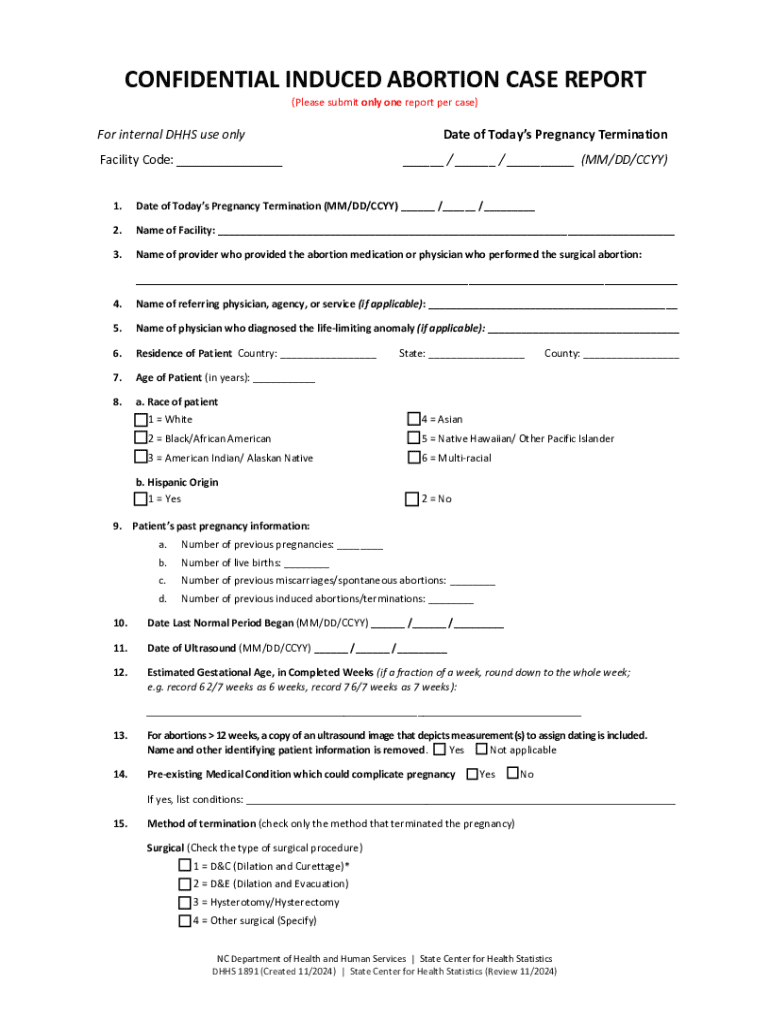
The "Confidential Induced Abortion Case Report" is a vital document intended for internal use by the North Carolina Department of Health and Human Services (DHHS). It serves as a confidential reporting tool required by state law to collect detailed information about abortion procedures. This form gathers medical and demographic data while maintaining strict confidentiality. Its purpose is to provide statistical summaries of abortion characteristics, ensuring compliance with legal requirements without compromising patient privacy.
Steps to Complete the Confidential Induced Abortion Case Report
-
Gather Patient Information: Begin by collecting necessary demographic details, including patient age, race, and previous pregnancy history. This foundational data is crucial for completing the form accurately.
-
Record Medical Details: Document the method of termination and note any complications experienced during the procedure. Precise medical information aids in compiling comprehensive reports for DHHS.
-
Ensure Data Accuracy: Double-check all entries for accuracy and completeness. Given the form's confidential nature, any discrepancy can impact statistical reliability and legal compliance.
-
Finalize Submission: After verifying that all information is correct, follow submission protocols as outlined by DHHS. Ensure timely submission within the specified timeframes to avoid potential legal repercussions.
Legal Use and Compliance
The form is governed by strict legal frameworks ensuring compliance with state laws. Completing and submitting the report within specified deadlines is mandatory to fulfill legal obligations. Non-compliance may result in penalties, underscoring the importance of adherence to the process.
Confidentiality Measures
- Patient Privacy: The form is designed to protect patient identity through confidentiality protocols, maintaining the integrity of personal health information.
- Data Protection: Secure handling and storage practices are essential, given the sensitive nature of the information collected.
Key Elements of the Confidential Induced Abortion Case Report
- Patient Demographics: Capture specifics such as age and racial background, which are crucial for demographic analysis and reporting.
- Procedure Details: Include the type of abortion procedure performed, ensuring accurate categorization of medical data.
- Complication Reports: Document any procedural complications experienced, providing insights into the safety and effectiveness of abortion methods.
Who Typically Uses the Confidential Induced Abortion Case Report
Healthcare facilities performing abortion procedures are the primary users of this form. Medical professionals are required to document and report each case to comply with state law. The information collected helps DHHS in developing public health strategies and policies.


State-Specific Rules for North Carolina
North Carolina has specific regulations governing the use and submission of the Confidential Induced Abortion Case Report. Healthcare providers in the state must adhere to these guidelines to ensure legal compliance while contributing to statewide health data collection efforts.
Important Terms Related to the Form
- Induced Abortion: A procedure carried out to terminate a pregnancy intentionally.
- Complications: Medical issues or side effects that arise during or after the abortion procedure.
Understanding these terms aids in accurately completing the form, ensuring that the data reflects true conditions and outcomes.
Form Submission Methods
Submission of the Confidential Induced Abortion Case Report can be done via various methods as prescribed by DHHS. Options might include electronic submission or traditional paper-based methods, each chosen based on security and feasibility considerations.
- Electronic Submission: Offers a secure and efficient alternative, reducing the potential for human error and ensuring quicker processing.
- Paper Submission: May still be required in some instances, particularly where electronic access is limited.
Ensuring timely and accurate submission using the appropriate method is critical for meeting state reporting requirements and upholding patient confidentiality.