






Definition & Meaning
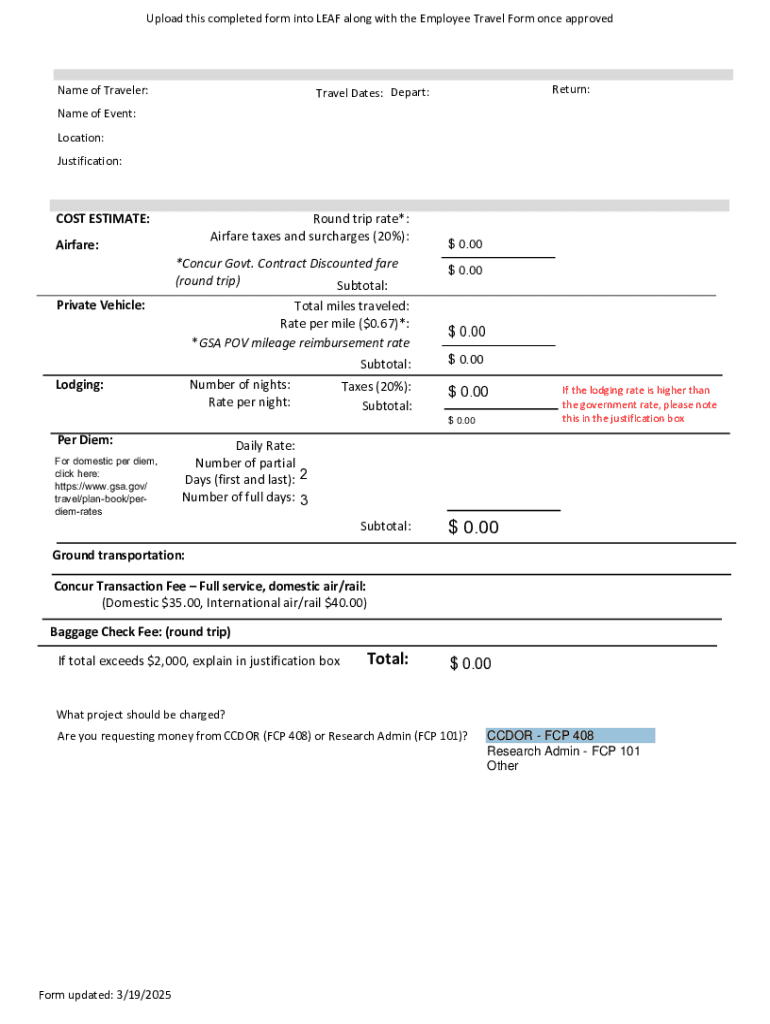
The "Employee Travel Form" is a critical document used within organizations to request and approve official travel arrangements. It ensures proper planning, budgeting, and authorization for work-related trips. This form typically includes details such as travel dates, the purpose of the trip, destinations, and estimated costs for transportation, lodging, and meals. By standardizing these details, companies can efficiently manage employee travel, control expenses, and ensure compliance with corporate travel policies. This structured approach reduces the risk of errors and miscommunication, enabling smoother logistics for both the employee and the employer.
Steps to Complete the Employee Travel Form
Completing the Employee Travel Form involves a few essential steps to ensure accuracy and compliance:
-
Gather Travel Details: Collect information such as the trip's purpose, destination, travel dates, and times.
-
Estimate Costs: Calculate anticipated expenses including airfare, accommodations, local transportation, and meals. Ensure these estimates align with company travel policies.
-
Fill Out Personal Information: Provide your name, department, and contact details. This helps in identifying and approving the travel request.
-
List Event or Meeting Details: Specify any conferences, meetings, or other professional events you'll attend. Adding an agenda or itinerary is beneficial for validation.
-
Submit for Approval: Once completed, submit the form to the appropriate personnel or travel authority within your organization for review and approval.
-
Retain a Copy: After approval, keep a copy for your records and reference during the trip.
By following these steps, employees ensure that their travel requests are comprehensive and that they meet all necessary requirements.
Why Use the Employee Travel Form
Using an Employee Travel Form is essential for several reasons:
-
Budget Management: It helps organizations forecast and control travel expenses by providing a clear projection of costs before approval.
-
Compliance and Control: The form ensures that all travel complies with company policies, legal regulations, and budget constraints.
-
Record Keeping: It creates an official record of business travel that can be used for audits, reimbursements, and evaluations.
-
Operational Efficiency: Streamlines approval processes and reduces misunderstandings by clearly communicating travel plans and requirements.
-
Risk Mitigation: Helps identify potential issues, such as visa requirements or health advisories, well before travel occurs.
Using this form contributes to a well-organized travel process, benefiting both employees and the organization.
Key Elements of the Employee Travel Form
An Employee Travel Form typically contains several key components that ensure clarity and thoroughness:
-
Employee Information: Name, department, and job title to identify the traveler.
-
Travel Purpose: A detailed explanation of the trip's objective, including meetings or events.
-
Travel Details: Dates, destination, and means of transportation.
-
Cost Estimates: Detailed breakdown of anticipated costs such as airfare, lodging, meals, and local transportation.
-
Approval Section: Space for signatures from the employee and approving manager to validate the request.
-
Comments or Remarks: Optional section for additional information or justification for the trip.
These elements are crucial for drafting a comprehensive travel request that meets organizational standards.
Form Submission Methods (Online vs. Mail vs. In-Person)
Organizations offer multiple methods for submitting the Employee Travel Form, each with its own advantages:
-
Online Submission: The most efficient method, allowing employees to submit forms via email or a designated company portal. It often integrates with online travel management systems, enabling faster processing and approval.
-
Mail Submission: While less common in digital environments, mailing forms may still be preferred in certain contexts. It requires a physical copy to be sent internally, which might delay the process compared to electronic methods.
-
In-Person Submission: Allows employees to hand-deliver forms, providing a direct way of ensuring receipt. It's beneficial for urgent requests that need immediate attention but can be time-consuming and less efficient than online submissions.
Choosing the right method depends on the organization's infrastructure and the urgency of the travel request.
Digital vs. Paper Version
Choosing between a digital and paper version of the Employee Travel Form involves weighing key factors:
-
Efficiency: Digital forms are quicker to fill out, submit, and process. They integrate with other digital tools, reducing administrative effort.
-
Accessibility: Digital forms allow access from any location, supporting remote work environments. In contrast, paper forms require physical presence for completion and submission.
-
Sustainability: Digital forms are environmentally friendly, reducing paper waste and physical storage needs.
-
Security and Compliance: Digital forms offer enhanced security features such as encryption and access controls, ensure data integrity, and facilitate audit trails.
Considering these aspects will help organizations align their form use with operational goals and sustainability practices.
Required Documents
Filling out an Employee Travel Form may require supporting documents to validate the request:
-
Itinerary or Agenda: Providing a detailed travel schedule or event agenda justifies the trip's purpose and helps coordinate logistics.
-
Cost Breakdown or Quotes: Gather estimates or quotes for major expenses, including flights, hotels, and car rentals, to support budget estimates.
-
Company Policy Document: Knowing the organization's travel policy helps ensure that requests comply with any established rules or guidelines.
-
Approvals for Exceptional Costs: Additional documentation may be required for expenses that exceed standard rates, requiring higher management approval.
Collecting these documents in advance facilitates a smooth approval process and helps avoid delays.
Examples of Using the Employee Travel Form
Practical scenarios for using an Employee Travel Form include:
-
Attending Conferences: Employees attending industry events must justify attendance through detailed agendas and estimated costs.
-
Client Meetings: Justifying travel to meet with clients or stakeholders, especially when the trip involves significant travel time or expense.
-
Training Events: Internal or external training sessions requiring employee attendance at a distant location.
Each example highlights the form's purpose in authorizing travel aligned with company objectives and budgets.