
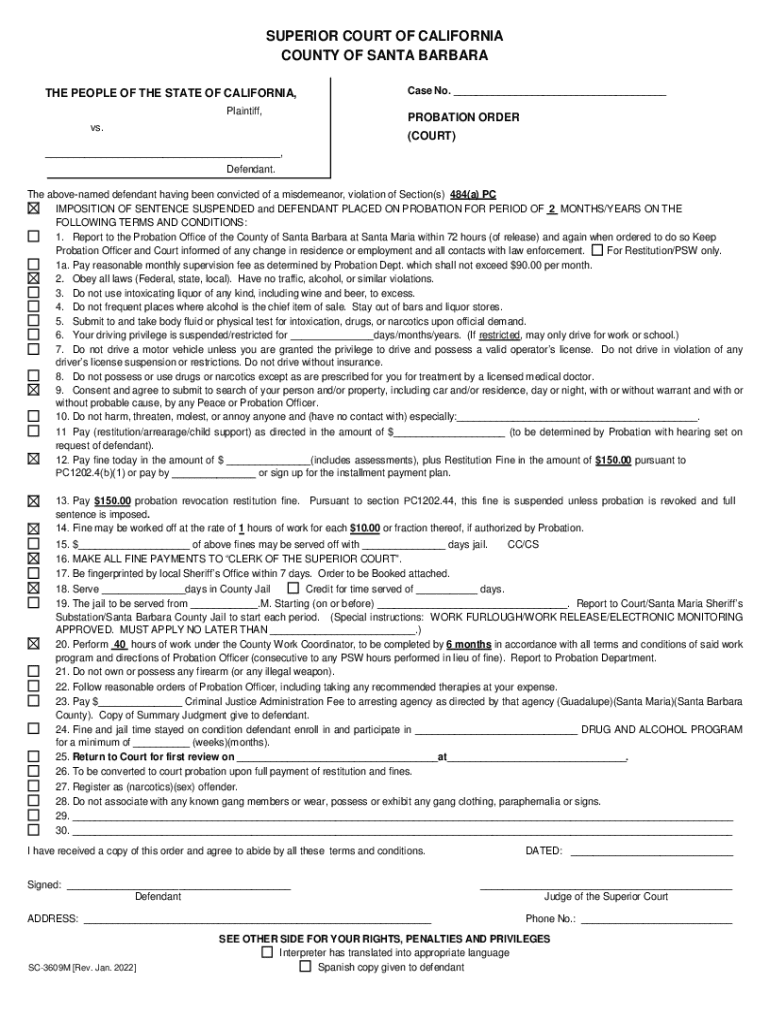







Definition and Meaning of a Probation Order
A Probation Order, often issued by a court, is a legal mandate that outlines the terms and conditions a defendant must follow after being convicted of a crime—a misdemeanor in many cases. This document acts as a guide for the period during which the convicted individual is under supervision instead of serving time in jail. The primary objective of a Probation Order is to rehabilitate the offender by imposing restrictions and requirements that facilitate responsible behavior. Specific stipulations can include mandatory check-ins with a probation officer, adherence to laws, and engagement in community service. This enables the offender to integrate into society under monitored boundaries, encouraging conformity to legal norms.
Using the Probation Order Effectively
To effectively utilize the Probation Order, the defendant must fully understand and comply with all its conditions. This includes:
-
Reporting Regularly: The individual must report to an assigned probation officer at specified intervals. Failure to meet this requirement could result in further legal action.
-
Obeying Laws: Committing any new offense during the probation period can lead to revocation and potential imprisonment.
-
Avoiding Alcohol and Drugs: Most Probation Orders have strict prohibitions against substance use, and regular testing might be conducted to ensure compliance.
-
Completing Community Service: Often, community service hours are required as part of the order, which must be completed within a particular time frame.
Adhering to these conditions can lead to successful completion of probation and avoidance of harsher penalties.
Steps to Complete the Probation Order
Completing a Probation Order involves several critical steps to ensure adherence and successful discharge from probation:
-
Initial Meeting: Arrange the first meeting with your probation officer immediately after the hearing to discuss the order's specifics.
-
Understand Restrictions: Review each condition thoroughly to understand what is expected.
-
Develop a Compliance Plan: Schedule regular reporting, plan community service hours, and set reminders for any required therapy or classes.
-
Tracking Progress: Maintain records of completed community service and other activities to demonstrate compliance.
-
Regular Check-ins: Consistently attend scheduled meetings with your probation officer and update them on your progress.
-
Final Review: As the probation period ends, prepare a review meeting with your probation officer to ensure all conditions have been met satisfactorily.
Important Terms Related to Probation Orders
Understanding specific terminology associated with Probation Orders is crucial for accurate compliance:
-
Probation Officer: A court-appointed official who supervises offenders to ensure adherence to the probation conditions.
-
Restitution: A requirement to compensate victims for losses related to the crime.
-
Revocation: The process of canceling the probation due to violations, potentially leading to imprisonment.
-
Community Service: Unpaid work for community betterment that the offender must complete.
These terms play a vital role in understanding and fulfilling the order's requirements.
Legal Use of the Probation Order
Probation Orders serve an essential legal purpose by providing an alternative to incarceration, promoting rehabilitation, and reducing prison populations. They legally bind the defendant to adhere to set conditions, empowering the court to take corrective action if these terms are violated. This tool also gives the criminal justice system flexible options for handling cases, encouraging offenders to reform and reintegrate into society. Probation orders are a testament to the judicial system's commitment to supporting transformative justice while maintaining public safety.
Key Elements of the Probation Order
Probation Orders typically contain several key elements designed to regulate and monitor behavior:
-
Conditions of Supervision: These include regular reporting to a probation officer and submission to periodic drug tests.
-
Mandatory Programs: Offenders might be required to attend educational or rehabilitation programs pertinent to the offense.
-
Special Restrictions: Depending on the nature of the crime, the court might impose curfews or restrict associations with certain individuals.
Each of these elements is crafted to encourage rehabilitation and ensure compliance.
Penalties for Non-Compliance
Failure to comply with the Probation Order can lead to significant consequences:
-
Probation Violation: If a violation is identified, the probationer might face a revocation hearing, where the court will decide whether the probation will be revoked.
-
Extended Probation: Instead of revocation, the court might choose to extend the probation period or add additional conditions.
-
Imprisonment: Serious violations can result in being sent to jail for the remainder or a portion of the original sentence.
Understanding these potential repercussions emphasizes the importance of strict adherence to all order conditions.
Who Uses the Probation Order
Typically, Probation Orders are used by defendants charged with misdemeanors who the court determines are capable of rehabilitation outside a prison environment. This form serves individuals who show potential for reformation and could positively contribute to society if given the opportunity. Judges, probation officers, and legal counsel use these forms to outline and enforce specific behaviors and obligations, ensuring the offender's guided path toward societal reintegration while upholding the law's integrity.




