






Definition & Meaning
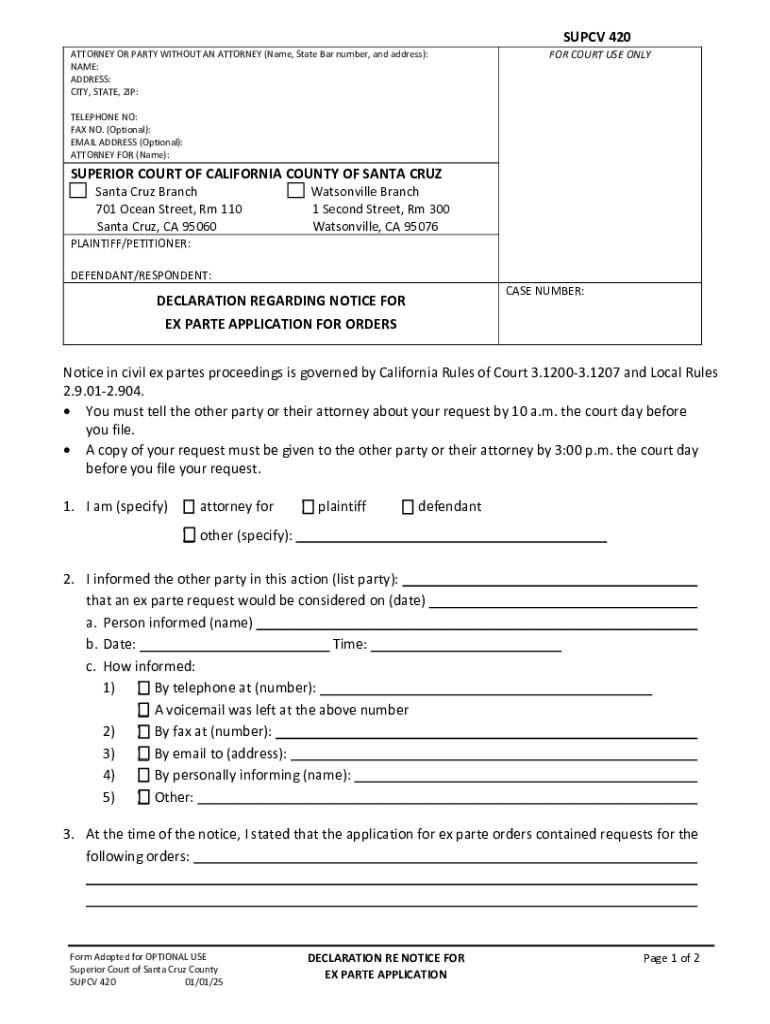
The "Declaration Regarding Notice for Ex Parte Application for Orders" is a legal document utilized in the Superior Court of California, specifically within Santa Cruz County. This form is crucial for individuals or parties seeking an ex parte order, which is a court order made without notice to the other side. The declaration outlines the efforts made to notify the opposing party about the application, ensuring the court that due process is being respected even in urgent situations. The document ensures that all necessary information regarding communication, deadlines, and reasons for not notifying the other party are clearly documented and presented for judicial review.
How to Use the Declaration Regarding Notice for Ex Parte Application for Orders
Using the declaration effectively involves several steps and considerations. First, it is essential to fill out all sections comprehensively, including the names and roles of the parties involved in the matter. Detailed descriptions of how notice was given, or the rationale for not providing notice, must be included. Typically, the form requires individuals to explain the urgency of the application and exhibits respect for due process standards. Finally, ensure the document is signed under penalty of perjury, affirming the truthfulness of the submitted information and sealing its legal credibility.
Steps to Complete the Declaration Regarding Notice for Ex Parte Application for Orders
-
Identify Parties Involved: Begin by clearly documenting the full names and roles of all parties involved in the legal matter to ensure clear communication.
-
Detail Notice Given: Write a comprehensive account of how the notice was communicated to the other party, including methods and timelines. This step involves specifying whether it was via phone, email, or direct service, and the exact date and time.
-
Explain Exception for Notice: If notice was not given, detail the reasons why it was not possible or viable under the judicial rules. This typically involves citing exceptions like risk of harm or immediate urgency.
-
Fill in Specifics: Ensure all the minor sections, such as court case numbers or references to specific orders, are accurately filled out.
-
Declaration Under Penalty of Perjury: Conclude the form by signing the declaration under penalty of perjury, asserting the accuracy and truthfulness of the information provided.
Key Elements of the Declaration Regarding Notice for Ex Parte Application for Orders
- Parties Involved: Identifying all parties involved is crucial for the legitimacy of the process.
- Notice Section: A detailed account of how notice was given or why it was not provided is central to the declaration.
- Declaration Statement: A sworn statement under penalty of perjury forms the crux of the document, ensuring accountability.
State-Specific Rules for the Declaration Regarding Notice for Ex Parte Application for Orders
While the form is primarily used in the California court system, understanding specific state rules like those in Santa Cruz County is crucial. Each jurisdiction may have slight variations in how notice should be executed and recorded within their court systems. Failing to adhere to these specific rules can delay proceedings or result in a denial of the ex parte request.
Legal Use of the Declaration Regarding Notice for Ex Parte Application for Orders
The declaration serves a legal function by ensuring that the rights of all parties are considered. It acts as a safeguard against abuse of ex parte orders, which can bypass the typical requirement for both parties to be heard. By providing documented evidence of notification efforts, the form maintains the integrity of the judicial process and supports fair adjudication.
Required Documents for the Declaration Regarding Notice for Ex Parte Application for Orders
When submitting the declaration, you should include supporting documents that validate the steps taken to notify other parties. These might include email printouts, phone logs, or affidavits from service agents. Such documents help substantiate claims made within the declaration and aid the court in decision-making.
Practical Examples of Using the Declaration Regarding Notice for Ex Parte Application for Orders
An example scenario might involve a person seeking a last-minute restraining order against an individual. The applicant can complete the declaration, detailing attempts to provide notice, or justify why notice could not be given if it poses a risk. This process ensures the court is informed while addressing urgent legal needs.
Digital vs. Paper Version
The declaration is available in both digital and paper formats. The choice between them often depends on court requirements and personal preference. Digital versions might offer easier filing and submission processes, whereas paper forms may be more accessible for individuals less inclined towards technology.