






Definition & Meaning
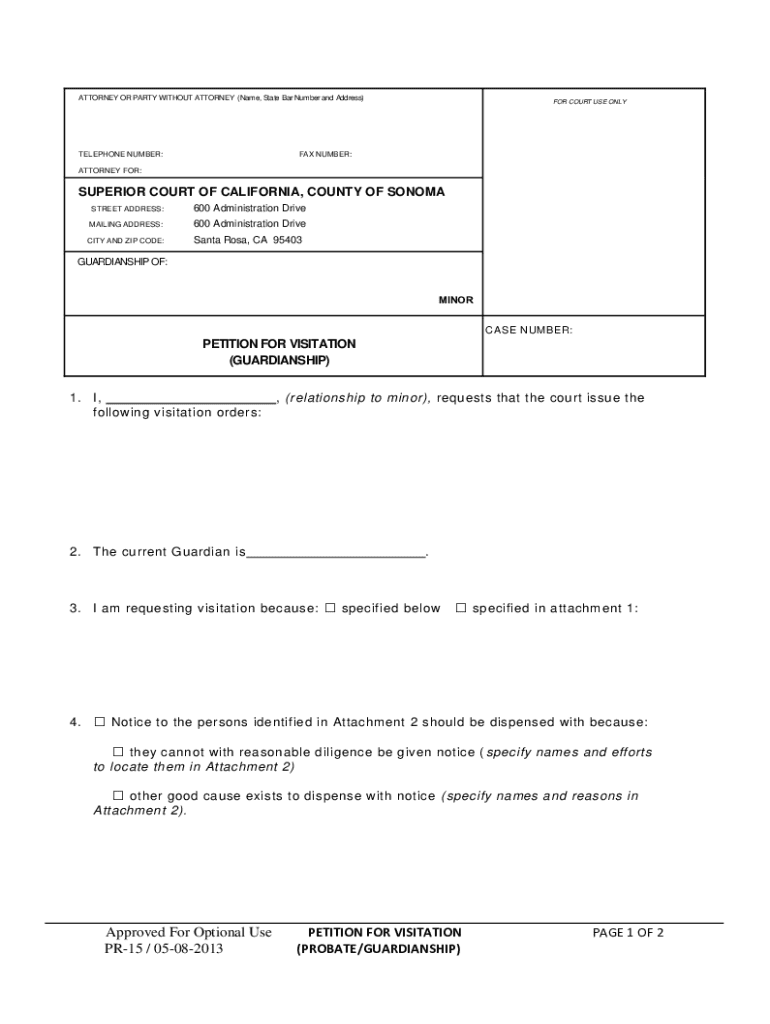
A "Petition for Visitation (guardianship)" is a legal request submitted to the court to gain visitation rights with a minor child who is under the guardianship of another individual. This form is often used by relatives, such as grandparents or non-custodial parents, who wish to establish or alter visitation terms. The petition outlines the desire for visitation and requires the petitioner to prove that such visitation is in the best interest of the child. In California, this request is typically submitted to the Superior Court, and the document involves details about the minor, the current guardian, and the proposed visitation schedule.
How to Use the Petition for Visitation (guardianship)
-
Understanding the Form's Purpose: Before completing the petition, understand that its primary purpose is to request court-ordered visitation with a minor under guardianship. The form must detail why the visitation is beneficial for the child.
-
Filling the Form Accurately: Ensure accurate completion of the form, including personal information such as your name, relation to the child, and current address. Additionally, provide information about the current guardian and specifics of the requested visitation schedule.
-
Gathering Supporting Documentation: Attach any necessary supporting documentation that makes a case for why the visitation should be granted. This may include letters of support from other family members, reports from social services, or any legal precedents relevant to your request.
-
Submitting the Form: Once completed, submit the petition to the relevant court. It might require submission in person or via mail, depending on local court procedures.
Steps to Complete the Petition for Visitation (guardianship)
-
Collect Personal and Child Information: Begin by gathering all required personal information and details related to the child in question, including names, birthdates, and addresses.
-
Specify Visitation Details: Clearly outline the type of visitation being requested, including frequency, duration, and any specific terms that pertain to the visit (e.g., supervised visits).
-
Explain the Best Interest of the Child: It is crucial to provide a narrative or evidence demonstrating how the requested visitation aligns with the child's best interests and overall welfare.
-
Include Notarized Statements: It may be helpful to include statements from other family members or professionals who support the visitation request, which should be notarized to bolster their credibility.
-
File the Petition: Submit the completed petition to the county court clerk where the guardianship case is maintained; make sure to comply with any local filing fees or additional document requirements.
Key Elements of the Petition for Visitation (guardianship)
-
Petitioner Information: Detailed information about the person requesting visitation, including their relationship with the child.
-
Guardian Information: Details about the current legal guardian, such as their name, address, and their role in the child’s life.
-
Visitation Plan: A clear plan outlining the specifics of the visitation, such as dates, times, places, and any conditions that might apply.
-
Justification for Visitation: A section dedicated to explaining why the visitation is in the child's best interests, backed by evidence and possibly expert opinions.
State-Specific Rules for the Petition for Visitation (guardianship)
-
California Guidelines: In California, the petitioners must adhere to specific state statutes that determine eligibility for filing a petition for visitation, often focusing on the child's welfare.
-
Court Procedures: Typical procedures include filing with the appropriate family court and serving notice to the current guardian or any other interested parties (such as the child's parents, if applicable).
Legal Use of the Petition for Visitation (guardianship)
-
Court-Ordered Visitation: Its primary use is to seek court intervention when voluntary visitation agreements cannot be reached, ensuring that all visitation is legally recognized.
-
Adjustment of Existing Arrangements: The petition can also function as a tool to modify existing visitation arrangements when circumstances change or when it becomes apparent that changes are needed to better serve the child's needs.
Important Terms Related to Petition for Visitation (guardianship)
-
Guardian: The individual who has been legally appointed to care for the child, making decisions about their day-to-day and long-term welfare.
-
Visitation Rights: The legally granted right to visit and spend time with the child, which may vary widely from unsupervised visits to heavily monitored interactions.
-
Best Interest of the Child: A legal standard used to determine the most beneficial arrangement for the child's overall well-being and development.
Who Typically Uses the Petition for Visitation (guardianship)
-
Grandparents and Extended Family: Often used by grandparents or other family members who wish to maintain or establish a relationship with the child despite living apart.
-
Non-custodial Parents: Parents who do not have legal custody might use the petition as a means to request structured visitation time.
-
Third Parties: In some cases, individuals who are not direct relatives but have a close relationship with the child might petition for visitation rights if it serves the child’s best interests.