






Definition & Meaning
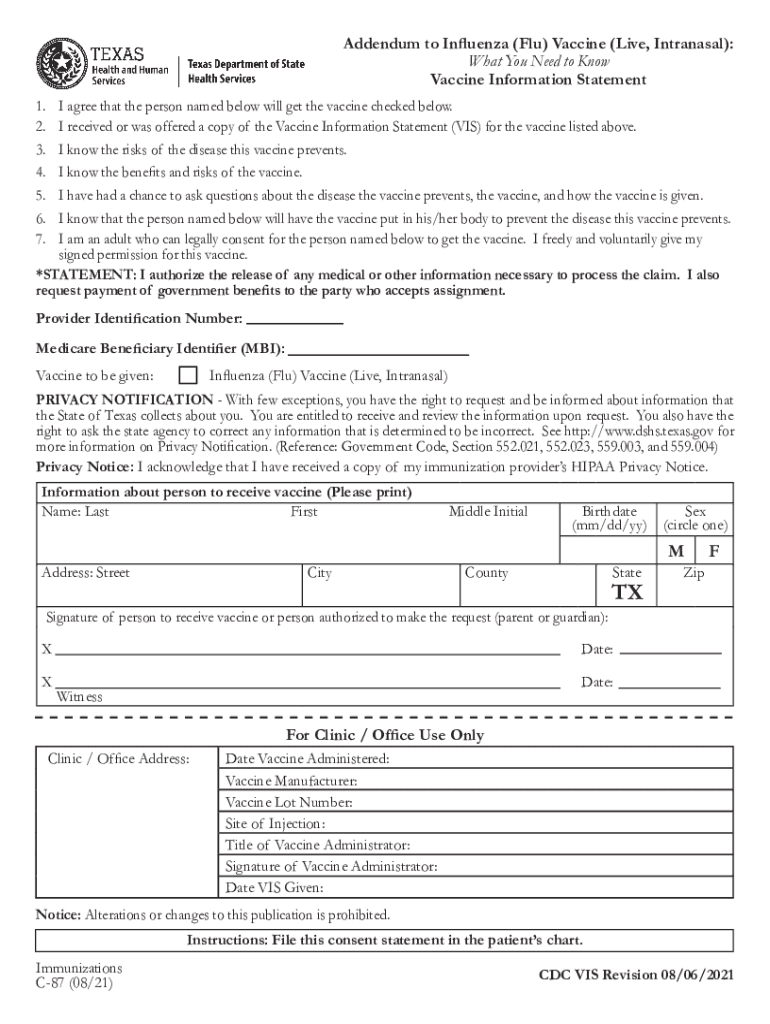
The "Addendum to Influenza (Flu) Vaccine (Live, Intranasal)" is a supplemental document to the Vaccine Information Statement specifically for the live, intranasal flu vaccine. It serves as an extension to provide additional information that may not be covered in the original Vaccine Information Statement. This document is crucial for ensuring that vaccine recipients and their guardians are fully informed about the specific aspects of the live, intranasal vaccine, focusing on consent, privacy, risks, and benefits.
Importance of Understanding
Understanding this addendum is vital as it outlines critical information specific to the live, intranasal flu vaccine. Recipients must be aware of its unique administration method and potential side effects, ensuring they make well-informed decisions about vaccination. Given the public health implications of flu vaccinations, this document plays a crucial role in maintaining transparency and trust between healthcare providers and patients.
Key Elements of the Addendum
The addendum contains several essential components that recipients and healthcare providers must be aware of:
- Consent Process: Details the process for obtaining legal consent from recipients or their guardians, ensuring acknowledgment of risks and benefits.
- Privacy Notifications: Specifies how personal information will be protected and used, in compliance with privacy regulations.
- Patient Information: Collects specific details about the vaccine recipient to ensure proper and customized care.
- Vaccine Administration Details: Provides instructions on how the live, intranasal vaccine is to be administered safely.
Consent and Privacy
Consent and privacy are two of the addendum's cornerstones. By formalizing these processes, the addendum ensures patients' rights are protected while facilitating informed decision-making regarding vaccination.
How to Use the Addendum
Using the addendum effectively involves several steps:
- Review the Document: Both healthcare providers and recipients should carefully read the document to understand its content fully.
- Acknowledge Risks and Benefits: Ensure that all parties are aware of the potential risks and benefits associated with the live, intranasal flu vaccine.
- Complete Sections: Fill out necessary sections, such as patient information and consent, accurately.
Practical Usage Tips
To optimize its use, healthcare providers should discuss each section with the recipient or their guardian, addressing any concerns or questions. This practice not only ensures comprehension but also enhances trust and compliance.
Steps to Complete the Addendum
Completing the "Addendum to Influenza (Flu) Vaccine (Live, Intranasal)" involves several steps:
- Gather Necessary Information: Obtain required personal and medical information from the vaccine recipient.
- Fill Out Patient Details: Enter the recipient's information, ensuring all fields are accurate.
- Clarify Risk and Benefit Acknowledgment: Ensure that the recipient comprehends the documented risks and benefits and has consented to proceed.
- Secure Required Signatures: Obtain signatures from the recipient or guardian, as well as from healthcare providers administering the vaccine.
Ensuring Accuracy
Accuracy is crucial. Confirm that all entered information is correct, as errors can lead to complications or delays in vaccination. In cases of discrepancies, consult with the healthcare provider for clarification.
Who Typically Uses the Addendum
This addendum is utilized by various parties involved in the flu vaccine process:
- Healthcare Providers: Use the document to obtain consent and provide thorough information to patients.
- Vaccine Recipients and Guardians: Engage with the addendum to understand vaccine specifics and consent to the immunization process.
- Legal Guardians: In circumstances involving minors or individuals unable to consent, legal guardians play a vital role in reviewing and signing the document.


Organizational Use
Healthcare facilities incorporate the addendum into their vaccination protocols to ensure comprehensive documentation and legal compliance.
Important Terms Related to the Addendum
Understanding specific terms within the addendum is essential for clarity:
- Live, Intranasal Vaccine: A type of flu vaccine administered via the nasal passage that contains live, attenuated virus particles.
- Consent: A legal agreement from the recipient or guardian acknowledging the vaccine's risks and benefits.
Detailed Term Clarifications
Such terms are critical for maintaining clear communication and ensuring that recipients are adequately informed about the vaccine's nature and administration.
Legal Use of the Addendum
The addendum functions as a legal document that supports informed consent processes, which are vital for:
- Legal Compliance: Ensuring that the vaccination process adheres to laws and regulations concerning medical consent and patient rights.
- Risk Management: Documenting acknowledgment of risks to safeguard against legal claims and liabilities.
Protecting Rights
This legal framework protects patient rights and ensures the transparency of the vaccination process, fostering a trustful healthcare environment.
State-Specific Rules for the Addendum
Vaccine regulations and requirements can vary by state. It is important to check local guidelines when using the addendum to ensure compliance with state-specific laws:
- State Regulation Compliance: Verify that the document aligns with state health department regulations.
- Adaptations for Jurisdiction: Adjust the addendum, if necessary, to meet specific legal requirements unique to each state.
Local Adaptations
Being aware of and adapting to these local variations ensure the document's effectiveness and legal standing across different jurisdictions.