






Definition and Meaning of a Memorandum of Land Contract
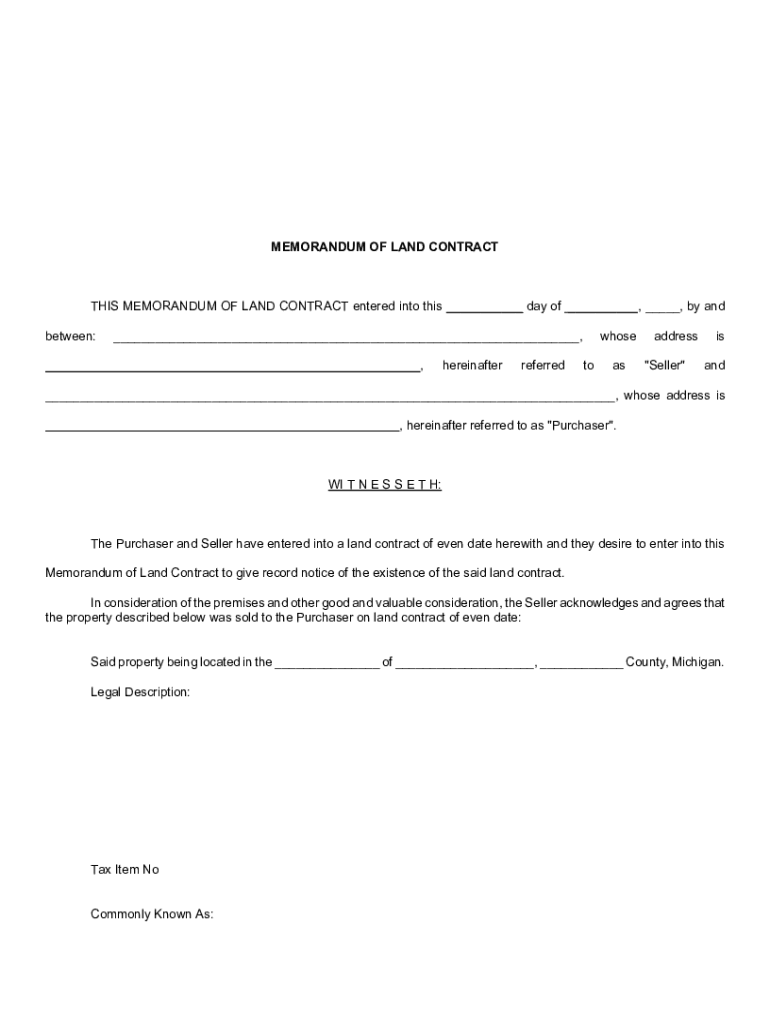
A Memorandum of Land Contract is a legal document that records the existence and terms of a land contract between a seller and a buyer. This memorandum serves primarily to provide public notice of the land contract, including its essential terms, such as the parties involved, an outline of the agreement, and the property specifics. It is often recorded with the local county register of deeds, making it a critical document in transactions involving real estate, particularly when formalizing the terms of an installment land contract. The memorandum ensures transparency and can protect both parties' interests by serving as evidence of the contract’s details without disclosing the complete agreement.
How to Use the Memorandum of Land Contract
To effectively use the Memorandum of Land Contract, the parties involved must first draft the comprehensive land contract detailing the terms and conditions of the property sale. Once the main contract is finalized, they prepare a summary in the form of a memorandum incorporating the key terms such as the identities of the seller and purchaser, the legal description of the property, and any conditions specific to the sale. This memorandum is then notarized and filed with the local county register to ensure public notice. Filing provides legitimacy and prioritizes the buyer’s interests in the property under law, which can be crucial if any disputes regarding the property arise.
Key Elements of the Memorandum of Land Contract
The Memorandum of Land Contract typically includes several vital components that ensure its legal validity and usefulness:
- Parties Involved: Clearly states who the seller and purchaser are.
- Property Description: Provides a detailed legal description to accurately identify the real estate involved.
- Effective Date: Indicates when the contract becomes legally binding.
- Terms Summary: Outlines essential terms of the contract like payment schedules or any seller-provided financing.
- Notarization: Includes a section for notarization to affirm the document’s authenticity.
- Signatures: Both parties must sign to confirm their agreement to the memorandum terms.
These components are essential to ensure that the document serves its purpose of clearly outlining the terms of the contract while remaining a succinct version of the full land contract.
Legal Use of the Memorandum of Land Contract
The Memorandum of Land Contract serves several legal functions and can be particularly beneficial in states that require public notice of land transactions. This document is used to secure an equitable interest in the property for the buyer, establish priority over third-party claims, and protect against future encumbrances that could affect title rights. Additionally, its recordation ensures the terms are enforceable against successors in interest, preserving both parties’ intentions even if the property is transferred to another individual. This legal tool is especially useful in instances where the buyer has equitable title over the property before full payment is made.
Steps to Complete the Memorandum of Land Contract
- Draft the Full Land Contract: Begin by negotiating and drafting the complete detailed land contract.
- Create the Memorandum: Based on the full agreement, prepare a memorandum that summarizes the key terms.
- Include Legal Descriptions: Ensure the legal description of the property is precise and comprehensive.
- Notarization: Both parties should sign in the presence of a notary public to validate the document.
- Record the Memorandum: Submit the notarized document to the local county register of deeds to make the details public.
Each step must be followed carefully to ensure the memorandum is legally sound and effectively accomplishes its objectives.
State-Specific Rules for the Memorandum of Land Contract
While memoranda of land contracts are commonly utilized across the United States, specific regulations can vary by state. Some states may have unique formatting requirements for recording documents or might demand additional disclosures beyond general requirements. It's imperative to consult local real estate laws or seek legal advice to confirm that the memorandum adheres to regional laws, especially regarding notification and filing procedures. Failure to comply with state-specific rules can lead to complications in enforcing the memorandum or asserting the buyer's rights.
Who Typically Uses the Memorandum of Land Contract
Memoranda of land contracts are most commonly used by real estate professionals, individuals engaged in the buying or selling of property, and investors involved in installment sales or seller financing arrangements. Buyers leverage these documents to protect investments over the contract duration, while sellers use them as assurance of transaction terms. Additionally, attorneys and title companies often facilitate the creation and recording of these documents to ensure compliance with state regulations, thus serving as an essential tool in real estate transactions.


Examples of Using the Memorandum of Land Contract
Consider a scenario where an individual sells a parcel of land through an installment agreement, reserving title rights until full payment is completed. In such cases, the parties draft a memorandum to record public notice of this arrangement, ensuring local authorities and potential third-party claimants are aware of the buyer's interest. Another example includes an investor purchasing multiple properties via land contracts; here, recording a memorandum for each property helps manage and protect their investments across transactions, illustrating its versatility across different real estate dealings.