






Definition and Meaning of Discriminate Analysis of the Personality
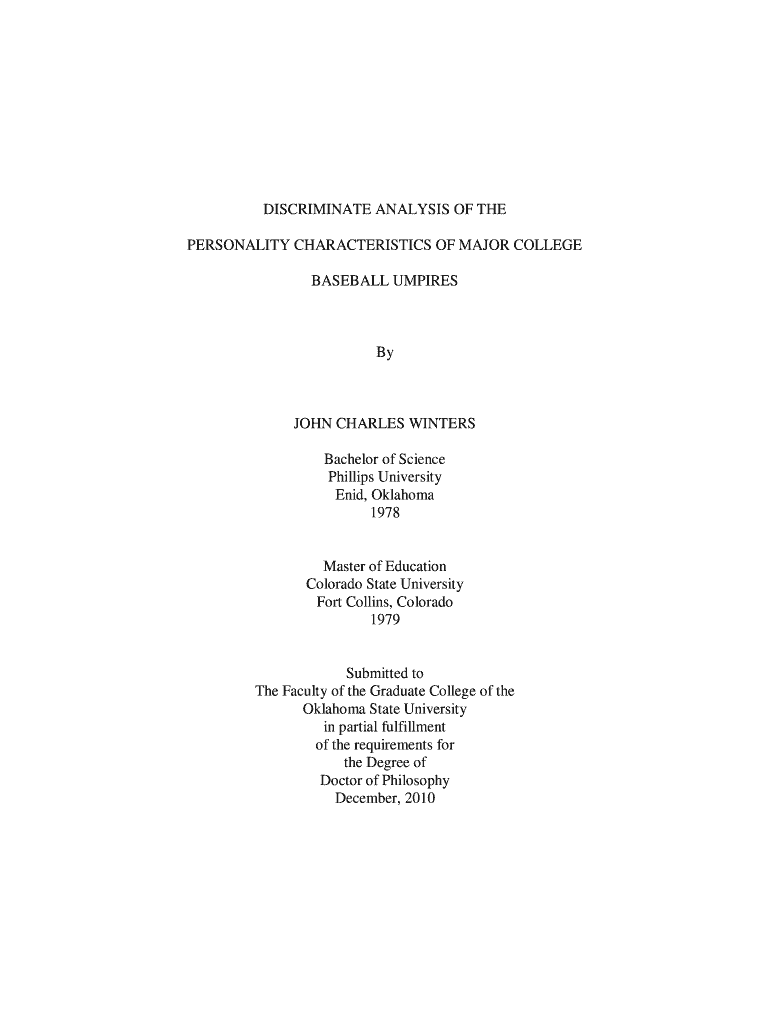
Discriminate Analysis of the Personality involves using statistical techniques to identify differences in personality traits between distinct groups of individuals. This analysis uses personality assessment tools such as the Revised NEO Personality Inventory, which helps determine clusters of traits pertinent to specific professional roles. A key aspect is understanding how these traits can influence selection processes in various fields, like sports officiating, where personality plays a critical role in decision-making and performance.
How to Use the Discriminate Analysis of the Personality
To utilize Discriminate Analysis of the Personality, one must first gather data on personality traits of interest. This involves:
- Selecting appropriate assessment tools.
- Administering these tools to the target groups.
- Analyzing the resulting data using statistical software.
This method can discern between different personality traits in a population, aiding in making informed decisions about role suitability.
Steps to Complete the Discriminate Analysis of the Personality
Performing a Discriminate Analysis of the Personality requires a structured approach:
- Define Objectives: Clearly identify what you aim to discover (e.g., traits predictive of successful umpires).
- Gather Data: Use tools like the Revised NEO Personality Inventory to collect data from relevant groups.
- Statistical Analysis: Utilize software to conduct discriminate analysis, focusing on identifying meaningful differences between groups.
- Interpret Results: Analyze the findings to determine the implications for selection or training criteria.
Key Elements of the Discriminate Analysis of the Personality
Several core aspects define the analysis:
- Trait Identification: Focus on specific traits measurable through standardized tests.
- Comparator Groups: Involves contrasting different populations, such as current officials vs. new applicants.
- Statistical Rigor: Utilizes robust statistical methods to ensure reliable differentiation.
Who Typically Uses the Discriminate Analysis of the Personality
This type of analysis is often employed by:
- Sports Organizations: To select and train officials based on personality characteristics.
- Psychological Researchers: To study the correlation between personality traits and professional performance.
- Human Resources Departments: To refine hiring processes by understanding personality fit for roles.


Important Terms Related to Discriminate Analysis of the Personality
Understanding certain terms is vital:
- Revised NEO Personality Inventory: A tool for measuring the Big Five personality traits.
- Cluster Analysis: A statistical method used to group individuals based on similarities in traits.
- Personality Traits: Characteristics that define individual behaviors, such as Agreeableness or Conscientiousness.
Legal Use of the Discriminate Analysis of the Personality
In the U.S., using discriminate analysis for personality assessments must comply with legal standards:
- Non-Discrimination: Ensure assessments do not lead to unfair bias.
- Confidentiality: Protect individuals' personal data and results.
- Informed Consent: Prior authorization from participants is essential before conducting analysis.
Examples of Using the Discriminate Analysis of the Personality
Real-world applications include:
- Sports Recruiting: Analyzing potential umpire candidates for traits linked to effective decision-making.
- Corporate Hiring: Evaluating candidates for leadership positions with personality traits conducive to company goals.
- Educational Settings: Assessing students' traits to tailor educational approaches or career guidance.
This analysis is integral for refining selection and training processes, ultimately enhancing performance outcomes across varying domains.