






Definition & Meaning
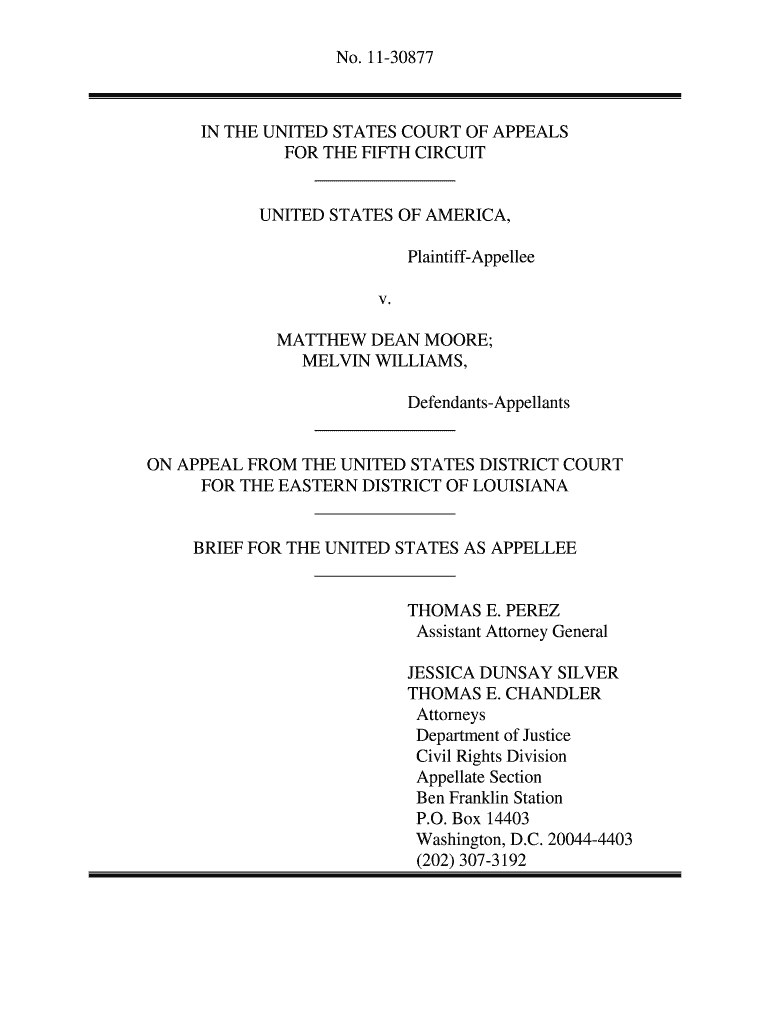
In the context of "United States v Williams and Moore - US Department of Justice," this legal document is a court brief concerning the trial and appeal of Matthew Dean Moore and Melvin Williams. Both individuals were New Orleans police officers convicted in connection with the death of Raymond Robair. The brief serves a dual purpose: outlining jurisdiction and providing a detailed account of the criminal case, including offenses like false reporting and statutory violations.
Key Elements of the United States v Williams and Moore
The brief highlights several critical elements in the case against Williams and Moore. These include the detailed actions of the defendants during the incident, their attempts at falsifying reports to authorities, and their ultimate convictions under U.S. law. The document offers a substantial analysis of these elements, providing evidence that supports the convictions and justifies the severity of their sentences.
Legal Issues Addressed
- False Reporting: The defendants were found guilty of fabricating information to mislead law enforcement authorities.
- Statutory Violations: The case involved convictions under multiple legal statutes pertinent to the actions of the defendants as police officers.
Important Terms Related to United States v Williams and Moore
Understanding the brief requires familiarity with several legal terms:
- Jurisdiction: The court's authority to adjudicate the case, crucial for determining the legitimacy of the trial proceedings.
- ESIGN Act: Although primarily noted for electronic signatures, this act underscores the importance of legally compliant documentation.
- Conviction: A formal declaration by the legal system that the defendants are guilty of the charges against them.
Steps to Complete the United States v Williams and Moore Form
To thoroughly grasp and utilize the brief, several steps should be considered:
- Read the Introduction: Gain an overview of the case.
- Analyze the Jurisdiction: Understand where and why the case was tried.
- Examine the Charges: Dive into the specific accusations against the defendants.
- Review the Evidence: Study how the evidence supports or refutes the charges.
- Understand the Sentencing: Consider the arguments for the appropriateness of the sentences given.
Examples of Using the United States v Williams and Moore
This legal document can be instrumental as a case study in criminal justice courses, particularly those focusing on police conduct and legal ethics. It can also serve as an example in legal training programs to demonstrate the complexities of criminal appeals and the rigors of justifying sentencing.
Educational Use
- Criminal Justice Classes: Utilize to illustrate the intricacies of law enforcement-related charges.
- Legal Training: Offers a real-world example of appellate reasoning and sentencing justification.
Legal Use of the United States v Williams and Moore
From a legal standpoint, the brief is significant for its role in detailing how the courts handle appeals and determine sentencing appropriateness. It acts as a reference for legal professionals dealing with similar cases or needing to understand the subtleties of legal reporting and statutory violations.
State-Specific Rules for United States v Williams and Moore
While the case is situated within federal jurisdiction, understanding the local state laws that influenced legal proceedings is crucial. New Orleans police officers are subject to both state-specific mandates and federal laws, which intersect in complex ways in cases of reported misconduct or criminal activity.
Who Typically Uses the United States v Williams and Moore Form
This legal brief is primarily used by legal professionals, scholars, and law students. It may be referenced by those researching legal precedents, studying police misconduct cases or engaged in appellate law. Additionally, it serves the Department of Justice in showcasing how legal actions against law enforcement officers are processed and adjudicated.


Penalties for Non-Compliance
Non-compliance with court orders or attempts to falsify documents, as done by Williams and Moore, can lead to severe penalties including imprisonment, fines, and a permanent criminal record. This case exemplifies how the justice system imposes stringent consequences on those who obstruct legal processes.