







Definition & Meaning
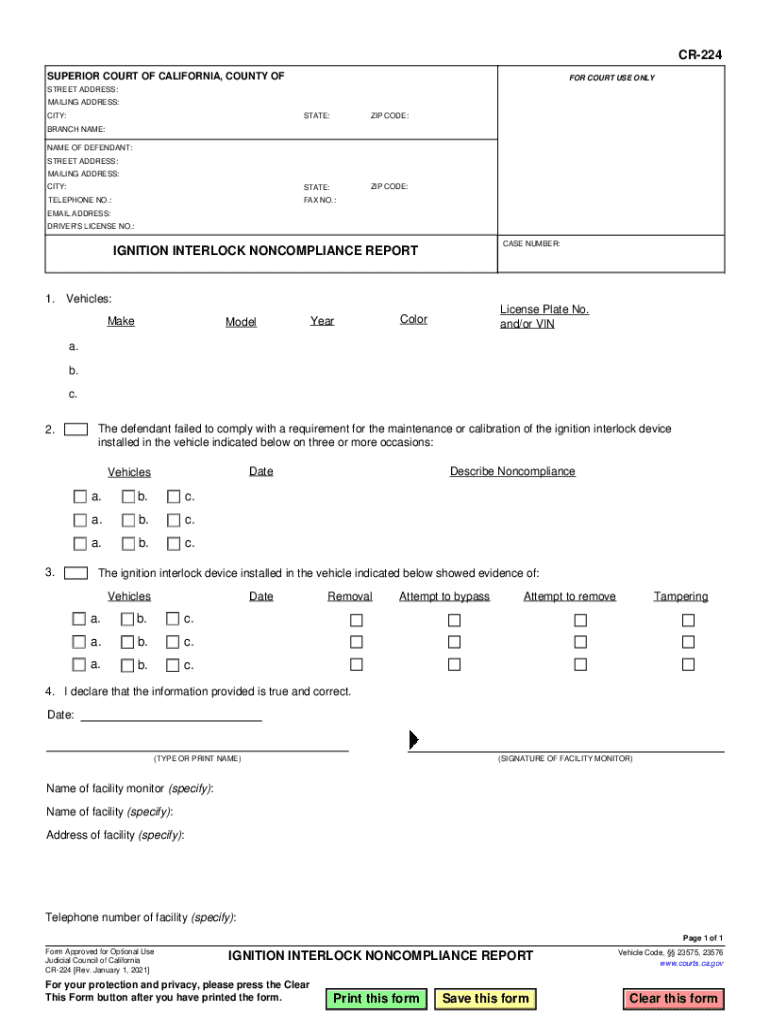
The CR-224 Ignition Interlock Noncompliance Report is a legal document used by the Superior Court of California to track instances where a defendant has failed to comply with ignition interlock device requirements. This report includes important details such as vehicle information, the dates of noncompliance, and any evidence of tampering or removal of the device. It serves as a formal record to ensure defendants adhere to court mandates, particularly in cases where driving privileges are conditional upon the use of such devices.
Key Elements of the CR-224 Ignition Interlock Noncompliance Report
This report contains several critical sections that collect comprehensive information about noncompliance:
- Vehicle Information: Provides details about the vehicle in which the device is installed, including make, model, and license plate number.
- Dates of Noncompliance: Documents the specific dates on which violations occurred, helping to establish a timeline of noncompliance.
- Evidence of Tampering or Removal: Includes any physical or electronic evidence suggesting that the device was tampered with or removed without authorization.
- Declaration by Facility Monitor: A confirmation provided by a certified monitor to vouch for the accuracy of the documented information.
Steps to Complete the CR-224 Ignition Interlock Noncompliance Report
Filling out the CR-224 form involves a systematic approach to ensure all information is accurately recorded:
- Gather Required Information: Collect details about the defendant, vehicle, and ignition interlock device.
- Document Noncompliance: Note down the instances and nature of noncompliance, including dates and any supporting evidence.
- Complete Specific Sections: Fill out each section diligently, ensuring all required fields such as vehicle information and evidence of tampering are covered.
- Obtain Declaration: Ensure the facility monitor reviews and confirms the accuracy of the report, providing their declaration at the end.
- Submission: Submit the completed report to the appropriate judicial authority within specified timelines to facilitate further legal proceedings.
How to Obtain the CR-224 Ignition Interlock Noncompliance Report Judicial Council Forms
These forms can typically be accessed through the following methods:
- Judicial Council of California's Website: Online availability ensures easy access for legal professionals and defendants.
- Local Courts: Physical copies may be available at local courthouses that handle cases involving ignition interlock devices.
- Legal Professionals: Attorneys can provide forms to their clients as part of the legal process for handling noncompliance issues.
Who Typically Uses the CR-224 Ignition Interlock Noncompliance Report Judicial Council Forms
The form is primarily utilized by various stakeholders in the judicial and legal process:
- Courts and Judges: To ensure compliance with court orders related to ignition interlock devices.
- Facility Monitors: To report and certify instances of noncompliance.
- Legal Attorneys: To advocate for or against a defendant's actions related to interlock device use.
- Defendants: To understand the implications and address any alleged noncompliance.


Legal Use of the CR-224 Ignition Interlock Noncompliance Report Judicial Council Forms
The CR-224 form serves several legal purposes:
- Compliance Verification: Acts as a legal document to confirm that the defendant is adhering to court-mandated requirements.
- Evidence Support: Provides documented evidence of noncompliance that may be used in hearings or trials.
- Legal Accountability: Holds defendants accountable for maintaining and calibrating their ignition interlock devices, consistent with state law.
Penalties for Non-Compliance
Failure to maintain compliance with ignition interlock requirements can lead to significant penalties:
- License Suspension: Noncompliance can result in the suspension or revocation of driving privileges.
- Monetary Fines: Fines may be imposed as a direct consequence of failing to adhere to legal mandates regarding the interlock device.
- Extended Monitoring: Courts may require extended periods of monitoring or additional legal consequences.
State-Specific Rules for the CR-224 Ignition Interlock Noncompliance Report Judicial Council Forms
While the CR-224 form is specific to the state of California, it's important to understand variations in interlock device laws across different states:
- California Regulations: Govern the implementation of ignition interlock devices particularly for DUI offenders, establishing specific guidelines for compliance.
- Variations Across States: Some states may have additional requirements or legal implications that differ from California's framework.
- Interstate Differences: Legal mandates may vary, affecting how noncompliance is reported and penalized.
Examples of Using the CR-224 Ignition Interlock Noncompliance Report Judicial Council Forms
Common scenarios where the CR-224 form would be utilized include:
- DUI Cases: A driver who has been convicted of DUI and mandated to use an interlock device fails to comply, necessitating a report.
- Evidence Submission: The form is used to submit evidence in court hearings to substantiate claims of noncompliance.
- Legal Hearings: The report is referenced during hearings to establish a defendant's track record of adherence or deviation from court orders.




