






Definition & Meaning
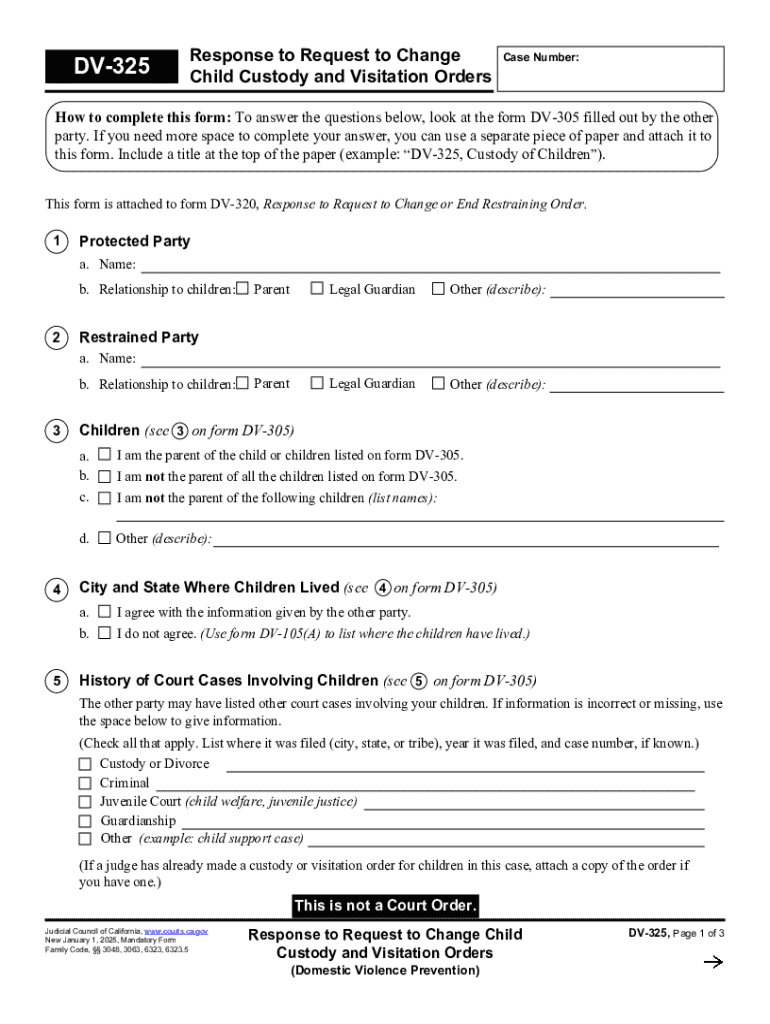
The DV-325 form, titled "Response to Request to Change Child Custody and Visitation Orders," is a Judicial Council form utilized in family law cases, specifically addressing situations involving child custody and visitation order modifications. Often invoked within the context of domestic violence cases, this form allows the respondent to formally reply to a request for changes in custody or visitation arrangements. Key to this process is the opportunity for respondents to articulate their perspective on proposed changes, ensuring a fair consideration of their position. This response is legally significant as it outlines the consenting or opposing views of the respondent regarding changes that might impact the welfare and best interests of the child involved.
Steps to Complete the DV-325 Form
Filling out the DV-325 form involves several critical steps to ensure accuracy and compliance with court requirements:
-
Section Identification: Start by correctly identifying the sections to be completed based on the details of the case. Include the case number, names of the parties involved, and any other identifying information as indicated on the form.
-
Current Relationship Status: Clearly define your relationship to the child or children concerned. This includes detailing whether you are a biological parent, legal guardian, or another legal standing relative to the child.
-
Agreement or Disagreement: Indicate whether you agree or disagree with the proposed changes to the custody or visitation schedule. Provide detailed reasoning for your position, supporting it with any relevant documents or evidence.
-
History of Court Cases: Include any history of previous court cases that involve the child or custody issues. This is crucial as it contextualizes the current request within the broader legal narrative surrounding the child’s welfare.
-
Specific Custody Concerns: Address specific concerns regarding custody or visitation, such as the child’s safety, health, educational needs, or emotional well-being. Articulate practical examples or scenarios that underscore these concerns.
-
Signature and Date: Conclude the form by signing and dating it, attesting that all information provided is true and accurate under penalty of perjury.
Who Typically Uses the DV-325 Form
The DV-325 form is generally used by individuals involved in family law disputes, particularly when there are ongoing custody and visitation considerations. Typical users include:
- Parents: Biological or adoptive parents looking to adjust custody or visitation arrangements.
- Legal Guardians: Individuals who have been granted legal guardianship over a child and seek to protect the child's best interests.
- Attorneys: Legal representatives preparing the form on behalf of their clients to ensure all legal bases are covered.
- Court Officials: Judges or mediators reviewing the form as part of case proceedings to understand all parties’ stances and facilitate informed decisions.


Key Elements of the DV-325 Form
The DV-325 form is composed of several essential elements critical for a comprehensive response:
- Personal Information: Details of the respondent, including name, address, and relationship to the child.
- Proposed Order Changes: Areas where current custody or visitation orders are being challenged and the specific adjustments under consideration.
- Respondent's Position: Arguments for or against the proposed changes, backed by factual support.
- Child’s Interests: Consideration of the child’s needs, highlighting why the proposed changes are or are not in their best interest.
Legal Use of the DV-325 Form
The legality of the DV-325 form is embedded in its function as a tool for judicial transparency and fairness in custody-related cases. It:
- Documents Consent or Opposition: Provides a formal platform to accept or reject changes proposed in child custody arrangements.
- Ensures Due Process: Allows respondents to voice their side, contributing to a rounded judicial analysis.
- Serves as an Official Record: The completed form becomes part of the legal record, impacting how the court views and adjudicates the custody issue.
State-Specific Rules for DV-325 Form
While the DV-325 form is a standardized Judicial Council form in California, it is crucial to recognize that specific procedural rules can differ by locality. Some considerations include:
- Filing Procedures: Varies by county; it is essential to follow local court rules for filing and submission deadlines.
- Required Supporting Documents: Some jurisdictions may demand additional evidence or declarations about related domestic violence allegations.
- Verification Processes: The need for notarization or additional verification steps may differ, necessitating careful adherence to local guidelines.
Required Documents
To properly complete and file the DV-325 form, several accompanying documents might be needed, such as:
- Proof of Relationship: Documentation that establishes your legal connection to the child, such as birth certificates or adoption papers.
- Court Orders: Copies of any existing custody or visitation orders relevant to the case.
- Supporting Evidence: Schedules, medical records, or educational reports that back the claims made within the form.
Form Submission Methods
Upon completion, the DV-325 form can be submitted through various means, each with its own set of procedures:
- Online Submission: Some jurisdictions may facilitate electronic filing through court websites, offering a streamlined and efficient process.
- Mail Submission: Traditional postal submission remains available, where completed forms are sent to the appropriate court address.
- In-Person Submission: Directly submitting the form at the courthouse allows for immediate interaction and clarification if any submission errors are found.