




01. Edit your form online
Type text, add images, blackout confidential details, add comments, highlights and more.

Type text, add images, blackout confidential details, add comments, highlights and more.

Draw your signature, type it, upload its image, or use your mobile device as a signature pad.

Send it via email, link, or fax. You can also download it, export it or print it out.
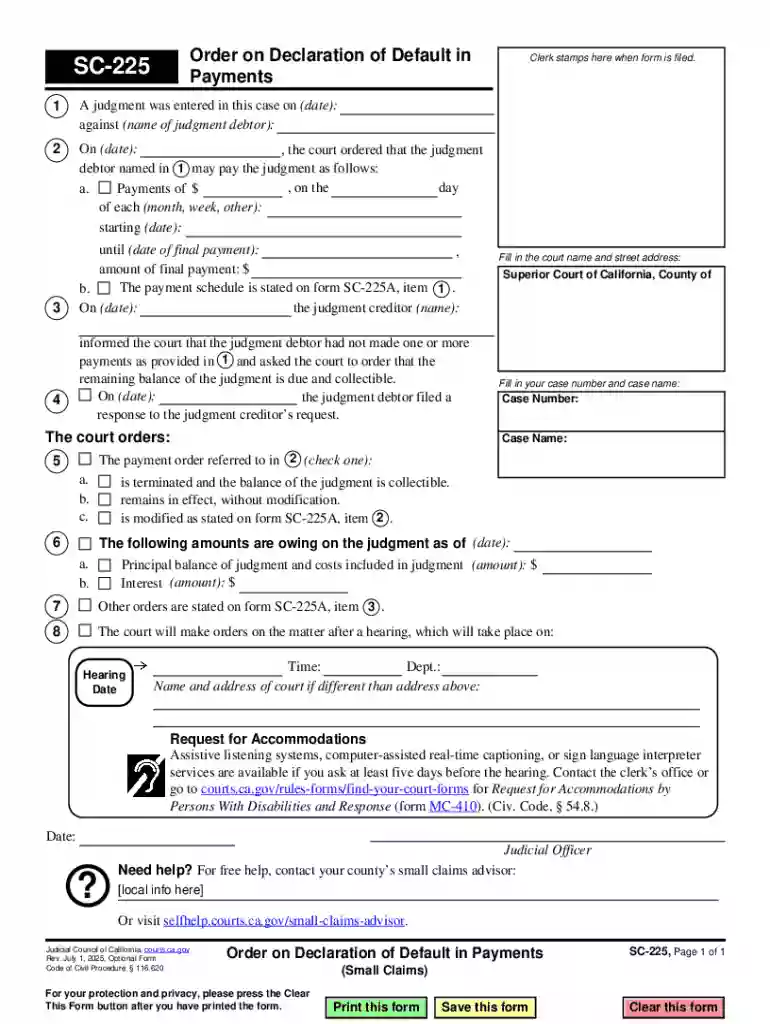
The "SC-225 Order on Declaration of Default in Payments" is a legal document issued by the Superior Court of California. It serves as an authoritative record when a debtor fails to comply with a court-ordered payment schedule. The document outlines the specifics of the default and considers potential actions such as modifying the payment order or terminating it altogether. This order addresses the debtor's obligations and provides essential details such as the amounts owed and potential future court hearings. It stands as a critical instrument for creditors to enforce financial obligations legally.
Obtain the Form: Acquire the SC-225 form from the Superior Court of California, either through their website or in person at a courthouse.
Fill in Debtor Information: Enter the debtor’s full name, contact details, and case number to ensure the document is correctly identified with the specific case.
Detail Defaulted Payments: Clearly list missed payments, including dates, amounts, and any other agreed terms that were not met.
Provide Supporting Documentation: Attach evidence such as prior payment agreements, court judgments, or any correspondence between the parties involved.
Complete Financial Disclosure: Include a summary of the debtor’s financial situation if required, highlighting any changes since the original order.
Submit the Form: File the completed form with the appropriate court clerk and ensure you receive confirmation of submission.
Prepare for the Hearing: Be ready to attend any scheduled hearings to discuss the order, and present further evidence if necessary.
Creditors: Individuals or entities who extended credit or loaned money and need to enforce a payment schedule that has gone into default.
Attorneys: Legal representatives managing debt recovery processes for creditors can utilize this form to initiate court proceedings.
Debtors: Individuals who have defaulted on a court-ordered payment schedule and need to understand the legal implications and potential modifications.
Court Officials: Judges and clerks use this form to process defaults formally and manage related court actions.


Debtor Information: Precise identification details of the debtor to ensure accurate processing.
Payment Schedule: The original payment plan terms, including amounts and deadlines, that the debtor failed to meet.
Default Details: Comprehensive outline of the defaults, including all relevant missing payments.
Court's Decision: Space for the court to record its final decision regarding the default, whether altering the payment plan or terminating it.
Hearing Information: Details about upcoming hearings specific to the case, providing clarity on the next steps for both parties.
The SC-225 order serves several legal functions. It acts as an official record of a debtor's failure to comply with court-ordered payments, and it can trigger legal actions such as garnishments or liens. Additionally, it can lead to the modification or termination of the original payment schedule. It’s used by courts to enforce financial obligations and provides a legal framework for creditors to pursue defaulted payments through judicial means.
Although the SC-225 is specific to California, the nuances of applying this form may vary slightly by county due to differences in local court procedures. It's important for interested parties to check with their local court to understand any specific requirements or procedures that may affect the completion and submission of this form. Legal counsel can provide guidance on jurisdiction-specific rules that impact the enforcement of payment defaults.
Case of a Loan Default: A small business extends a loan to a vendor under a structured payment plan. When payments cease, the creditor files the SC-225 order to formally declare the vendor in default, prompting court-assisted recovery efforts.
Rental Agreement Breach: A landlord uses the SC-225 form after a tenant fails to meet agreed rent payments under a court-mediated rental agreement. The court's ruling aids in addressing overdue payments or evicting the tenant if required.
Divorce Settlement Default: During a divorce, one party fails to adhere to a payment settlement dictated by the court. The affected party uses the SC-225 order to seek enforcement or adjustment of the settlement terms through the court system.
Debtor: The individual or entity that owes money under a court-imposed order.
Creditor: The party to whom the money is owed and who initiates the SC-225 order.
Default: The failure to meet the terms of payment as prescribed by a court order.
Garnishment: A legal process of deducting money from a debtor's wages or accounts to satisfy a defaulted obligation.
Lien: A legal claim against assets that can be used to satisfy a debt obligation in cases of default.
Understanding these terms aids in comprehending the SC-225 form and its implications for both debtors and creditors.
We've got more versions of the SC-225 Order on Declaration of Default in Payments form. Select the right SC-225 Order on Declaration of Default in Payments version from the list and start editing it straight away!
At DocHub, your data security is our priority. We follow HIPAA, SOC2, GDPR, and other standards, so you can work on your documents with confidence.






Mar 27, 2026 The library organized a list of forms made available on the SC Judicial Branchs Court Forms page. Declaration of Minor Under the Age of
Jul 1, 2025 On (date): the judgment creditor (name): informed the court that the judgment debtor had not made one or more payments as provided in and askedRead more
Hydraulic dredging case studies 225 Table 6-4. adequately address a number of factors in order for the remedy to be successful. This concept is embedded in


