01. Edit your form online
Type text, add images, blackout confidential details, add comments, highlights and more.

Type text, add images, blackout confidential details, add comments, highlights and more.

Draw your signature, type it, upload its image, or use your mobile device as a signature pad.

Send it via email, link, or fax. You can also download it, export it or print it out.
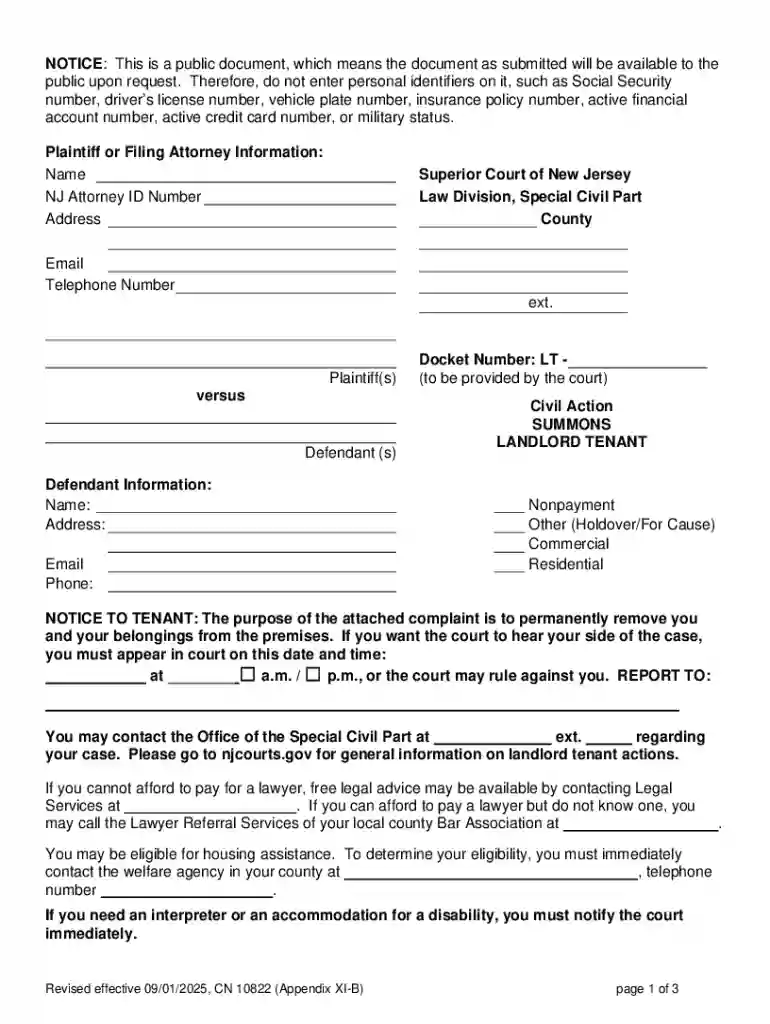
The Tenancy Summons and Return of Service (R 6:2-1) Appendix XI-B is a formal legal document used within the context of landlord-tenant civil actions in the Superior Court of New Jersey. It serves as a summoning mechanism to notify a tenant about a pending lawsuit initiated by a landlord, typically concerning issues related to tenancy such as unpaid rent or lease violations. This document plays a crucial role in the legal process, ensuring both parties are informed of their obligations and the upcoming legal proceedings.
To use the Tenancy Summons and Return of Service effectively, the initiating party, usually the landlord or their legal representative, must complete the form meticulously, ensuring all pertinent details such as parties' names, addresses, and court dates are accurately included. The form must then be filed with the court, and a copy should be served to the tenant. Serving the document appropriately is critical, as it involves notifying the tenant about the court action, thus requiring adherence to state-specific rules for legal service of process.
In New Jersey, specific rules under R 6:2-1 regulate how the summons must be served. The methods can include personal delivery, certified mail, or other legally sanctioned processes. The Return of Service must provide evidence that proper service has been conducted to avoid delays or dismissals of the case. Non-compliance with these rules can lead to procedural setbacks or case dismissals.
The Tenancy Summons and Return of Service is legally used to address disputes in landlord-tenant relationships. This form, part of the legal documentation process, ensures both parties are aware of the issues at hand, their legal rights, and the procedural requirements they need to fulfill. It forms the backbone of initiating lawful action against a tenant to seek remedies such as eviction or rent recovery.
Failure to serve the Tenancy Summons correctly, or not adhering to the filing deadlines, can result in dismissal of the case or legal sanctions. The court may rule against the landlord if procedural rules are not followed, emphasizing the importance of complying with all legal requirements as stipulated under R 6:2-1.
We've got more versions of the Tenancy Summons and Return of Service (R 6:2-1) Appendix XI-B form. Select the right Tenancy Summons and Return of Service (R 6:2-1) Appendix XI-B version from the list and start editing it straight away!
At DocHub, your data security is our priority. We follow HIPAA, SOC2, GDPR, and other standards, so you can work on your documents with confidence.