
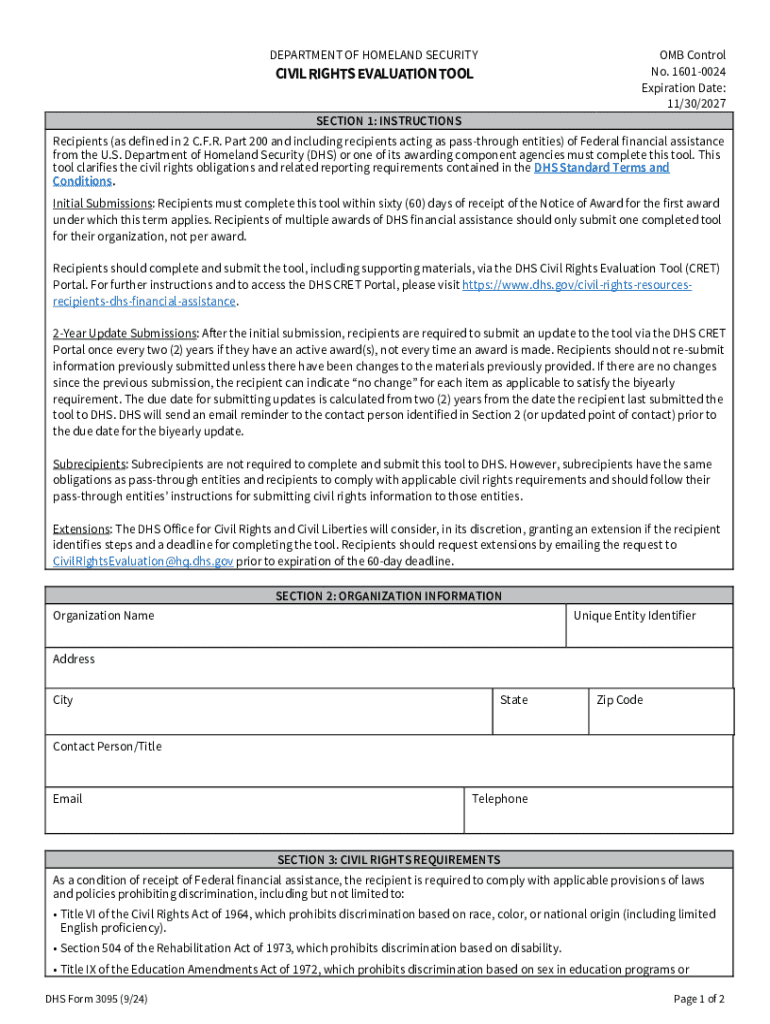







Definition & Meaning
The Civil Rights Evaluation Tool is designed for organizations that receive Federal financial assistance from the U.S. Department of Homeland Security (DHS). Its primary purpose is to ensure compliance with anti-discrimination laws. These laws cover a spectrum of protected characteristics, including race, color, national origin, sex, age, disability, and religion. Through this tool, recipients are guided to ensure adherence to these legal obligations, thereby promoting equitable practices and reducing the risk of discrimination in programs and activities funded by federal assistance.
Importance of Compliance
Ensuring compliance with civil rights laws is crucial for recipients of federal funds. Non-compliance can result in the loss of funding and legal challenges. The evaluation tool acts as a preventative measure, helping organizations identify areas needing improvement in their current practices. By using the tool, organizations can demonstrate their commitment to equity and inclusivity, fostering trust among stakeholders and beneficiaries.
How to Use the Civil Rights Evaluation Tool
Initial Setup and Access
Organizations begin by obtaining access to the Civil Rights Evaluation Tool through the DHS website or designated platforms. It is essential to establish credentials and log into the system to access the features. The tool is user-friendly to accommodate varying levels of technical expertise, ensuring all users can navigate the evaluation effectively.
Navigation and Completion
- The tool provides a series of questions and scenarios designed to evaluate current practices.
- Users input relevant data and documentation as evidence of compliance.
- Guidance is offered within the tool to assist in interpreting questions or issues that may arise.
Regular Updates
Organizations are required to submit initial and biennial updates using the tool. This requirement emphasizes the need for ongoing compliance and reflection of any changes in organizational structure or policies that impact civil rights adherence.
Steps to Complete the Civil Rights Evaluation Tool
-
Access the Tool: Establish login credentials via the DHS portal.
-
Input Organizational Information: Provide detailed data on programs, beneficiaries, and operating procedures.
-
Conduct Self-Assessment: Follow the tool’s prompts to assess existing policies against civil rights requirements.
-
Submit Supporting Documentation: Upload necessary documents that validate compliance efforts, such as policies and training records.
-
Review and Submit: Once completed, review all entries for accuracy before final submission.
-
Respond to Feedback: If any deficiencies are noted, the DHS may provide guidance on improvements or additional actions required.
Key Elements of the Civil Rights Evaluation Tool
The tool highlights specific areas critical for compliance:
- Policy Review: Ensures all organizational policies reinforce non-discrimination principles.
- Training Programs: Assesses the availability and effectiveness of training for staff on civil rights laws.
- Data Collection: Evaluates how data regarding protected characteristics are collected, stored, and used.
- Public Notices: Checks that notices regarding rights under federal law are accessible to all stakeholders.
Important Terms Related to the Civil Rights Evaluation Tool
Understanding key terms is vital for effective use:
- Protected Characteristics: Traits such as race, gender, or disability shielded under anti-discrimination laws.
- Federal Financial Assistance: Grants or aid programs provided by federal entities, necessitating compliance with related regulations.
- Compliance: Adhering to prescribed rules and laws, particularly concerning civil rights.
Required Documents
Organizations need to submit various documents within the tool to prove compliance:
- Non-Discrimination Policies: These should be current and actively enforced.
- Training Records: Proof of employee training sessions related to civil rights.
- Incident Reports: Details on any past discrimination complaints and resolutions.
Document Preparation
All documents should be current, well-organized, and clearly labeled before submission. This ensures a swift review process and easy accessibility for evaluators.
Penalties for Non-Compliance
Failure to comply with the civil rights guidelines can result in serious consequences:
- Loss of Federal Funding: The most immediate risk is the cessation of financial support from federal sources.
- Legal Action: Non-compliance may lead to lawsuits or legal penalties under applicable civil rights laws.
- Reputation Damage: Public knowledge of discriminatory practices can result in loss of trust and harm to organizational reputation.
Who Typically Uses the Civil Rights Evaluation Tool


Primary Users
Organizations and agencies receiving DHS funding are the primary users. This includes public sector entities, non-profits, and educational institutions.
Secondary Users
Secondary users may include auditors or consultants tasked with ensuring third-party compliance and providing advisory services related to federal grants and civil rights adherence.
Target Demographics
The tool is tailored for use within the United States, considering the cultural and legal context of American civil rights legislation. It ensures organizations align with federal requirements, promoting inclusivity and preventing discrimination across various demographics.




