






Definition & Meaning of the "a la corte No entregue informacin Solo para - California Courts"
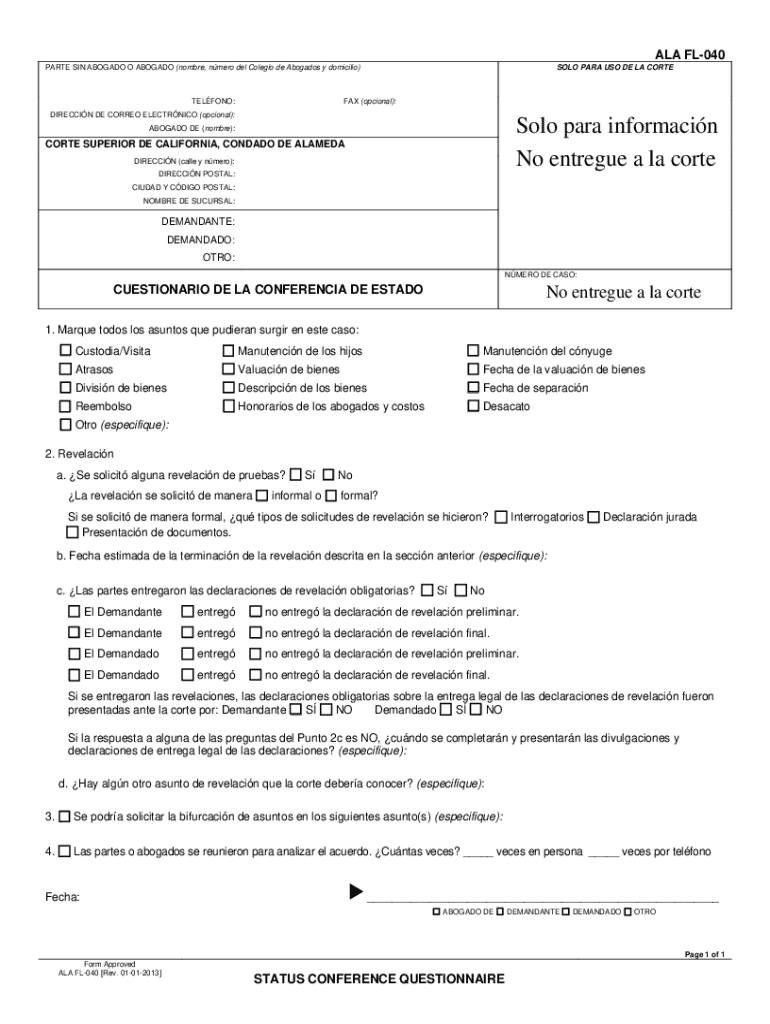
The "a la corte No entregue informacin Solo para - California Courts" form is a document used within the California court system. It serves specific legal functions, often related to family law cases in Superior Courts. This form is significant for individuals involved in legal proceedings, providing a standardized method for conveying information pertinent to their case. It addresses various elements, such as legal representation details, status of case evidence, and pertinent issues like custody and property division.
How to Use the "a la corte No entregue informacin Solo para - California Courts"
To effectively use the form, individuals must understand its requirements and components. Typically, the form will require detailed information about the parties involved in a legal case, their attorneys, and any previous court proceedings. Users should fill out each section accurately, ensuring all necessary details are provided to prevent delays in the legal process. It's essential to review instructions carefully and follow any specific guidelines outlined by the Superior Court.
Steps to Complete the Form
-
Gather Necessary Information: Before filling out the form, collect relevant details such as case numbers, attorney contacts, and any supporting documents related to your case.
-
Fill Out Personal Information: Enter your personal and contact details, ensuring accuracy.
-
Provide Case Details: Include specifics such as the nature of your case, involved parties, and any previous court actions.
-
Disclose Relevant Issues: Highlight any family law matters, like custody or support, that pertain to your situation.
-
Review and Sign: Carefully check the form for completeness and accuracy before signing. Some sections may require notarization.
Key Elements of the Form
- Case Identification: Listing the case number and court details for reference.
- Party Information: Details of all parties involved, including legal representation.
- Legal Issues: Explanation of primary legal matters, like custody or property disputes.
- Evidence Status: Updates on the disclosure of evidence between parties.
Who Typically Uses the Form
The form is primarily utilized by individuals engaged in family law cases within California. This includes parties such as spouses undergoing divorce proceedings, parents involved in custody disputes, and individuals seeking modifications to court orders. Attorneys representing these individuals also regularly utilize this form to communicate with the court effectively.


Legal Use of the Form
This form is intended for use in legal settings within California's court system. It's a formal document that contributes to the procedural aspects of family law cases, ensuring all parties provide current and accurate information to the court. Proper usage aligns with California's legal requirements and helps facilitate fair and organized proceedings.
Required Documents
To accompany this form, individuals may need to provide additional documents, such as:
- Proof of Identity: Valid photo ID or equivalent.
- Legal Documents: Copies of any previous court orders, agreements, or notices.
- Financial Statements: If financial matters are involved, documentation such as pay stubs or tax returns may be required.
Form Submission Methods
The form can be submitted through various methods, depending on the court's requirements:
- Online Submission: Some courts may offer digital submission options through official web portals.
- Mail: Sending the completed form and any accompanying documents via postal service.
- In-Person: Delivering the document directly to the court clerk's office during business hours.
Important Terms Related to the Form
Understanding key terms is crucial when filling out this form:
- Petitioner: The person who initiates the court proceeding.
- Respondent: The party responding to the legal action.
- Custody: Legal right and responsibility to make decisions about a child's welfare.
- Support: Financial assistance provided for a child's or spouse's needs.