
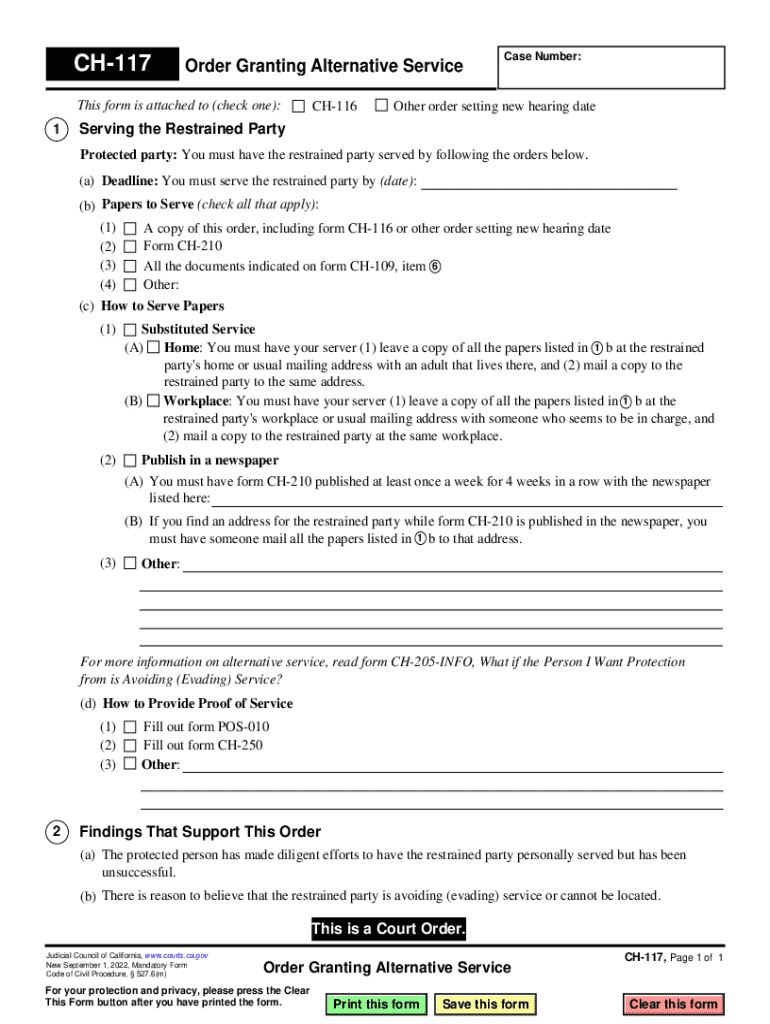







Definition and Meaning of Ch-117
Form CH-117 is a pivotal legal document used within the United States court system, primarily when a protective order's standard service cannot be fulfilled through conventional means. It becomes necessary in cases where continued efforts to serve the restrained party have been fruitless. The CH-117 authorizes alternative methods such as substituted service at a home or work address, notification through publication in a newspaper, or other indirect means of service. Understanding its purpose and implications can help when traditional service processes are not feasible.
How to Use the Ch-117
To utilize form CH-117, a petitioner typically must demonstrate diligent attempts to serve the restrained party through standard procedures. Once these efforts have been documented, the court considers permitting alternative service methods outlined in the form. This document requires specific information about the efforts made and justifications for alternate service, making it crucial for petitioners to maintain meticulous records of their attempts at service. Upon approval, petitioners can proceed with the authorized service methods, ensuring that legal proceedings are not halted because of unsuccessful service attempts.
Step-by-Step Guide to Using Ch-117
- Document Diligence: Keep an accurate record of attempts to serve the restrained party, including timeframes and methods used.
- File the CH-117: Submit the form to the relevant court along with evidence of attempted service.
- Await Approval: The court reviews and either approves or denies the request for alternate service methods.
- Implement Court-Approved Methods: Follow through with the alternative service methods approved in the order.
Steps to Complete the Ch-117
Completing the CH-117 involves several critical steps to ensure the accuracy and validity of the request. This process begins with collecting personal and case-specific details necessary for the form.
- Personal Information: Provide names, addresses, and contact information for both parties.
- Case Details: Include the case number and any pertinent court information.
- Efforts to Serve: Detail the previous attempts made to serve the restrained party and the methods employed.
- Proposed Alternative Methods: Clearly outline requested alternative service methods, supported by rationale and evidence.
Detailed Breakdown
- Identify Parties: Clearly fill out the section with the names and addresses of involved parties.
- Service Attempts: Record each attempt to serve, specifying dates and methods.
- Alternative Methods: Present a detailed proposal for alternate service, justifying its necessity and effectiveness.
Key Elements of the Ch-117
The CH-117 form encompasses several crucial components needed for completion and approval:
- Justification for Alternative Service: Clearly articulated reasons supporting why alternative service methods should be authorized.
- Verification of Diligence: Certified logs of all traditional service attempts are a must.
- Court Authorization Request: A formal request for the court to permit alternate service methods.
- Proposed Service Plan: Structured plan detailing the alternative service methods, ensuring they abide by legal standards and court instructions.
Legal Use of the Ch-117
Form CH-117 carries legal weight, making it imperative for petitioners to use it correctly to comply with judicial mandates. It ensures the restrained party is informed of court proceedings, even when direct methods have failed, thus safeguarding due process rights while maintaining judicial efficiency. Courts require evidence showing that all traditional measures have been exhausted, warranting alternative approaches. It also demands adherence to precise legal language and formats, thus necessitating legal counsel for its completion in complex situations.
State-Specific Rules for the Ch-117
While the general use of CH-117 is consistent nationwide, specific rules and procedures can vary by state:
- Different Requirements: Some states may have unique conditions for what constitutes a diligent effort for service.
- Jurisdictional Approval Processes: Different jurisdictions might have varied protocols for court reviews and approvals.
- Varied Timeframes: The time allowed for completing and processing CH-117 can differ across states.
Example of State-Specific Variances
For instance, in California, the requirements might demand more extensive documentation of service attempts compared to smaller states, where alternative service might be more readily granted given the geographical challenges in reaching rural areas.
Examples of Using the Ch-117
Real-world applications of CH-117 illustrate its importance and necessity:
-
Case Study 1: A petitioner in a domestic violence case repeatedly attempts service at various addresses without contact. After submitting CH-117, the court authorizes the use of email and notification via social media.
-
Case Study 2: A business owner repeatedly fails to serve a contractor failing contractual obligations. The CH-117 allows service through publication in a trade journal read widely by the business community.
Selecting the specific blocks above aims to provide a comprehensive and diverse understanding of the CH-117 form and its application within legal processes. Each aspect—from procedural steps to real-world application and state-specific nuances—combines to deliver a full picture of this vital legal instrument.




