01. Edit your form online
Type text, add images, blackout confidential details, add comments, highlights and more.

Type text, add images, blackout confidential details, add comments, highlights and more.

Draw your signature, type it, upload its image, or use your mobile device as a signature pad.

Send it via email, link, or fax. You can also download it, export it or print it out.
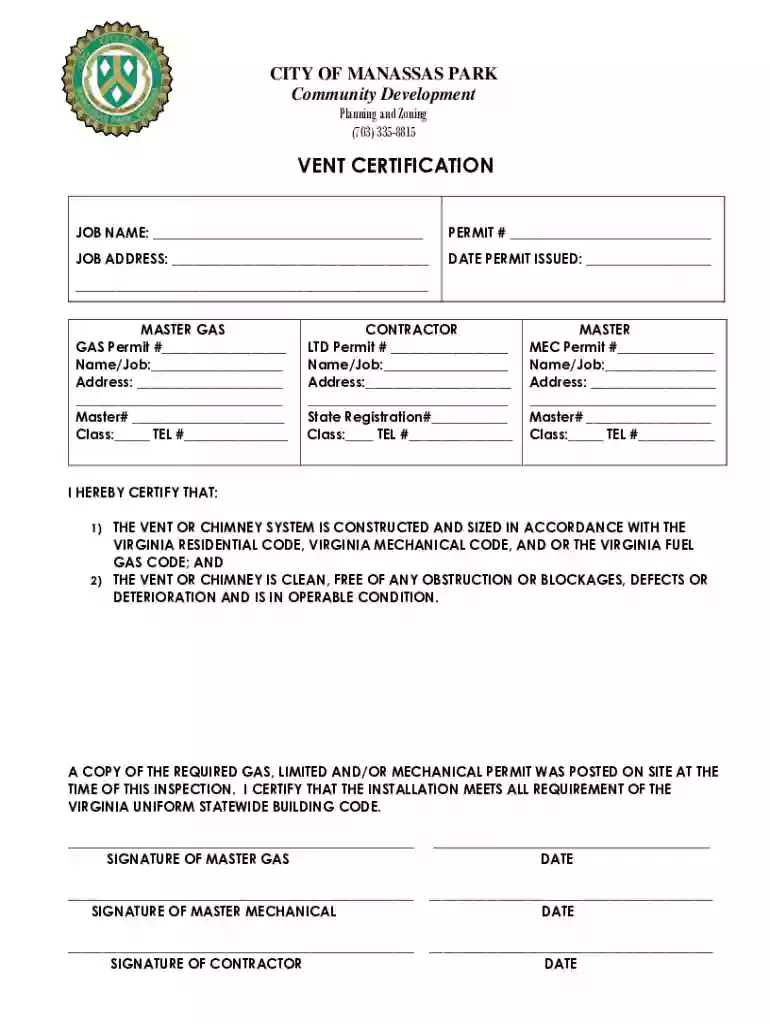
Vent certification ensures that a vent or chimney system complies with building codes, specifically in the region of its usage. For instance, in Virginia, the vent certification from the City of Manassas Park's Community Development Planning and Zoning department ensures systems adhere to local regulations. The process involves confirming that installations are safe, efficient, and environmentally compliant. Certification is crucial as it assures homeowners and businesses that their systems operate correctly and safely. This certification is particularly important for preventing potential hazards associated with vent or chimney failures.
Using the vent certification form involves several steps to effectively document compliance. Users need to accurately provide all required information, including the details of the vent or chimney systems, and ensure that any necessary permits are mentioned. It is essential to fill out all relevant sections completely and accurately. Completing this form involves collaboration between different parties, including certified professionals, to verify all aspects of the vent system’s compliance are addressed. This process ensures that all safety measures are adhered to, preventing liability issues or hazardous situations.
Gather Necessary Information: Begin by collecting all relevant details about the vent or chimney, including location, type, and any past certifications or inspections.
Identify Parties Involved: The form requires signatures from the master gas, master mechanical, and contractor responsible for the vent system. Ensure these professionals are identified early in the process.
Complete the Form: Carefully fill out each section. Include details about any permits, the installation’s compliance with building codes, and the operational condition of the system.
Review and Sign: Before submission, review all entered information for accuracy. Obtaining the required signatures from the responsible parties is critical for valid certification.
Submit the Form: Once completed, the form can be submitted as specified by the local building authority, ensuring compliance with submission guidelines.
Gathering the right documents is crucial for a smooth certification process. Required documents typically include proof of any required permits, detailed schematics of the vent or chimney system, and previous inspection reports if applicable. These support the application and provide the regulatory body with comprehensive data regarding the system’s compliance with legal standards. Missing or incomplete documentation can lead to processing delays or rejection of the certification application.
The vent certification holds legal significance as it verifies that a venting system complies with all applicable building codes and safety standards. This compliance is crucial in the event of a dispute or inspection. Holding a valid certification can protect property owners and contractors from legal liability related to non-compliance or accidents. The certification serves as documented evidence of lawful installation and maintenance, mitigating risks of legal implications.
Non-compliance with vent certification requirements can lead to significant penalties, including fines from local authorities or legal actions. Systems found operating without certification may be deemed illegal, leading to forced shutdowns until compliance is achieved. Building owners can incur additional costs related to bringing a system into compliance post-installation. Thus, securing certification early and adhering to requirements is economically and legally beneficial.
Vent certification requirements can vary significantly based on state-specific codes and regulations. It's crucial for applicants to familiarize themselves with local requirements, such as those in Virginia, which may differ from other regions. State-specific rules could affect the form completion process, necessary documentation, and regulatory provisions affecting certification timelines and requirements. Consulting local guidelines can help in navigating these differences efficiently.
Consider a scenario where a homeowner wants to sell a property. A valid vent certification can serve as a reassuring point during the transaction, confirming that the property complies with building safety standards. Similarly, commercial entities needing to prove compliance for insurance purposes can rely on the certification as a standard document affirming the safety and legality of their systems. Real estate transactions, insurance coverage, and workplace safety audits frequently require this type of certification.
We've got more versions of the Vent Certification form. Select the right Vent Certification version from the list and start editing it straight away!
| Versions | Form popularity | Fillable & printable |
|---|---|---|
| 2021 | 4.8 Satisfied (26 Votes) |
At DocHub, your data security is our priority. We follow HIPAA, SOC2, GDPR, and other standards, so you can work on your documents with confidence.