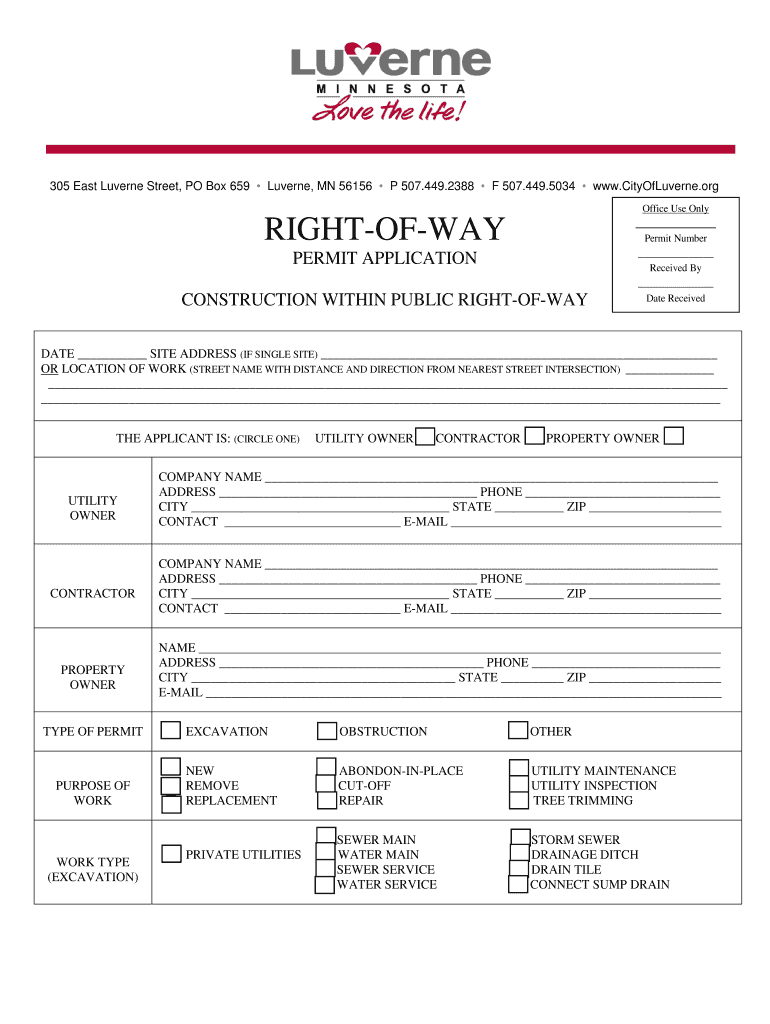







Definition and Meaning of Right-of-Way Permit Application
The Right-of-Way Permit Application is an essential document used to gain legal permission for construction activities within public right-of-way areas, such as streets, sidewalks, and easements. This form is pivotal for utility companies, contractors, and private individuals who need to modify public spaces temporarily for construction, maintenance, or installation activities. The permit ensures that the proposed activities comply with local regulations and public safety standards.
Technical Aspects
- Purpose: Facilitate safe and regulated construction work within public spaces.
- Common Use Cases: Roadwork, utility installations, and temporary traffic adjustments.
- Issuers: Typically local governments or municipal authorities, such as city engineering departments.
How to Use the Right-of-Way Permit Application
To successfully utilize the Right-of-Way Permit Application, applicants must ensure they provide comprehensive and accurate information. This involves detailing the scope of the work, estimated timelines, and project impact on surrounding areas. The aim is to provide municipal authorities with sufficient data to assess the feasibility and safety of the proposed activities.
Steps for Effective Usage
- Gather Required Information: Collect all necessary details such as project plans, timelines, and contact information.
- Fill Out the Application: Complete all sections of the application form thoroughly to avoid delays in processing.
- Submit Supporting Documents: Attach any additional documents required by the issuing body, such as project maps or traffic management plans.
Key Elements of the Right-of-Way Permit Application
A Right-of-Way Permit Application generally comprises several critical components that must be completed accurately to be considered for approval. Understanding these elements can streamline the application process and improve chances of obtaining the permit.
Main Components
- Applicant Information: Contact details of the person or entity filing the application.
- Project Description: Comprehensive summary of the intended work, including methods and materials used.
- Site Plan: A detailed depiction of the work area, often required for major projects.
Additional Considerations
- Permit Fees: Outline of associated costs, which might vary based on project scale and duration.
- Utility Owner’s Signature: Verification from the utility owner, if applicable, acknowledging the planned work.
Steps to Complete the Right-of-Way Permit Application
Completing the Right-of-Way Permit Application involves a series of steps that applicants must follow precisely. Ensuring that each step is executed correctly is vital to gain approval for the proposed activities.
Step-by-Step Process
- Review Local Guidelines: Understand the specific requirements set by the local authority.
- Prepare Detailed Project Outlines: Ensure all aspects of the project are clearly defined and documented.
- Complete Each Section: Carefully fill out each part of the form, ensuring no required field is left empty.
- Double Check for Accuracy: Review the information for mistakes or omissions that could delay processing.
Eligibility Criteria for the Right-of-Way Permit Application
To apply for a Right-of-Way Permit, individuals or organizations must meet specific eligibility requirements set by the local authorities. It is crucial to verify eligibility beforehand to reduce the likelihood of application rejection.


Standard Criteria
- Legal Authority: Applicants must have the legal authority or permission to conduct work on the designated property.
- Compliant Plans: Ensure the submitted project plans align with local regulations and safety standards.
Important Terms Related to Right-of-Way Permit Application
Understanding the terminology associated with the Right-of-Way Permit Application can facilitate better communication and comprehension throughout the process. Common terms help applicants interpret requirements and comply with regulations.
Key Terms
- Right-of-Way: Areas reserved for public passage, such as roads and sidewalks.
- Permittee: The individual or entity granted permission to proceed with the work.
- Encroachment: An intrusion on the public right-of-way that requires special permission.
State-Specific Rules for the Right-of-Way Permit Application
Regulations for submitting and processing Right-of-Way Permit Applications can vary significantly across different states. It is essential to be aware of local regulations to comply with applicable laws and avoid complications during the application process.
Variations and Considerations
- Regional Regulations: Some states may have additional requirements around environmental impact and public notification.
- Application Timelines: Deadlines and processing times may differ, so early submission is often recommended.
Understanding these elements and processes ensures applicants can navigate the Right-of-Way Permit Application effectively, resulting in successful project execution within the public right-of-way.