
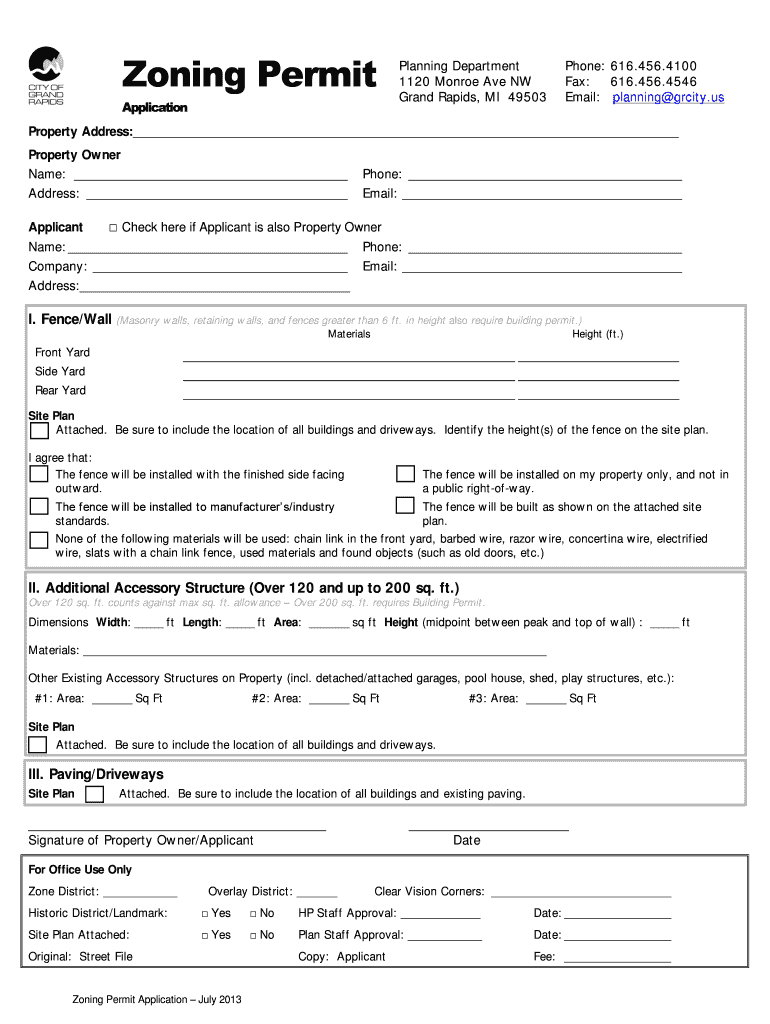







Definition & Purpose of the Zoning Permit Application
A Zoning Permit Application is a document required by the Planning Department in various municipalities, such as Grand Rapids, MI, to ensure that any proposed changes to a property comply with local zoning laws. This application is integral for property owners and developers who plan to undertake construction projects, such as building fences, walls, or accessory structures. By obtaining a zoning permit, applicants confirm that their projects adhere to regulations regarding land use, structure dimensions, and material restrictions. Understanding its purpose is essential for legal compliance and successful project execution.
Steps to Complete the Zoning Permit Application
Completing a Zoning Permit Application involves several meticulous steps to ensure accuracy and compliance with local zoning regulations.
-
Gather Required Information: Collect all necessary details related to the property, including ownership information, property dimensions, and detailed plans of the proposed structures.
-
Prepare Site Plans: Create detailed site plans that clearly outline the location, dimensions, and materials of the proposed structures. These plans are crucial for evaluating compliance with zoning codes.
-
Complete the Application Form: Fill out the Zoning Permit Application form, providing all requested information about the project, including intended use, construction specifics, and compliance statements.
-
Attach Supporting Documents: Include any additional documentation required, such as property maps, previous permits, and any variance requests.
-
Submit the Application: File the completed application and supporting documents with the local Planning Department. Choose either an online submission, mailing, or an in-person handover, depending on local procedures.
-
Await Approval: Once submitted, the zoning office will review the application to decide on the permit issuance. Approval times can vary based on the complexity of the project and local government workload.
Key Elements of the Zoning Permit Application
The Zoning Permit Application comprises several critical sections that applicants must thoroughly complete:
-
Applicant Information: Personal details of the property owner or authorized applicant, including contact information.
-
Project Description: Concise description of the proposed work, detailing all structures intended for construction.
-
Site Specifications: Information about the existing site conditions, including current land use and any existing structures.
-
Compliance and Regulations: Statements ensuring that the proposed project adheres to local zoning ordinances and any special conditions or variances required.
-
Owner's Authorization: Signature of the property owner or an authorized representative, confirming agreement with the application details and adherence to regulatory requirements.
How to Obtain the Zoning Permit Application
To secure a Zoning Permit Application, follow these methods depending on availability in your locality:
-
Online Access: Visit the website of the local Planning Department, where the application form can be downloaded or filled out digitally.
-
In-Person Pickup: Head to the local municipal or zoning office to collect a paper copy of the application form. This visit may also provide an opportunity for direct inquiries about the process.
-
Mail Request: Some municipalities offer the option to request the application form via mail, where it will be sent to you for completion.
Legal Use of the Zoning Permit Application
Using the Zoning Permit Application correctly ensures compliance with local regulations and helps avoid legal issues. This document confirms that your construction plans meet all zoning codes, which is essential for securing final approval to proceed with construction. Any deviation from approved plans or incomplete application submissions can result in penalties, legal injunctions, or mandatory modifications.
State-Specific Rules for the Zoning Permit Application
Each state—and often smaller jurisdictions within states—may have different zoning rules influencing the Zoning Permit Application process:
-
Michigan: In cities like Grand Rapids, applications must include site-specific data such as local environmental considerations and historical site usage.
-
California: Requirements might be stricter to account for environmental regulations specific to regions such as coastal zones or wildfire-prone areas.
-
New York: Urban areas may have complex zoning laws, requiring thorough proof of compliance with building height restrictions, building footprints, and community impact assessments.
Required Documents for the Zoning Permit Application
Several key documents must accompany the Zoning Permit Application to ensure completeness and expedite the review process:
-
Property Deed: Verification of property ownership.
-
Detailed Site Plan: Schematic drawings showing proposed construction details and their placement concerning existing structures.
-
Environmental Assessments: If applicable, documents showing compliance with environmental regulations or impact assessments.
-
Local Variance Approvals: Documentation of any variances previously granted for deviations from standard zoning requirements.
Penalties for Non-Compliance with Zoning Regulations
Failing to adhere to the requirements of a Zoning Permit Application can lead to significant consequences:
-
Fines: Monetary penalties can be levied against properties for unauthorized construction or zoning violations.
-
Demolition Orders: In severe cases, non-compliant structures may be subject to removal by city authorities.
-
Project Cessation: Ongoing or planned construction can be legally halted until compliance with all zoning regulations is demonstrated.
Understanding these repercussions underscores the importance of following due process and ensuring all elements of the Zoning Permit Application are accurately completed and submitted.




