






Definition and Purpose of Storm Water Discharge Ordinancedoc
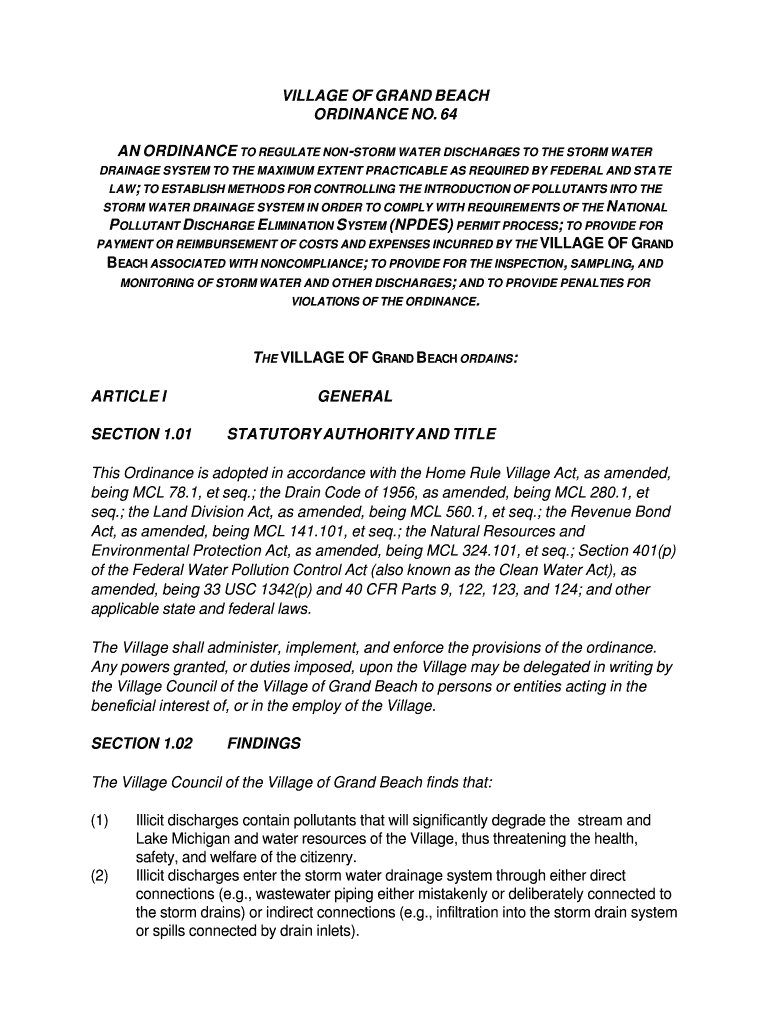
The Storm Water Discharge Ordinancedoc is a regulatory framework designed to control non-storm water discharges into storm drainage systems, ensuring compliance with federal and state environmental laws. This ordinance typically spells out specific methods for managing pollutants that enter the storm water drainage systems, mandates regular inspections and monitoring protocols, and details penalties for violations. Its primary goal is to protect public health and the environment by prohibiting illicit discharges and connections, thus safeguarding water resources from contamination.
Key Elements of the Storm Water Discharge Ordinancedoc
Understanding the core components of the ordinance is crucial for proper compliance and implementation:
- Pollutant Control Measures: The ordinance outlines strategies and methods for reducing pollutants, such as treatment requirements and source control measures.
- Inspection Protocols: Regular inspections are mandated to ensure compliance with the ordinance. These inspections help in identifying unauthorized discharges and maintaining system integrity.
- Enforcement and Penalties: It details the consequences for non-compliance, including fines and potential legal action, to ensure adherence to the regulations.
- Prohibition of Illicit Discharges: Strict guidelines prevent unauthorized materials from entering drainage systems, thus protecting water quality.
How to Use the Storm Water Discharge Ordinancedoc
To effectively utilize the ordinance, it is important to follow these steps:
- Understand the Requirements: Thoroughly review the ordinance to familiarize yourself with all regulatory requirements and expectations.
- Implement Control Measures: Develop and deploy necessary control measures within your organization or community to prevent non-compliant discharges.
- Schedule Regular Inspections: Establish a routine inspection schedule to ensure ongoing compliance and address any violations promptly.
- Document Compliance Efforts: Keep detailed records of all compliance activities, including monitoring results and corrective actions taken.
Steps to Complete Compliance with the Ordinance
Achieving compliance involves a series of structured steps:
- Assessment of Current Systems: Evaluate existing drainage systems to identify potential sources of illicit discharge.
- Training and Awareness: Educate stakeholders, including employees and contractors, about the ordinance requirements and best practices.
- Installation of Prohibitive Structures: Implement physical barriers and systems to prevent unauthorized discharges.
- Develop Contingency Plans: Prepare emergency plans to handle accidental discharges promptly and effectively.
Important Terms Related to the Storm Water Discharge Ordinancedoc
Understanding specific terminology is vital for interpreting the ordinance correctly:
- Illicit Discharge: Any discharge to the storm water system that is not composed entirely of storm water, except as authorized by the ordinance.
- BMPs (Best Management Practices): Strategies or techniques implemented to control and reduce pollution in storm water discharges.
- NPDES (National Pollutant Discharge Elimination System): A federal permitting program that regulates point sources of pollution discharging into waters of the United States.
Legal Implications and Use of the Ordinance
Compliance with the Storm Water Discharge Ordinance is not just best practice but a legal obligation:
- Regulatory Compliance: Ensures adherence to federal and state laws, reducing liability risks.
- Legal Authority: Provides municipalities with the legal authority to enforce compliance measures and take remedial actions.
- Litigation Risks: Non-compliance could result in lawsuits from regulatory bodies or environmental groups focused on safeguarding water quality.
Who Typically Uses the Storm Water Discharge Ordinancedoc
The ordinance is relevant to several stakeholders, including:
- Municipalities: Cities and towns use the ordinance to regulate and maintain their drainage systems.
- Businesses and Industry: Companies that produce discharge must comply with the ordinance to prevent pollutants from entering public water systems.
- Environmental Agencies: These bodies oversee compliance and may offer guidance or enforcement.


State-Specific Rules and Variations
While the ordinance is based on federal guidelines, there may be state-specific adaptations:
- Regional Amendments: Some states may implement stricter pollutant limits or additional compliance requirements.
- Local Adaptations: Municipalities might tailor the ordinance to address specific local environmental concerns or geographic challenges.
Examples of Using the Storm Water Discharge Ordinancedoc
Several practical scenarios illustrate the ordinance's application:
- Urban Development Projects: Implementing water management systems in construction projects to control runoff.
- Industrial Facilities: Installing treatment facilities to filter pollutants from discharge before entering storm systems.
- Community Eco-initiatives: Local environmental campaigns focused on educating the public and businesses about reducing pollutants in storm water.