






Definition and Meaning of Financial Aid Appeal
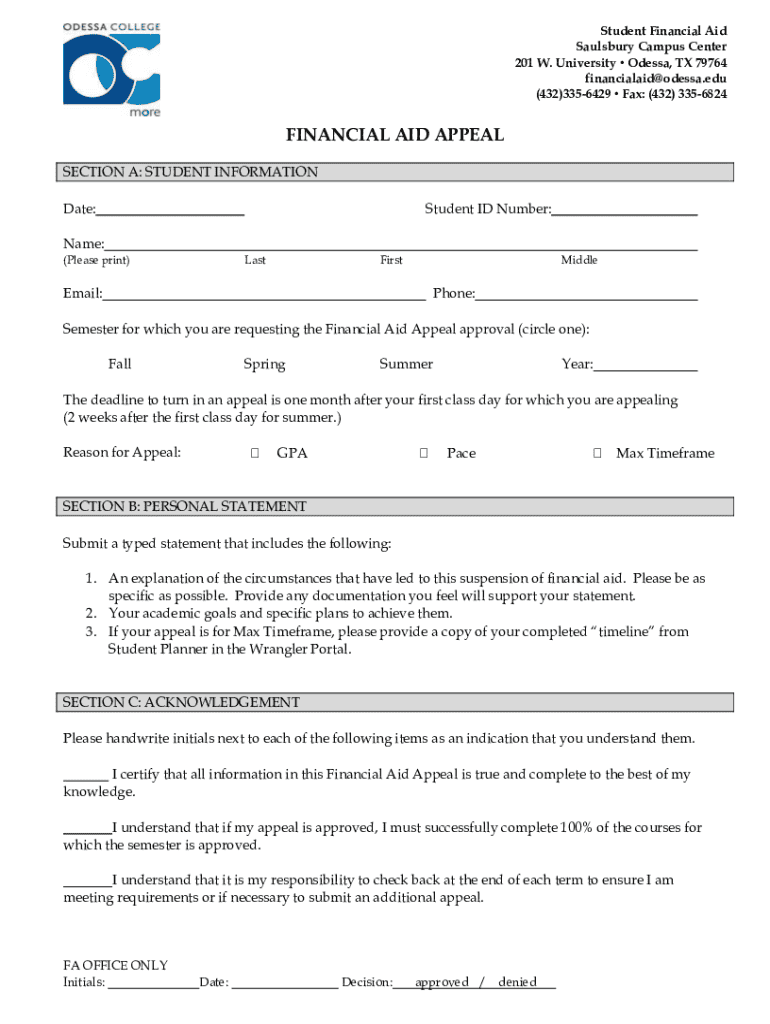
A Financial Aid Appeal is a formal request submitted by a student to a college or university seeking reconsideration of their financial aid package. This appeal is often necessary when a student faces a suspension or reduction in their financial aid due to various reasons such as academic performance, changes in financial circumstances, or discrepancies during a financial aid audit. The appeal process allows students to provide additional information or documentation that can demonstrate a legitimate need for financial assistance or outline circumstances that justify the reinstatement or increase of their aid.
Students often use the Financial Aid Appeal to communicate significant life changes, such as a parent's job loss, unexpected medical expenses, or other economic hardships that affect their ability to pay for education. Institutions typically require a detailed explanation along with supporting documents to evaluate the merit of the appeal.
Steps to Complete the Financial Aid Appeal
-
Understanding the Process and Requirements
Before starting the appeal process, students should thoroughly understand the specific requirements and procedures of their institution, as these can vary widely between colleges. Key components often include a detailed personal statement, required documentation, and adherence to submission deadlines. -
Drafting the Personal Statement
The personal statement is a crucial part of the financial aid appeal process. In this document, students should clearly articulate the reasons for their appeal, emphasizing any changes in financial circumstances or addressing academic challenges that led to a reduction or suspension of aid. It's essential to remain honest and provide a narrative that connects each detail convincingly to the financial difficulties being faced. -
Gathering Supporting Documents
Gathering the necessary documentation can reinforce the arguments made in the personal statement. This typically includes, but is not limited to, tax returns, medical bills, unemployment statements, or letters from school counselors or other relevant individuals. Proper organization and succinct explanations of these documents often enhance the appeal's effectiveness. -
Submission
Once the appeal and all supporting documents are compiled, it's important to ensure everything is submitted through the correct channels, whether online, in person, or via mail. Double-check the institution’s guidelines to make sure all criteria are met to avoid unnecessary delays. -
Wait for Response
After submission, students should expect a waiting period while the financial aid office reviews the appeal. During this time, it may be beneficial to maintain regular communication with the relevant department to ensure all submitted information is received and is under consideration.
Key Elements of the Financial Aid Appeal
- Student Information: Ensure personal data such as student ID, contact details, and enrollment status are accurately provided.
- Reason for the Appeal: Clearly describe the circumstances that prompted the need for an appeal. This might include familial financial changes, unexpected expenses, or personal hardships.
- Documentation: Attaching relevant documents such as tax records, pay stubs, or medical bills can support the appeal.
- Acknowledgment of Responsibilities: Alongside the request, students usually must acknowledge their understanding of academic and financial obligations moving forward.
Important Terms Related to Financial Aid Appeal
- SAP (Satisfactory Academic Progress): A standard used by colleges to make sure students are succeeding in their studies while using federal aid.
- EFC (Expected Family Contribution): A measure of a family's financial strength, which affects a student’s financial aid eligibility.
- COA (Cost of Attendance): The total amount it will cost a student to go to school, often juxtaposed against financial aid.
Understanding these terms can better position students to write compelling appeals. Furthermore, it helps ensure clarity and precision when discussing financial concerns or future academic commitments.
State-Specific Rules for the Financial Aid Appeal
While federal guidelines provide a framework for financial aid, many states have specific rules or additional programs that can affect a student's financial aid package. Students should check their state's department of education site for any state-specific regulations or financial aid offerings that might provide additional resources or necessitate different procedures.
Legal Use of the Financial Aid Appeal
Submitting a Financial Aid Appeal must comply with institutional policies and broader legal frameworks. The information provided should be accurate and truthful, as inaccuracies or fraudulent claims can result in severe consequences, including legal penalties and revocation of aid. Familiarity with privacy rights and data protection laws is crucial, as these can impact how personal information included in an appeal is managed.
Examples of Using the Financial Aid Appeal
-
Example 1 - Loss of Employment: A student's parent recently lost their job, significantly affecting the family’s financial capability to support educational expenses. The student submits a financial aid appeal featuring layoff notices and updated tax filings to argue for increased aid.
-
Example 2 - Medical Emergency: A student has accrued extraordinary medical expenses due to unforeseen health issues. In their appeal, they present medical bills and insurance statements, seeking acknowledgment of these additional expenses in their financial aid review.
-
Example 3 - Academic Probation Due to Personal Crisis: A student faced a family crisis that affected their academic performance, leading to the suspension of aid. They provide counselor statements and a detailed account of the situation to show commitment to improving academic standing and requalify for aid.
Required Documents for the Financial Aid Appeal
- Tax Returns: Provide the most recent tax documents to show changes in financial status.
- Medical Bills: If applicable, include itemized statements or insurance paperwork.
- Termination Letters: In cases of unemployment, attach official job termination notices.
- Academic Transcripts: Demonstrate past performance and ongoing commitment to academic improvement.
Each document serves to substantiate the student's narrative, adding credibility to their request for reconsideration of financial aid.