






Definition and Meaning
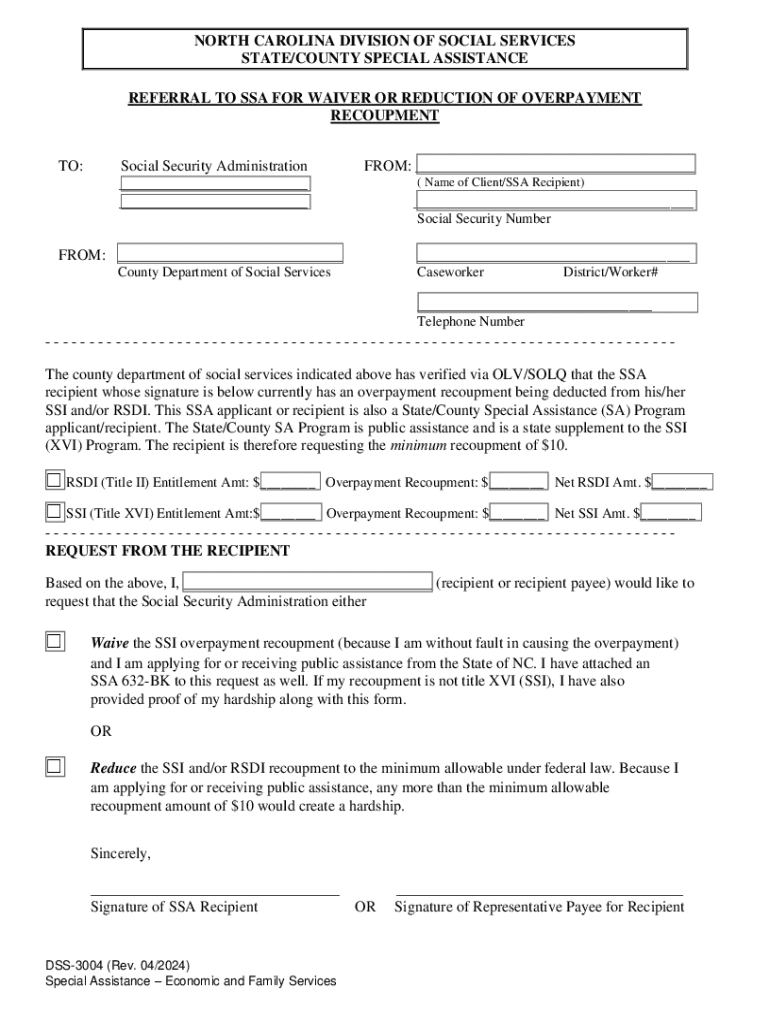
The referral to the Social Security Administration (SSA) for a waiver or reduction of overpayment is a formal request submitted to address situations where a recipient of Social Security Income (SSI) or Retirement, Survivors, and Disability Insurance (RSDI) benefits has been overpaid. This document aims to relieve the claimant from repaying excess benefits if overpayment was not their fault, or to reduce the recoupment amount asked by the SSA. It plays a pivotal role in helping individuals manage financial difficulties that can arise from these overpayments, ensuring that repayment demands do not exacerbate existing hardships.
How to Use the Referral to SSA for Waiver or Reduction of Overpayment
To use this form effectively, recipients should follow these steps:
-
Identify the Overpayment Details:
- Accurately understand the amount and reason for the overpayment.
- Confirm that the details correspond with notifications received from the SSA.
-
Determine Eligibility:
- Evaluate if you qualify for a waiver based on lacking fault for the overpayment and any resulting financial hardship.
-
Complete the Form:
- Fill out personal information and describe your financial situation thoroughly.
- Provide a detailed account of how the repayment would impact you financially.
-
Supporting Documentation:
- Attach any relevant documents, such as bank statements, pay stubs, and any correspondence from the SSA, to strengthen your case.
-
Submit the Form:
- Send the completed form to your local SSA office using preferred submission methods.
- Keep a copy for your records.
Steps to Complete the Referral to SSA for Waiver or Reduction of Overpayment
-
Review Instructions Carefully:
- Start by reading through all instructions attached to the form to avoid common mistakes.
-
Gather Necessary Information:
- Collect all personal and financial information, proof of overpayment, and relevant documents.
-
Fill Out the Form:
- Provide accurate responses in each section, ensuring the implications of continued repayment are clearly illustrated.
-
Include Documentation:
- Attach copies of any documents that support your claim of financial hardship and overpayment.
-
Check for Accuracy:
- Verify that all information is correct and complete before submission.
-
Submit the Form on Time:
- Ensure the form and any additional documents are submitted within the specified deadline to prevent delays or rejection.
Important Terms Related to Referral to SSA for Waiver or Reduction of Overpayment
- Overpayment: Excess funds received beyond your eligible benefits, which must typically be repaid.
- Waiver: An official allowance stating you are not required to repay the overpaid amount due to no fault of your own.
- Recoupment: The process where the SSA reduces your future benefits to recover the overpayment.
- Financial Hardship: A situation recognized by the SSA where repayment would cause significant financial strain on the recipient.
Legal Use of the Referral to SSA for Waiver or Reduction of Overpayment
When utilizing this referral form, it is crucial to be aware of its legal implications:
- Compliance with SSA Regulations: Ensure that information provided is truthful and complete, as misrepresentation can lead to further complications.
- Protection Under SSA Policies: If granted, a waiver can provide legal protection from having to repay an overpaid amount.
- Documentation Requirements: Maintain all communications and records associated with the waiver request, as these may be requested by SSA.
Key Elements of the Referral to SSA for Waiver or Reduction of Overpayment
- Personal Information: Detailed contact information of the claimant.
- Explanation of Overpayment Circumstances: A comprehensive narrative outlining how the overpayment occurred without the claimant’s fault.
- Financial Impact Statement: Details on how repayment would represent financial hardship.
- Request for Relief: A formal request specifying whether a waiver or a reduction in recoupment is desired.
State-Specific Rules for the Referral to SSA for Waiver or Reduction of Overpayment
While the form process is federally governed, certain aspects may vary slightly on a state-by-state basis:
- Specific Documentation: Requirements for supporting documents may differ.
- State Assistance Programs: Some states may offer additional resources or guidance.
- Regional SSA Policies: Minor procedural variations might exist in the processing timelines or methods.
Examples of Using the Referral to SSA for Waiver or Reduction of Overpayment
Consider these scenarios to understand practical applications:
-
Example 1: Jane received an overpayment because her income from part-time work was not processed correctly by SSA. She requests a waiver since the overpayment was not her fault.
-
Example 2: John, who is already facing significant medical expenses, finds the repayment unreasonable due to his hardship. He applies for a reduction to the minimum allowable recoupment amount.
These scenarios illustrate how the form can be leveraged to mitigate the impact of repayment obligations for various circumstances.