






Definition & Meaning
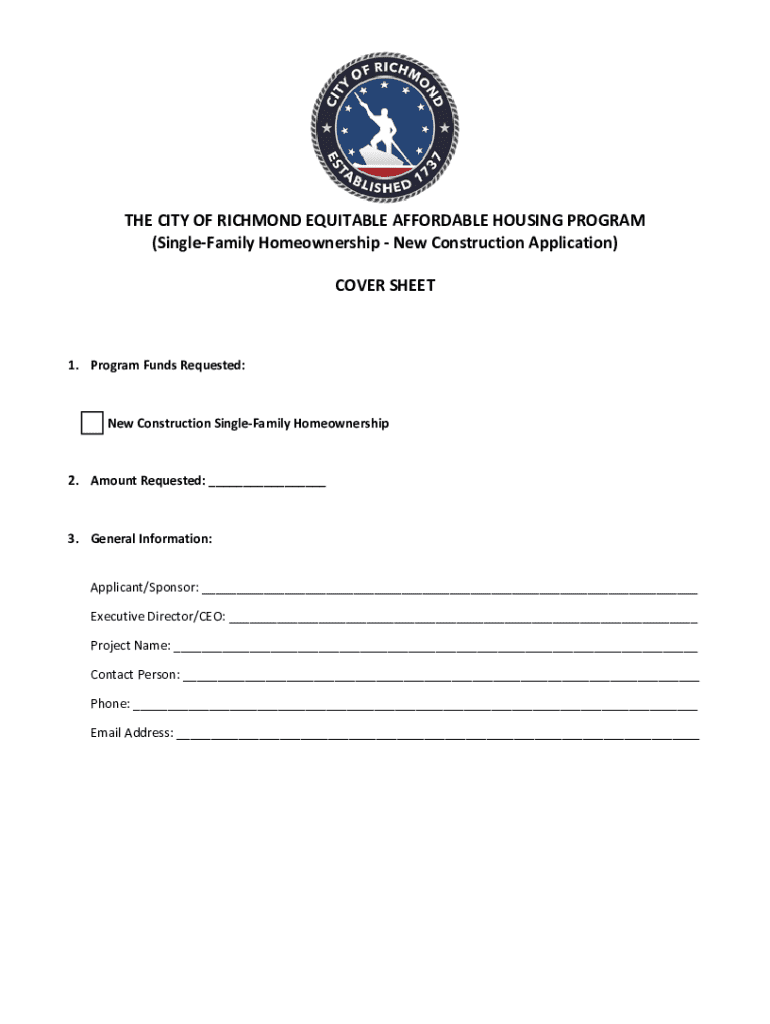
The "Single-family Homeownership - New Construction Application" refers to a formal request for participating in a program focused on increasing access to affordable, newly constructed single-family homes. This application process is critical for organizations or individuals seeking funding or support from initiatives like the City of Richmond's Equitable Affordable Housing Program. These programs aim to support the development of new housing that meets specific affordability and community impact criteria.
How to Use the Single-family Homeownership - New Construction Application
To use this application effectively, applicants should follow these steps:
- Review Eligibility Criteria: Before starting, ensure that your project aligns with the program's goals, such as focusing on affordability and community benefits.
- Gather Required Documentation: Compile all necessary documents, such as financial statements, project blueprints, and community impact assessments.
- Provide Detailed Project Information: Include comprehensive details about the proposed housing project, such as location, target demographics, and anticipated community impact.
Applicants should ensure the information provided is accurate and complete to avoid delays in processing.
Application Process & Approval Time
The application process for the Single-family Homeownership - New Construction can be divided into several key steps:
- Preparation: Collect detailed documentation on the proposed project.
- Submission: Submit the application either online via the program's portal or through designated mailing procedures.
- Review Period: Applications will undergo a thorough review process, assessing compliance with the program's objectives and criteria.
- Approval Notification: Once approved, applicants receive a notification detailing the next steps and any additional requirements to finalize participation.
The entire process, from submission to approval, varies by program but typically takes several months.
Required Documents
Successful completion of the application necessitates several key documents:
- Project Proposal: Describing the scope, objectives, and intended community impact.
- Financial Documentation: Such as funding requests, cost breakdowns, and financial feasibility studies.
- Affordability Plans: Outlining pricing and eligibility criteria for prospective homeowners.
- Community Impact Assessment: Detailing how the project benefits the local area.
These documents play a critical role in the evaluation process, ensuring projects meet the necessary standards.
Key Elements of the Single-family Homeownership - New Construction Application
A robust application will feature the following components:
- Detailed Project Description: Including site location, architectural plans, and environmental considerations.
- Affordability Strategy: Demonstrating adherence to defined affordability periods and pricing structures.
- Community Engagement: Showing plans for community involvement or support.
- Regulatory Compliance: Proof of alignment with local and federal housing regulations.
These elements ensure that the project aligns with the program’s goals.
Eligibility Criteria
Eligibility is a cornerstone of the application, typically requiring that:
- The project targets low to moderate-income families.
- The proposed construction adheres to sustainability standards.
- The organization can demonstrate past success in similar projects.
Applicants must provide evidence or documentation to support their eligibility claims.


State-specific Rules for the Single-family Homeownership - New Construction Application
Different states may have unique requirements or variations in the application process:
- Virginia: May emphasize projects that incorporate eco-friendly construction practices.
- California: Might require additional seismic safety assessments for new constructions.
- Texas: Could prioritize projects in regions experiencing rapid population growth.
Understanding and complying with state-specific rules are essential to ensure a smooth application process.
Examples of Using the Single-family Homeownership - New Construction Application
Organizations like non-profits or housing associations have used this application to:
- Secure funding for developments in underserved communities.
- Promote economic growth through affordable housing initiatives.
- Collaborate with local governments to create sustainable living environments.
These examples highlight the application’s role in fostering community-driven development projects.