




01. Edit your form online
Type text, add images, blackout confidential details, add comments, highlights and more.

Type text, add images, blackout confidential details, add comments, highlights and more.

Draw your signature, type it, upload its image, or use your mobile device as a signature pad.

Send it via email, link, or fax. You can also download it, export it or print it out.
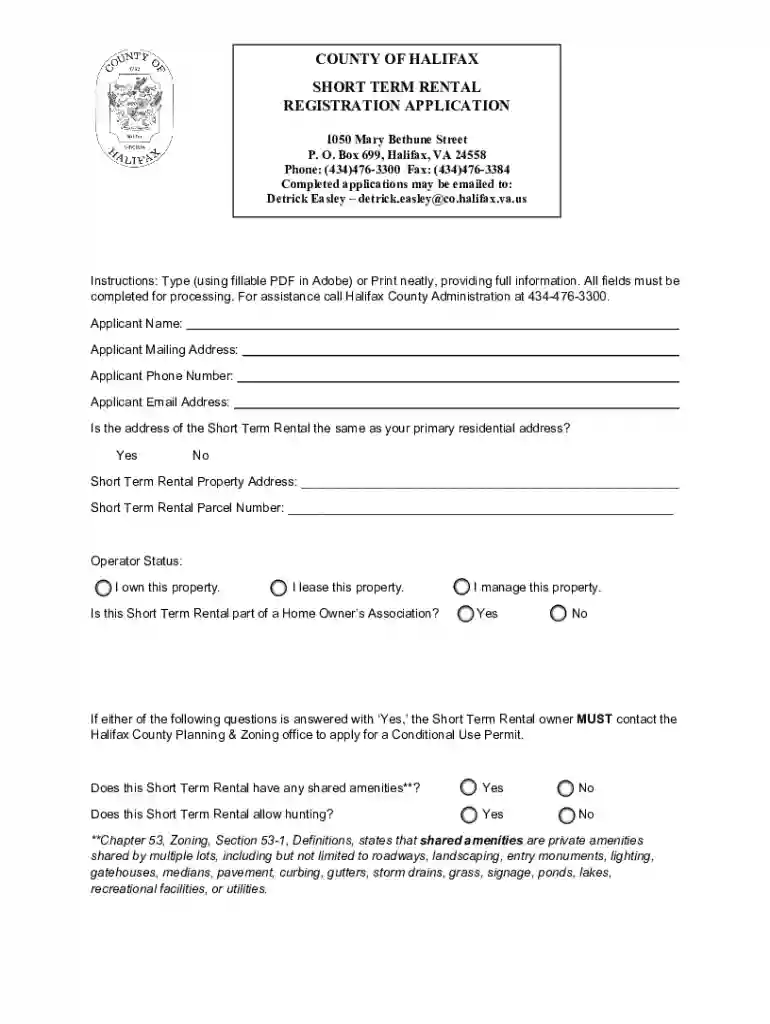
The "Short Term Rental Regulations and Registration Application" is a document that establishes the guidelines and necessary procedures for registering a short-term rental property within a jurisdiction, such as Halifax County, Virginia. This form is crucial for ensuring that property owners comply with local zoning and safety requirements. Typically, a short-term rental refers to renting a residential property for a duration shorter than thirty consecutive days. This application encompasses the legal foundation for property owners and managers to operate a short-term rental in compliance with municipal regulations.
Individuals or entities who own residential properties they wish to lease on a short-term basis use this application. This includes:


The application serves as a binding document that legalizes the operation of a short-term rental property. It ensures:
Regulations may differ significantly by state or even within different counties of the same state. For example, while some counties might require annual renewal of registration, others may have different guidelines concerning permissible rental periods or specific safety standards.
Applicants need to provide various documents that demonstrate compliance and eligibility. Essential documents typically include:
Non-compliance with short-term rental regulations can result in penalties, including:
Registration applications can usually be submitted through various channels:
Local government bodies, typically the Planning & Zoning Department or equivalent municipal department, are responsible for issuing and processing these forms. They oversee compliance, process approvals, and maintain public records associated with short-term rental registrations.
We've got more versions of the Short Term Rental Regulations and Registration Application form. Select the right Short Term Rental Regulations and Registration Application version from the list and start editing it straight away!
| Versions | Form popularity | Fillable & printable |
|---|---|---|
| 2023 | 4.6 Satisfied (29 Votes) |
At DocHub, your data security is our priority. We follow HIPAA, SOC2, GDPR, and other standards, so you can work on your documents with confidence.


All shared housing units are required to have an approved Registration Number to operate short-term rentals (31 days or fewer) in the City of Chicago.Read more
In S.L. 2014-91, the General Assembly explicitly allowed Cornelius to use zoning to regulate the location of vacation rentals and other transient occupancy. ARead more


