




01. Edit your form online
Type text, add images, blackout confidential details, add comments, highlights and more.

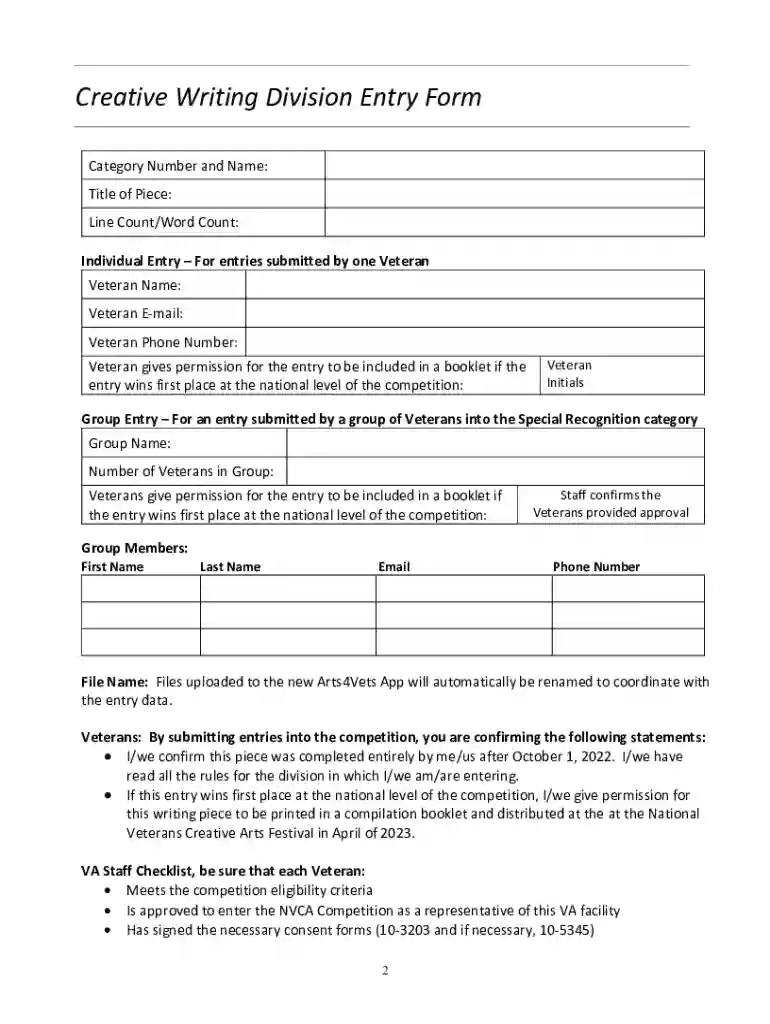
Type text, add images, blackout confidential details, add comments, highlights and more.

Draw your signature, type it, upload its image, or use your mobile device as a signature pad.

Send it via email, link, or fax. You can also download it, export it or print it out.
The term "Category Number and Name" typically refers to a classification system used in various contexts, such as taxation, documentation, or legal frameworks, to categorize and identify forms, documents, or regulations. The category number serves as a unique identifier that simplifies reference and retrieval, while the name provides a brief description or title that conveys the content or purpose. This system is essential for organizing, managing, and accessing documents effectively.
Key Features:
Examples:
Common Contexts:
When tasked with completing a category number and name for a document or form, several steps need to be followed to ensure accuracy and compliance.
Identify the Document Type: Determine whether the document is a tax form, legal document, or another type of classification that requires a category number and name.
Locate the Appropriate Category Number: Access the relevant database or guideline that lists corresponding category numbers and select the one that aligns with the document's purpose.
Apply the Correct Name: Once the number is identified, ensure the name associated with the number correctly describes the document or form aspect being referred to.
Verify Compatibility: Ensure that the number and name are compatible with digital systems if used online, to avoid any data entry errors or system conflicts.
Review for Accuracy: Double-check the filled-out section for mistakes to prevent compliance issues or misclassification.
Submit or Store Appropriately: After completing the form with the necessary category number and name, submit it or integrate it into the filing system as required.
The use of category numbers and names offers several benefits that contribute to smoother document handling and compliance.
Streamlined Organization: They provide a systematic way to organize documents, making retrieval swift and error-free.
Simplified Communication: By having a common reference, professionals communicate better across departments or with regulatory bodies.
Enhanced Compliance: Correctly using category numbers and names helps meet regulatory demands and aids in audits or reviews.
Reduced Errors: The structured system minimizes the risk of misfiling or incorrect document processing, thereby improving data integrity.
Understanding the core components of the category number and name system is crucial for effective utilization.
Category Number: This is typically a numerical or alphanumeric code that uniquely identifies a specific category within a system.
Category Name: A descriptive term that offers insight into the type of document or regulation the number pertains to.
Classification System: A set of rules and guidelines that define how category numbers and names are assigned.
Ensuring the correct application of category numbers and names is vital from a legal standpoint, especially in sectors with stringent compliance requirements.
Regulatory Compliance: For tax documents or legal filings, using the correct category helps in meeting legal standards and prevents penalties for misclassification.
Audit Trails: Correct categorization provides clear documentation trails required for audits or legal investigations.
Practical application of category numbers and names can be observed in various professional settings.
Tax Filings: Utilizing forms like "1040" or "W-9" with their respective numbers and names for taxpayer classification.
Legal Documents: Legal firm archives may use internal codes and names for indexing case-related documents.
Business Documentation: Companies often create internal coding systems to streamline document management.
Various individuals and entities utilize category numbers and names across multiple sectors.
Accountants & Tax Preparers: These professionals regularly deal with tax forms that require precise categorization.
Legal Professionals: Lawyers and paralegals use this system to organize case files and regulatory documentation.
Business Administrators: For efficient document management and regulatory compliance within organizations.


Several terms frequently relate to category numbers and names, facilitating better understanding and usage.
Taxonomy: The practice and science of classification.
Indexing: The process of assigning keywords and codes to documents for easy retrieval.
Compliance Codes: Specific regulatory numbers and names used in adherence to laws and standards.
These sections offer a structured overview of the "Category Number and Name," explaining its importance, application, and relevance across different fields. Each part provides detailed information to guide users in understanding, employing, and ensuring compliance with the system effectively.
We've got more versions of the Category Number and Name: form. Select the right Category Number and Name: version from the list and start editing it straight away!
At DocHub, your data security is our priority. We follow HIPAA, SOC2, GDPR, and other standards, so you can work on your documents with confidence.



Jul 29, 2026 Categories allow grouping of groups together in canvas. There are a few different built-in group categories used, or custom ones can be created
Jul 30, 2026 The Codex employs categories to easily index characters across different fictional characters. However, this leads to the creation of aRead more
May 8, 2025 Examples of stand-alone PII include Social Security Numbers (SSN), drivers license or state identification number; Alien Registration Numbers;Read more


