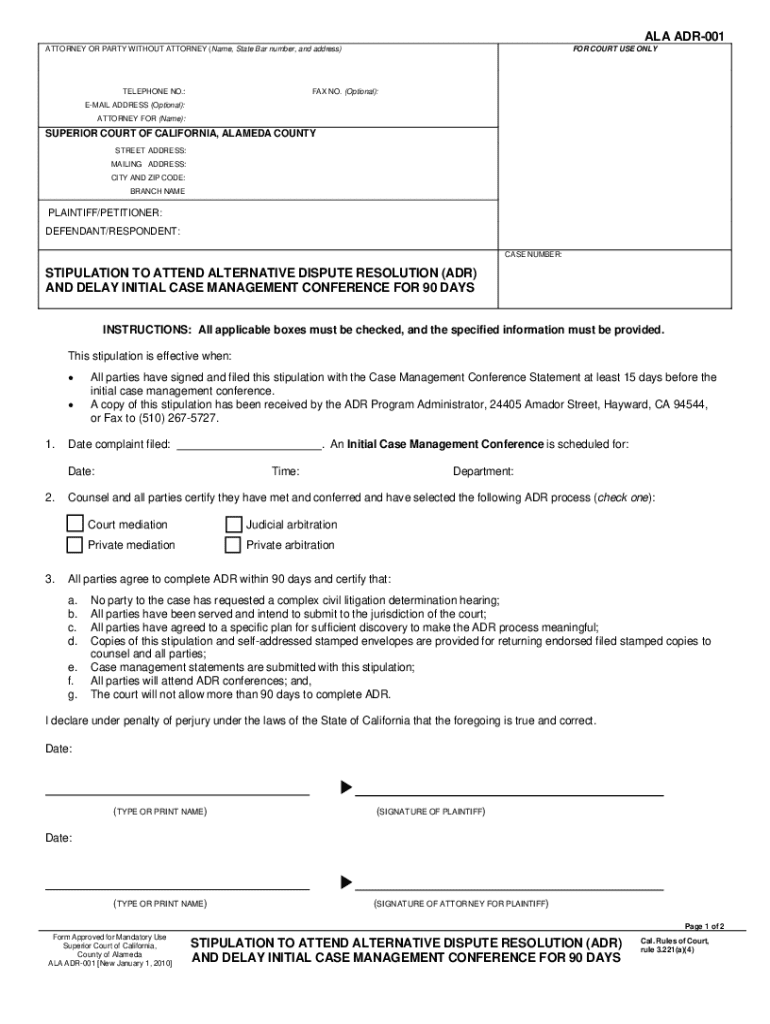







Definition and Meaning of ADR Information Packet
The "Alternative Dispute Resolution (ADR) Information Packet" is a comprehensive document designed to inform parties involved in civil lawsuits about alternative methods for resolving disputes outside traditional court settings. These methods include mediation, arbitration, and negotiation. Typically provided by courts, such as the Superior Court of California, the packet emphasizes the benefits of ADR, including faster case resolution and cost savings, while maintaining the relationships between disputing parties. It serves as an essential tool for parties considering ADR as a viable option to minimize litigation's adversarial nature.
Common Components of the ADR Information Packet
- Introduction to ADR: Definitions and explanations of ADR processes like mediation and arbitration.
- ADR Benefits: Highlights advantages such as faster resolution times, reduced costs, and privacy.
- Potential Disadvantages: Discussion of potential downsides, like limited recourse if arbitration decisions are unfavorable.
- Procedure Details: Step-by-step guidance on how ADR processes are typically conducted.
- Contact Information: Resources for accessing local mediation services.
How to Use the ADR Information Packet
To effectively utilize the ADR Information Packet, parties must familiarize themselves with its contents upon receiving it during a legal dispute. The packet serves as a road map for understanding, selecting, and engaging in ADR methods tailored to the dispute's specifics.
Steps for Effective Use
- Thorough Review: Both parties should thoroughly examine the packet's guidelines and suggestions.
- Discuss Options: Parties should discuss ADR as an option before escalating the matter further in court.
- Contact Services: Utilize the directory of local ADR services included in the packet to arrange mediation or arbitration.
- Follow Instructions: Adhere to any noted procedural steps specific to the court's ADR program.
Steps to Complete the ADR Information Packet
Completion of the ADR Information Packet involves specific actions by the plaintiff and, potentially, the defendant. This process ensures all parties are informed and agreeable to opting for ADR.
Detailed Completion Process
- Plaintiff's Responsibility: Attach the packet when serving the complaint to the defendant, ensuring the defendant is aware of ADR options.
- Acknowledgment: Both parties must acknowledge receipt and understanding of the packet's contents.
- Stipulation Filing: If both parties agree to pursue ADR, they should file a stipulation to attend ADR with the court.
- Engagement in ADR Process: Once agreed upon, follow through with the chosen ADR method, guided by recommendations in the packet.
Key Elements of the ADR Information Packet
The ADR Information Packet is structured to provide a clear understanding of various dispute resolution strategies.
Critical Elements
- Guidelines for Mediation: Outlining the process where an impartial third party facilitates negotiations.
- Arbitration Framework: Details on arbitration, where a neutral arbitrator renders a binding decision.
- Comparison to Litigation: Insight into why ADR can be preferable over traditional court proceedings.
- Compliance Instructions: How to ensure ADR agreements are recognized by the court.
Real-World Application
An example is a commercial contract dispute where parties opt to mediate to sustainably resolve differences without damaging business relationships. The packet helps structure these proceedings.
Who Typically Uses the ADR Information Packet
The ADR Information Packet is predominantly used by individuals or entities involved in civil litigation, including:


Common Users
- Plaintiffs: Individuals or organizations initiating legal action who wish to explore ADR as a first course of action.
- Defendants: Respondents in lawsuits who may benefit from quicker and less public dispute resolution.
- Legal Professionals: Lawyers and mediators facilitating ADR processes.
- Court Officials: Judges and court clerks providing direction towards ADR options.

State-Specific Rules for the ADR Information Packet
The implementation and structure of ADR Information Packets can vary based on jurisdictional rules, notably between different states.
Variations and Examples
- California: Specific emphasis on mediation and arbitration, with detailed requirements for both parties.
- New York: May include state-specific mediator qualifications and registration processes.
- Texas: Focuses on regional court-endorsed ADR providers and may include distinct procedural rules for filing stipulations.
Required Documents for ADR Participation
Engagement in ADR often requires preparation and submission of specific documents to ensure readiness and compliance.
Essential Documents
- ADR Agreement: Formal documentation outlining the decision to enter ADR.
- Case Outline: Brief details of the dispute, including key issues and desired outcomes.
- ADR Confirmation: Proof that parties have attended any mandatory ADR orientation or planning session.
Preparation Tip
Legal counsel can assist in ensuring documentation meets all stipulations outlined in the ADR packet to guarantee a smooth process.
Legal Use of the ADR Information Packet
The Alternative Dispute Resolution Information Packet is not just a set of guidelines but serves as a legally significant document when filed with the court system.
Legal Implications
- Court Approval: Filing a stipulation to attend ADR effectively integrates the chosen ADR process into the legal timeline of a case.
- Binding Agreements: Outcomes from ADR processes sanctioned by the court may result in legally binding agreements subject to enforcement.
- Judicial Endorsement: Depending on the jurisdiction, judges may require parties to attempt ADR before granting access to full court proceedings, underscoring the packet's legal authority.
This provides a comprehensive look into the various facets of the ADR Information Packet, offering depth and utility for those navigating civil litigation.