




01. Edit your form online
Type text, add images, blackout confidential details, add comments, highlights and more.

Type text, add images, blackout confidential details, add comments, highlights and more.

Draw your signature, type it, upload its image, or use your mobile device as a signature pad.

Send it via email, link, or fax. You can also download it, export it or print it out.
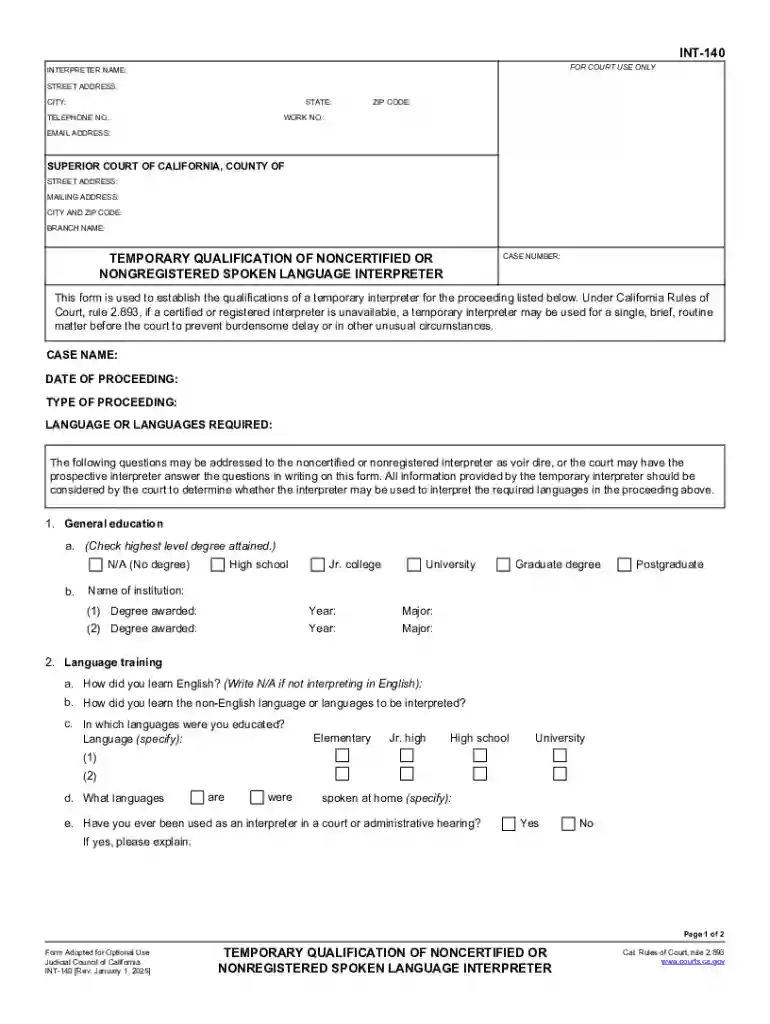
The "INT-140 Temporary Qualification of Noncertified or Nonregistered Spoken Language Interpreter Judicia" form is used predominantly by the Superior Court of California. This document is essential for establishing the temporary qualification of spoken language interpreters who are not certified or registered, specifically for court proceedings. It requires interpreters to provide detailed information about their educational background, language training, and any potential disqualifications. Through this form, the court can officially recognize the interpreter's temporary qualification status when a certified interpreter is not available.
Utilizing the INT-140 form involves a comprehensive process aimed at documenting the interpreter’s qualifications. The form must accurately reflect the interpreter’s competencies, ensuring the details provided are verifiable and complete. Users should pay close attention to each section, making sure to fill in all mandatory fields to avoid delays or rejections from the court.
This form serves a key function by ensuring interpreters with non-standard qualifications are still vetted and deemed competent for court duties. Completing the INT-140 form not only contributes to maintaining the integrity of court proceedings but also ensures that justice is accessible to non-English speakers.
Main users of this form include court officials requiring interim interpretation services and interpreters who have not achieved full certification or registration. Legal practitioners who handle cases involving non-English speaking clients may also facilitate the form’s use to engage necessary language services.


The INT-140 form holds legal weight as it formalizes the appointment of a noncertified or nonregistered interpreter for judicial purposes. This process ensures that interpreters are authorized to perform in legal settings, safeguarding against unqualified interpretations that might jeopardize court rulings.
Critical elements of this form include:
While the INT-140 form is specific to California, nuances in its application might exist. Courts may have individual mandates on form submission, required additional documentation, or interpreter criteria. It's crucial to verify with local judicial authorities to ensure full compliance with any state-specific adaptations.
In practice, the INT-140 is often utilized in cases where immediate linguistic assistance is essential, such as:
By addressing these common scenarios, the form demonstrates its practical application within the judicial system, providing necessary language support efficiently.
We've got more versions of the INT-140 Temporary Qualification of Noncertified or Nonregistered Spoken Language Interpreter Judicia form. Select the right INT-140 Temporary Qualification of Noncertified or Nonregistered Spoken Language Interpreter Judicia version from the list and start editing it straight away!
| Versions | Form popularity | Fillable & printable |
|---|---|---|
| 2025 | 4.2 Satisfied (22 Votes) |
At DocHub, your data security is our priority. We follow HIPAA, SOC2, GDPR, and other standards, so you can work on your documents with confidence.
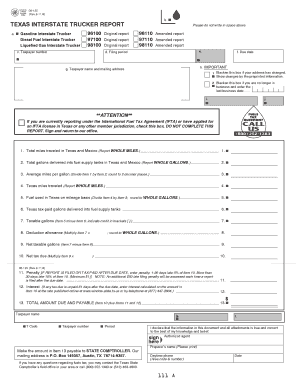




Jul 1, 2025 This form is used to establish the qualifications of a temporary interpreter for the proceeding listed below. Under California Rules of.Read more
This online course will teach you the skills needed to sit for the Oral Component of any State Court Interpreting Certification exams. Call Us: 855.520.6806


