






Definition & Meaning
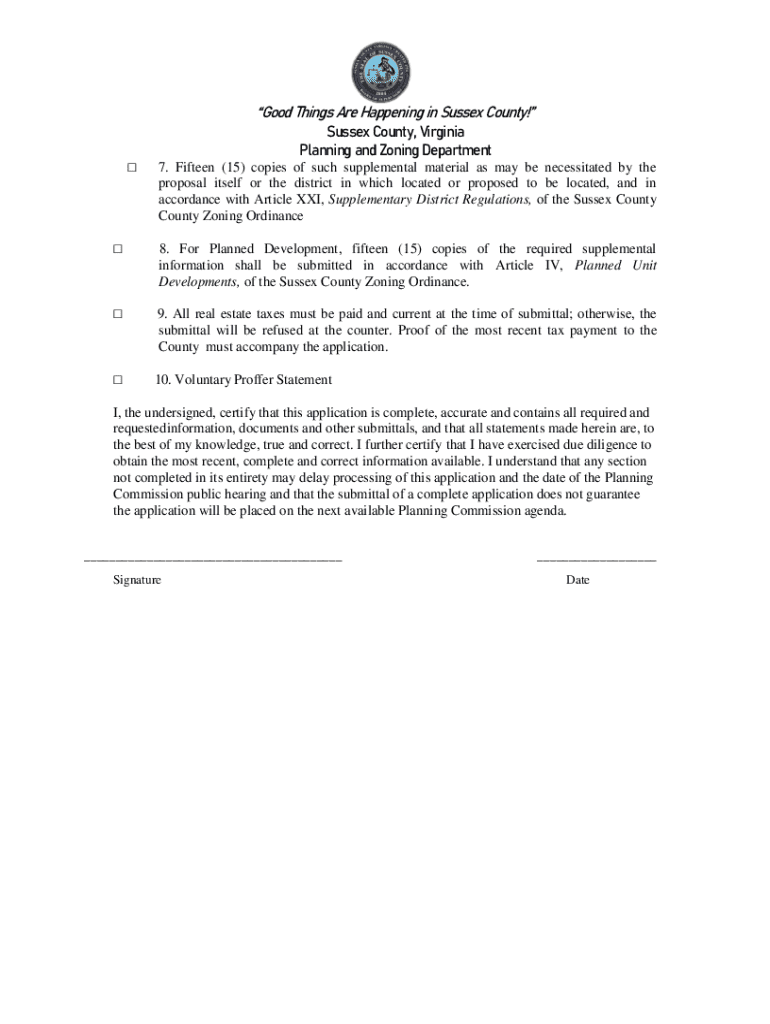
The "Application for Rezoning Conditional Zoning Amendment" is a formal request submitted to a local government authority seeking to alter the existing zoning designation of a property. This change allows the property to be used in ways not permitted under its current zoning category. Rezoning amendments are critical for property owners and developers looking to align a property's designation with proposed land use, facilitating new construction, development, or business operations. Conditional zoning amendments often include specific stipulations and conditions to address community concerns, ensuring that the proposed development aligns with the broader planning goals of the area.
Steps to Complete the Application for Rezoning Conditional Zoning Amendment
-
Pre-application Meeting: Schedule a meeting with the local zoning board or planning department. This step is commonly required to address preliminary inquiries and understand specific requirements for the application.
-
Prepare Required Documents: Gather necessary documents such as property deeds, site maps, proposed development plans, and environmental impact assessments. This ensures clarity and detail in the application process.
-
Complete the Application Form: Fill out the application with accurate and comprehensive details about the proposed zoning change, including current and desired zoning categories and a rationale for the request.
-
Submit the Application: Submit the completed form along with all the required documentation. Submissions can typically be made online, via mail, or in person at the relevant municipal office.
-
Attend Public Hearings: Participate in public hearings or meetings organized by the local authority. This forum allows stakeholders to express support or concerns about the proposed rezoning.
-
Await Decision: Once the application and all supplementary materials are reviewed, a decision will be made by the zoning board or city council. This process can take several weeks to months.
Key Elements of the Application for Rezoning Conditional Zoning Amendment
-
Applicant Information: Details about the individual or organization requesting the rezoning, including contact information and legal ownership proof.
-
Property Description: A comprehensive account of the property, including its legal description, current zoning designation, and the intended new classification.
-
Justification Statement: A narrative explaining the need for rezoning, including economic benefits, community impact, and consistency with local land use plans.
-
Proposed Conditions: Specific conditions or provisions the applicant is willing to abide by, which might include infrastructure improvements, environmental safeguards, or design standards.
Who Typically Uses the Application for Rezoning Conditional Zoning Amendment
Property developers, business owners, real estate investors, and sometimes individual homeowners are the primary users of the application. These parties often seek rezoning to facilitate development projects, expand business operations, or optimize property usage and value. Large-scale commercial developments and infrastructure projects commonly require such amendments for broader economic or community objectives.


Required Documents
-
Site Plans: Detailed maps and diagrams illustrating the proposed changes to the property layout and its surroundings.
-
Environmental Impact Assessments: Reports evaluating the anticipated effects of the rezoning and development on local ecosystems and environments.
-
Community Support Letters: Endorsements from local residents or businesses supporting the rezoning proposal and its expected benefits.
-
Financial Statements: Documentation demonstrating the financial viability of the proposed development project.
State-Specific Rules for the Application for Rezoning Conditional Zoning Amendment
The requirements for rezoning applications vary significantly across states and municipalities. Each jurisdiction may have unique procedural steps, documentation needs, and zoning laws. For instance, states like California may have rigorous environmental review processes, while others might place greater emphasis on community feedback. Understanding the specific legal landscape in your state is vital to navigating the application process successfully.
Form Submission Methods (Online / Mail / In-Person)
Rezoning applications can typically be submitted through one of three primary methods:
-
Online Submission: Many local governments offer electronic submission through municipal websites, streamlining the process and allowing for easy tracking of the application status.
-
Mail Submission: Submitting hard copies via mail is another standard method. This requires organizing and ensuring that all documentation is complete and accurately addressed.
-
In-Person Submission: Some jurisdictions require or offer the option to submit applications directly at municipal offices. This allows for direct clarification of any application details if needed at the point of submission.
Legal Use of the Application for Rezoning Conditional Zoning Amendment
The application is legally binding within the framework of municipal and state zoning laws. Successful applications result in formal amendments to local zoning maps and ordinances, legally altering permissible uses for the property. Compliance with the stipulations of a conditional zoning amendment is generally enforced by the municipal authority, with potential penalties for violations, including fines or revocation of approved zoning.
Examples of Using the Application for Rezoning Conditional Zoning Amendment
-
Retail Expansion: A business owner may use the application to change a parcel of land from residential to commercial zoning to establish a new retail store.
-
Residential Development: A real estate developer could seek to rezone agricultural land to residential to build a new housing community, accounting for housing demand shifts.
-
Mixed-Use Projects: Urban developers might apply for conditional rezoning to facilitate mixed-use projects, which combine residential, commercial, and public spaces in a single development, aligning with urban planning trends favoring density and convenience.
These examples illustrate the diverse scenarios in which rezoning applications are critical, highlighting their role in facilitating strategic property developments and community growth.