







Definition & Meaning
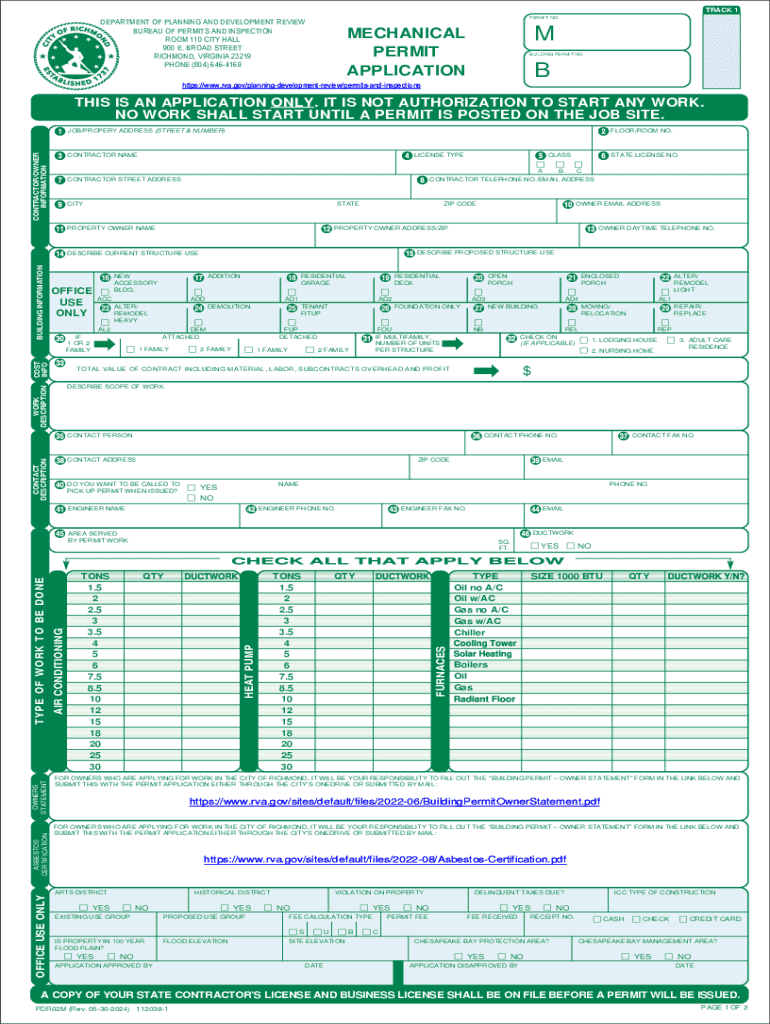
A Mechanical Permit Application is a formal document required by local government authorities, such as the Department of Planning and Development Review in Richmond, Virginia, to authorize mechanical work in residential or commercial projects. This document ensures that any proposed mechanical work complies with local building codes, safety standards, and regulations. Mechanical work generally includes projects related to heating, ventilation, and air conditioning (HVAC) systems, as well as other mechanical-related installations.
How to Use the Mechanical Permit Application
To effectively utilize the Mechanical Permit Application, applicants must first gather all relevant information required by the form. This includes the details of the contractor performing the work, a comprehensive project description, and an understanding of the fee structure, which often depends on the value of the proposed work. It is crucial to accurately reflect the scope and nature of the project to avoid delays or refusals. Completing the application correctly engages the local authorities in assessing the project for compliance with existing codes and regulations.
Steps to Complete the Mechanical Permit Application
-
Gather Necessary Information: Collect all pertinent information, such as contractor details, project site address, and a detailed work description.
-
Complete the Application Form: Fill out the form with exact project details, ensuring that every required field is addressed, including the applicable fee.
-
Review Local Guidelines: Make certain that the project adheres to local building codes and zoning laws. Check for any state-specific modifications that may need to be reflected in the application.
-
Submit Required Documents: Attach all mandatory documentation, such as plans, contractor licenses, and any additional forms that complement the main application.
-
Apply for Relevant Licenses: Ensure the contractor holds valid licenses or certifications needed to complete the work legally.
-
Submit the Application: Send the completed application and supplemental documents to the appropriate municipal office, either online, by mail, or in person.
Who Typically Uses the Mechanical Permit Application
The Mechanical Permit Application is primarily used by contractors, builders, and property developers involved in mechanical work that requires official approval. Architects and engineers may also engage with the permit as part of broader construction or renovation projects. Homeowners performing significant HVAC changes or installations might also need to file this form to ensure compliance with local regulations.


Key Elements of the Mechanical Permit Application
- Contractor Information: Details about the company or individual responsible for performing the mechanical work.
- Project Description: A thorough explanation of the mechanical work to be performed, including type, scope, and purpose.
- Fee Structure: Information about the permit fees, typically based on the project's overall value.
- Compliance Statements: Affirmations that the project will meet all relevant codes and standards.
- Signature and Date: Necessary authorizations from the applicant to validate the submission.
State-Specific Rules for the Mechanical Permit Application
Different states may have unique requirements for the Mechanical Permit Application. These variances can impact the specific documentation needed, the fees imposed, and the scope of work classifiable under the permit. For instance, states might have additional regulations regarding energy efficiency standards or environmental considerations specific to local climates.
Required Documents
When submitting the Mechanical Permit Application, it is essential to include all necessary documents to facilitate approval. Typical documents include:
- Detailed Project Plans: Architectural and mechanical diagrams outlining the intended work.
- Contractor License: Proof that the contractor or company performing the work holds a valid, state-recognized license.
- Proof of Insurance: Documentation confirming that the contractor has sufficient liability insurance coverage.
- Additional Permits: Depending on the scope of the work, additional permits (such as electrical or structural) may be necessary.
Legal Use of the Mechanical Permit Application
Obtaining a Mechanical Permit is a legal requirement to ensure that mechanical work is performed safely and in compliance with building codes. Engaging in such work without the necessary permit can result in penalties, work stoppages, and in some cases, forced project dismantlement. Ensuring legal compliance by submitting a precise and accurate application helps protect both the contractor and property owner from potential legal issues.




