01. Edit your form online
Type text, add images, blackout confidential details, add comments, highlights and more.

Type text, add images, blackout confidential details, add comments, highlights and more.

Draw your signature, type it, upload its image, or use your mobile device as a signature pad.

Send it via email, link, or fax. You can also download it, export it or print it out.
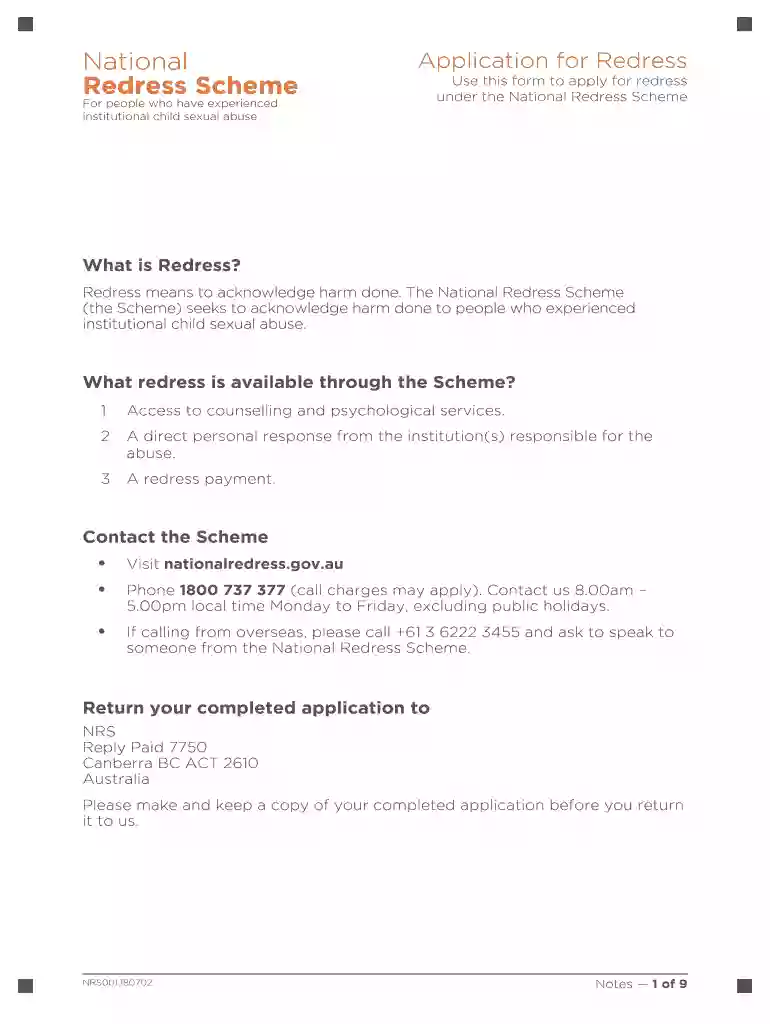
The National Redress Scheme is designed to offer support to individuals who have experienced institutional child sexual abuse. At its core, redress includes access to counseling, personal responses from institutions, and financial compensation. The scheme recognizes the profound impact such abuse can have on people's lives and seeks to offer avenues for healing and support.
A survivor applying for the scheme may seek counseling to process trauma, receive acknowledgment from institutions to validate their experiences, and secure financial support to help refocus their life trajectory.
Eligibility requirements for the scheme focus on individuals who have experienced child sexual abuse in an institution located in the United States. These criteria ensure that the support provided aligns with the needs of those the scheme aims to assist.


A person abused in a U.S.-based orphanage or school could qualify for support, provided they can demonstrate the abuse occurred during their childhood.
Applying for the National Redress Scheme involves several careful steps. The process ensures that applicants provide detailed information about their experiences, which is necessary to evaluate their claims accurately.
The approval period varies, but generally, applications are processed within six to twelve months. This timeframe accounts for the careful consideration and verification of each case's specifics.
Filling the form correctly ensures an accurate reflection of each individual's circumstances. Follow these detailed steps to complete the form effectively.
Ensure all given information is accurate and reflectively articulates the experiences to avoid delays in processing due to incomplete or improper documentation.
Gathering the correct documents is crucial in the application process. These documents verify an applicant’s claim and aid in assessing their eligibility for redress.
An applicant might include a combination of personal identification, a letter from a therapist corroborating the reported experience, and school records as part of their submission.
Legal considerations ensure that the scheme operates within the legal guidelines set by U.S. law, emphasizing confidentiality and data protection.
Applicants’ information is shielded from external parties unless they opt to share their experience publicly, ensuring their privacy is maintained throughout the process.
The National Redress Scheme requires cooperation between various entities to function effectively and address each application holistically.
An educational institution involved might work with the scheme and offer participating acknowledgment statements, ensuring the applicant's experience receives due recognition from relevant parties.
We've got more versions of the National Redress Scheme for people who have experienced form. Select the right National Redress Scheme for people who have experienced version from the list and start editing it straight away!
At DocHub, your data security is our priority. We follow HIPAA, SOC2, GDPR, and other standards, so you can work on your documents with confidence.