






Definition and Meaning
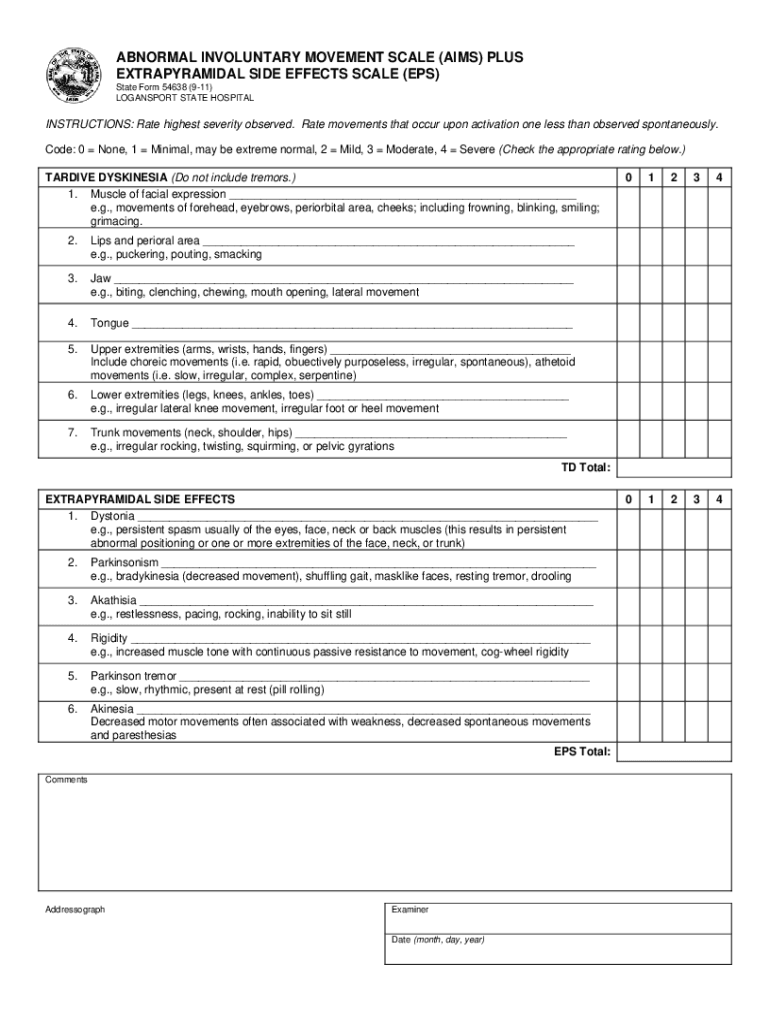
The Abnormal Involuntary Movement Scale (AIMS) and the Extrapyramidal Side Effects Scale (EPS) are essential tools used by healthcare professionals to assess and monitor movement disorders in patients, particularly those resulting from antipsychotic medications. The AIMS evaluates abnormal movements such as tardive dyskinesia by rating the severity of involuntary movements on a scale from 0 (none) to 4 (severe). The EPS scale, on the other hand, focuses on extrapyramidal symptoms, which include drug-induced movement disorders like tremors, rigidity, and bradykinesia. Together, these scales provide a comprehensive overview of a patient's motor function, aiding in the management and optimization of treatment plans.
How to Use the AIMS Plus EPS
To effectively use the AIMS and EPS scales, clinicians follow a structured process:
-
Observation: Begin by observing the patient while they are resting and during their usual activities. Pay attention to the face, lips, jaw, neck, trunk, and extremities.
-
Rating: Use the numerical scale from the AIMS to record the severity of movements observed. For the EPS, similarly rate the presence and impact of symptoms such as akathisia or dystonia.
-
Documentation: Note specific areas affected and details of the movements, such as frequency and duration, to capture a thorough picture of the patient's condition.
-
Review: Compare results over time to monitor changes in the patient's symptoms, which can inform adjustments in their treatment regimen.
Steps to Complete the AIMS Plus EPS
Completing the AIMS and EPS scales involves several steps to ensure accurate assessment:
-
Preparation: Prepare the evaluation space to be calm and free of distractions. Ensure the patient is comfortable.
-
Initial Briefing: Explain the process to the patient to reduce anxiety and ensure cooperation, highlighting the importance of the assessment for their treatment.
-
Assessment: Conduct the assessment systematically, observing each body region as specified in the scales. Ask the patient to perform tasks that can reveal the extent of involuntary movements.
-
Scoring: Utilize the provided scales to assign scores based on the observed symptoms. Be consistent and objective in scoring to ensure reliability.
-
Consultation: Discuss findings with the treatment team to determine if medication adjustments or additional interventions are necessary.
Who Typically Uses the AIMS Plus EPS
The AIMS and EPS scales are primarily used by psychiatrists, neurologists, and other medical professionals involved in mental health care. They are particularly relevant for:
-
Psychiatric Facilities: Used in settings like hospitals and mental health clinics to manage patients on long-term antipsychotic therapy.
-
Research: Utilized in clinical trials to assess the side effects of new medications.
-
General Practice: Family doctors may employ these scales when prescribing psychotropic medications as part of a holistic treatment plan.


Key Elements of the AIMS Plus EPS
Several critical components define the structure of these scales:
-
Scoring Method: Both scales employ a numerical rating system to quantify the severity of symptoms.
-
Specific Symptom Categories: The AIMS details areas of interest such as oral-facial movements, limb movements, and trunk movements. The EPS looks at specific drug-induced symptoms.
-
Observational Settings: The scales require various settings for assessment, including resting state and active tasks.
Examples of Using the AIMS Plus EPS
Practical instances of employing the AIMS and EPS scales:
-
Routine Monitoring: A psychiatrist might use the scales during regular check-ups for a patient with schizophrenia who is on long-term antipsychotic medication. The results guide any necessary adjustments in treatment.
-
Clinical Trials: Researchers assess movement disorders linked to trial medications, using these scales to gauge the drug's side effects comprehensively.
Important Terms Related to AIMS Plus EPS
Understanding specific terminology is crucial for accurately applying these scales:
-
Tardive Dyskinesia: A disorder resulting in repetitive, involuntary movements, often assessed using the AIMS.
-
Akathisia: A state of agitation and restlessness, commonly evaluated by the EPS.
-
Dyskinesia: Broad classification for involuntary movements evaluated through these scales.
Legal Use of the AIMS Plus EPS
The implementation of these scales carries certain legal implications:
-
Documentation: Proper record-keeping of assessments can be crucial in legal reviews or audits concerning patient care quality.
-
Compliance: Ensuring assessments are conducted in a standardized manner provides protection for healthcare providers against malpractice claims.
Software Compatibility
While traditional paper methods are common, digital tools enhance efficiency:
-
Electronic Health Records (EHR): Many EHR systems integrate these scales for streamlined assessments and tracking.
-
Mobile Applications: Some apps are available to facilitate real-time documentation during patient evaluations, ensuring ease and convenience.
These sections provide a comprehensive guide to understanding, applying, and managing the AIMS and EPS responsibly and effectively in clinical settings.