
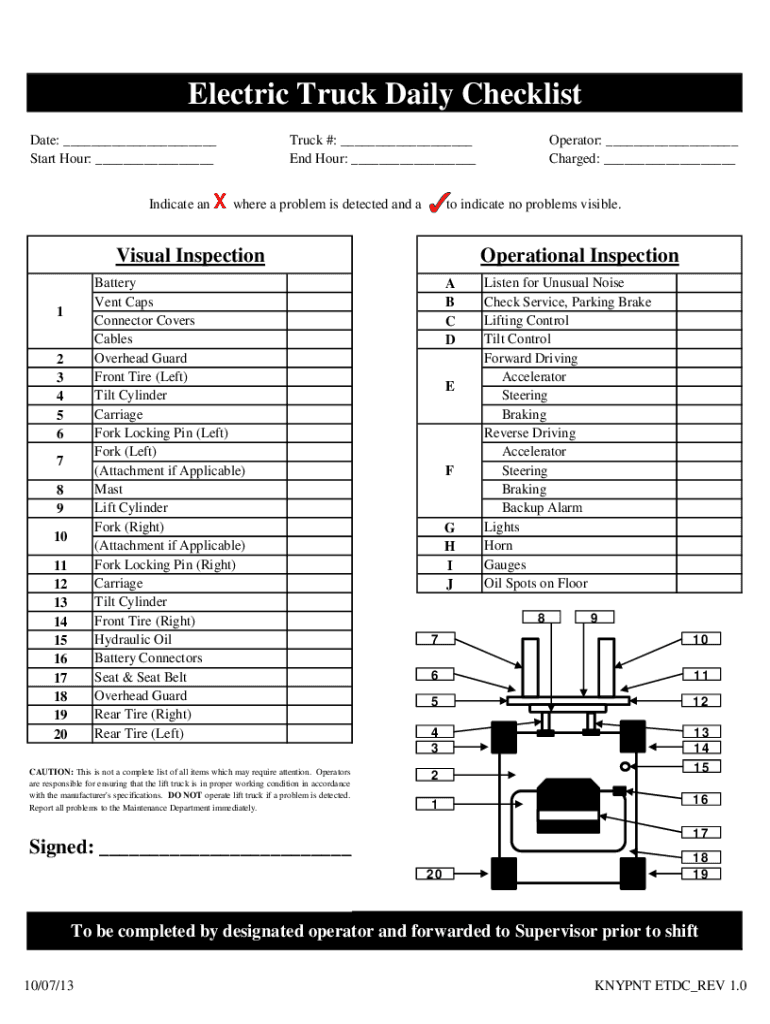







Definition and Purpose of the DAILY PRE-SHIFT CHECKLIST - Ribble Valley
The DAILY PRE-SHIFT CHECKLIST - Ribble Valley serves as a tool designed to guide operators in conducting essential visual and operational inspections of vehicles or equipment before each use. This checklist aims to ensure safety and compliance with established protocols, minimizing the risks associated with machinery operation. It typically includes a series of checks for various components such as batteries, tires, and control systems, accompanied by instructions for reporting issues to maintenance personnel. By adhering to this checklist, operators contribute to maintaining equipment reliability and safety standards.
How to Use the DAILY PRE-SHIFT CHECKLIST - Ribble Valley
To use the DAILY PRE-SHIFT CHECKLIST - Ribble Valley effectively, the following steps are recommended:
- Preparation: Before beginning the checklist, gather all necessary tools and verify that the equipment is in a safe location for inspection.
- Component Inspection: Follow the checklist, inspecting each component like battery levels, tire pressure, and control functionality. Use a systematic approach to ensure no item is overlooked.
- Documentation: Record any issues or irregularities noted during the inspection in the appropriate section of the checklist, ensuring clarity and detail for maintenance follow-up.
- Report Deficiencies: Immediately report any unsafe conditions to the Maintenance Department, prioritizing issues that could compromise safety or lead to equipment failure.
- Verification: Sign off on the checklist to confirm that the pre-shift inspection is complete and all issues have been addressed as required. This step is crucial for accountability and compliance tracking.
Steps to Complete the DAILY PRE-SHIFT CHECKLIST - Ribble Valley
The process of completing the checklist involves multiple detailed steps:
- Initial Assessment: Start with a visual inspection of the equipment's exterior to check for visible damage or leaks.
- Battery and Power Checks: Verify the battery charge and inspect for corrosion or loose connections. Ensure the power system is functioning.
- Tire and Brake Evaluation: Measure tire pressure and tread depth, and check brake functions to prevent accidents due to mechanical failures.
- Control System Confirmation: Test all control systems including steering, acceleration, and any other operational levers or switches.
- Safety Equipment Review: Confirm that all safety equipment, such as lights and warning signals, are operational and visible.
- Final Review and Reporting: Double-check all elements of the checklist before submitting. Report any findings to the immediate supervisor or maintenance team.
Who Typically Uses the DAILY PRE-SHIFT CHECKLIST - Ribble Valley
Primarily used by operators and personnel who manage complex machinery or vehicles, this checklist is critical in industries like logistics, manufacturing, and transportation. Employees responsible for equipment maintenance also rely on this checklist to receive accurate reports on potential issues needing attention. Moreover, supervisors can use the completed checklists to review operator diligence and compliance with safety protocols.


Key Elements of the DAILY PRE-SHIFT CHECKLIST - Ribble Valley
Key elements of the checklist include:
- Battery and Electrical Systems: Ensuring adequate charge and visual condition.
- Tire and Wheel Integrity: Checking for pressure, wear, and alignment.
- Operational Controls: Verification of steering, brakes, and accelerator effectiveness.
- Safety Features: Functionality of horns, lights, and safety alarms.
- Structural Components: Observing for any signs of damage or undue wear to primary structure parts.
These elements are selected to cover potential risk areas contributing to operator safety and equipment functionality.
Examples of Using the DAILY PRE-SHIFT CHECKLIST - Ribble Valley
In practice, examples include:
- Logistics Facilities: Forklift operators use the checklist before each shift to ensure vehicle safety for unloading materials.
- Construction Sites: Heavy machinery operators check equipment daily, reducing the likelihood of site accidents due to faulty machinery.
- Warehousing: Employees inspecting conveyor belts and transport vehicles to prevent workflow interruptions.
Utilizing this checklist promotes a culture of safety and operational excellence.
Digital vs. Paper Version
For convenience and efficiency, the checklist can be maintained in either digital or paper form:
- Digital Version: Offers the advantage of easy sharing and storage. It can be completed on mobile devices and integrates with digital workflow systems.
- Paper Version: Provides a tangible record and can be useful in environments where digital access is limited or impractical.
Both versions serve their purpose well, following the same inspection protocols.
Software Compatibility and Integration
The checklist can integrate with various software systems to enhance its utility:
- Document Management Platforms: Software like DocHub can facilitate easy editing, signing, and sharing of the checklist.
- Mobile Applications: User-friendly apps can automate data entry and ensure accessibility on-site or remotely.
- Maintenance Systems: Integrating checklist results with systems like QuickBooks could streamline maintenance scheduling and inventory management.
These integrations help in creating a seamless workflow, optimizing equipment utilization, and ensuring compliance.




