






Definition and Meaning
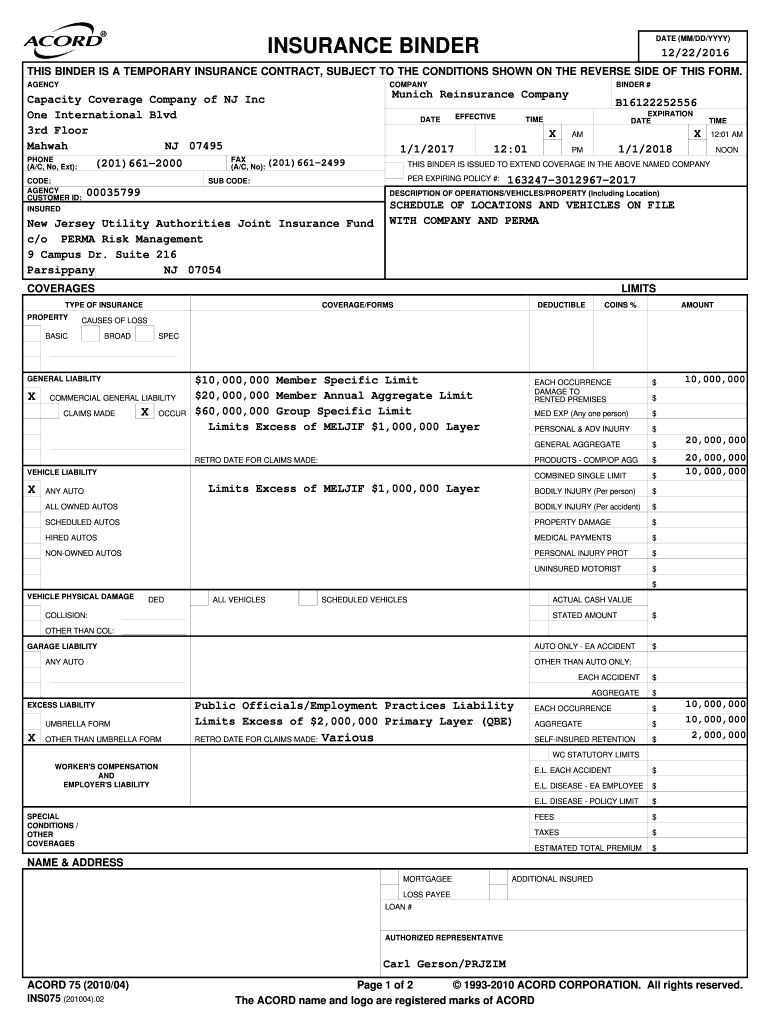
An insurance binder is a temporary agreement issued by an insurance company that provides immediate and effective coverage until a formal policy is finalized. It serves as proof of insurance and outlines the scope of coverage, including limits and conditions. This document is critical because it offers insurance coverage during the gap between the agreement's initiation and the policy's formal issuance. Insurance binders usually cover various aspects, such as general liability, vehicle liability, and other specific coverage types, depending on the needs of the insured.
Key Components
- Coverage Details: Enumerates the types of coverage provided, like liability and property damage.
- Limitations: Details specific conditions and limitations tied to the coverage.
- Effective Period: Specifies the duration for which the binder is valid, usually until the official policy is issued.
- Cancellation Terms: Outlines the circumstances under which the binder can be cancelled before the formal policy is established.
How to Use the Insurance Binder
Using an insurance binder is straightforward but requires precise compliance with its terms to ensure continued coverage.
Steps for Utilization
- Review Terms: Carefully read the binder to understand the coverage, limitations, and effective dates.
- Maintain Documentation: Keep a copy of the binder accessible for verification purposes.
- Monitor Expiry: Track the binder's expiry and ensure that a formal policy is executed before the binder lapses.
- Communicate with Insurer: Stay in touch with your insurance provider for updates on the issuance of the formal policy.
Steps to Complete the Insurance Binder
Completing an insurance binder involves several key steps to ensure that all necessary information is accurately captured.
Detailed Process
- Initial Discussion: Engage with the insurance agent to discuss coverage needs and options.
- Information Gathering: Provide the insurer with detailed information about the property or assets needing coverage.
- Finalization: The insurance company drafts the binder including specifics of terms and coverage.
- Confirmation: Both parties must validate and agree on the aspects of the binder, ensuring it meets the insured’s requirements.
Important Terms Related to Insurance Binder
Understanding the terminology associated with insurance binders is crucial for effective use and compliance.
Glossary of Terms
- Premium: The payment required to maintain the insurance coverage.
- Liability: Coverage for damages that the insured is legally responsible for.
- Deductible: The amount the insured must pay out-of-pocket before the insurance covers the remaining costs.
- Underwriting: The process through which an insurer evaluates the risk involved in providing coverage.
Legal Use of the Insurance Binder
The legal validity of an insurance binder is recognized across the United States, provided it aligns with specified legal criteria.
Compliance Framework
- ESIGN Act: Insurance binders can be legally binding when conforming to electronic signature requirements.
- State Regulations: Specific state laws might define additional requirements or constraints for binders.
- Contractual Obligations: The binder serves as a temporary contract, mandating legal adherence until the formal policy is active.
Key Elements of the Insurance Binder
Every insurance binder has crucial elements that define its structure and enforceability.
Core Elements
- List of Insured Parties: Identification of individuals or entities covered.
- Coverage Type and Limits: Specification of coverage details and maximum payout limits.
- Start and Expiry Dates: Clearly outlined dates for binder validity.
State-Specific Rules for Insurance Binder
Different states have distinct rules that might affect how an insurance binder is structured and used.
State Variations
- New Jersey: Binders must align with specific state laws, particularly those involving utility authorities.
- Policy Requirements: Certain states may require additional rider clauses to cater to unique local laws.
- Cancellation Protocols: Varying rules may exist regarding binder cancellation specifics.
Who Typically Uses the Insurance Binder
Insurance binders are valuable for a wide range of users, from individuals to businesses.


Common Users
- New Homeowners: Utilize binders for immediate coverage when purchasing a new property.
- Auto Purchasers: Acquire binders for temporary vehicle coverage upon purchase.
- Businesses: Frequently need binders for short-term coverage during transitions or until a full policy is established.
Each segment here provides an overview geared toward maximizing comprehension and application of the insurance binder, with a focus on functionality, legalities, and scenarios pertaining particularly to U.S. usage.